 By admin

The Lyon tourism office was set on fire as tens of thousands of people took part in protests across France on October 17, 2026. The demonstrations were driven by anger over the rising cost of living, economic inequality, and concerns about public services, with unrest reported in several major cities. In Lyon, masked individuals damaged and set fire to a tourism office near Place Bellecour as clashes between protesters and police intensified. Authorities reported numerous arrests and incidents of property damage as the nationwide demonstrations escalated. The unrest has renewed attention on France’s growing social tensions and the demands being raised by protesters
Table of Contents
France Protests Over Cost of Living and Education Standards

France protests have brought student-led demonstrations and wider public anger into focus, with protesters highlighting the cost of living, falling education standards, and rising fuel prices. Concerns about public services, public spending cuts, and a lack of job opportunities have intensified frustration, particularly among young people and workers’ unions seeking stronger financial support for French overseas territories.
The nationwide protests, including Paris demonstrations, reflect growing social grievances and political disillusionment. Some demonstrators have drawn comparisons with the yellow vest movement, as citizens demand changing government policies and greater government accountability. While many participants have supported peaceful protest, the scale of mobilisation has increased government pressure to respond to economic hardship and public concerns.
Police Response, Arrests and Escalation of Violence
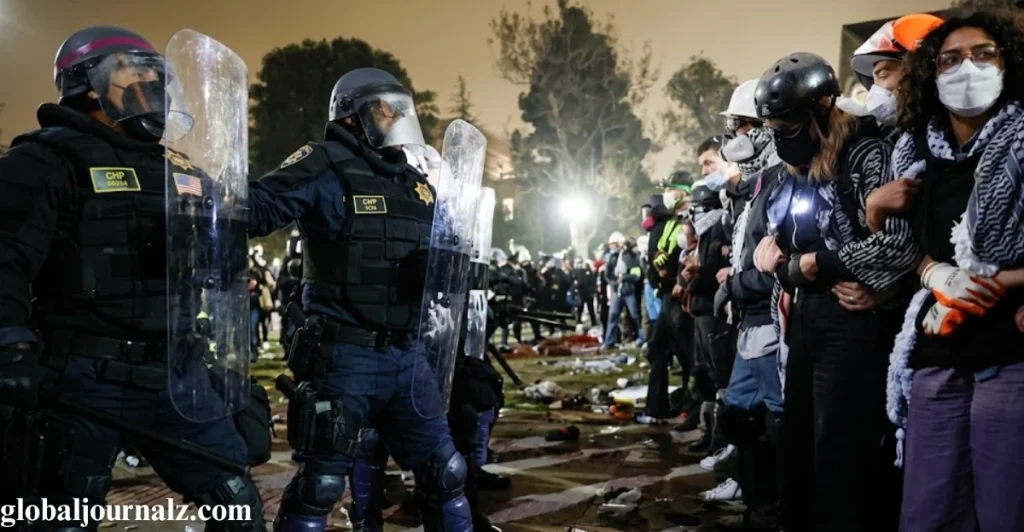
The French interior ministry reported 272 arrests nationwide amid an escalation in violence during active demonstrations. French riot police and other law enforcement officers deployed tear gas grenades and water cannon as clashes with protesters intensified. Authorities also reported masked protesters black bloc groups, and far-left elements involved in incidents that included attacks on police attempted looting and vandalised businesses.
The unrest placed additional pressure on security forces, with police deployment focused on public safety and protecting institutional sites. Reports cited 33,000 people taking part in 140 separate actions, alongside more than 160 arrests earlier in the day. Officials faced the challenge of distinguishing peaceful demonstrators from violent groups while limiting further damage to public spaces and businesses.
Lyon Tourism Office Fire and Damage Across French Cities
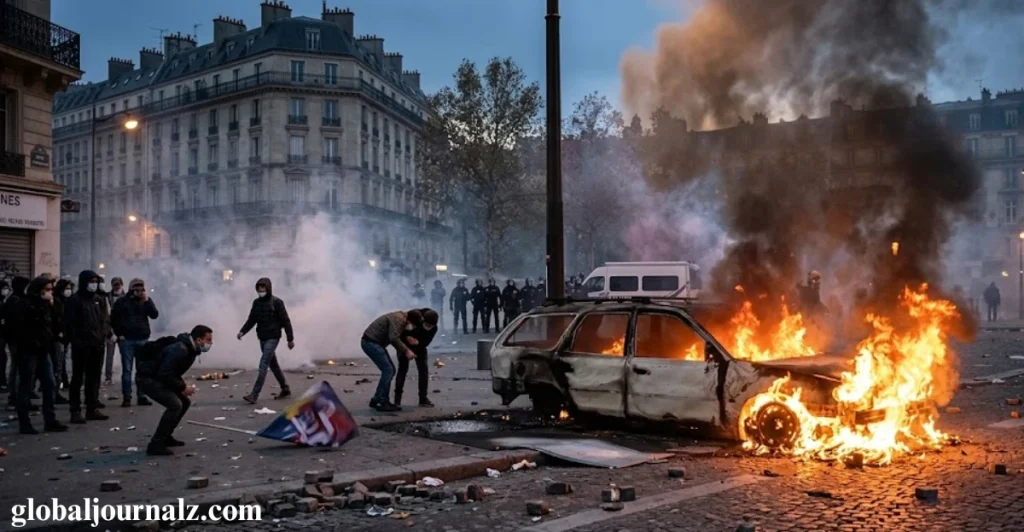
In eastern France, the Lyon tourism office was reportedly set on fire during demonstrations, leaving a smouldering building and reports of fires inside and outside. Protesters allegedly smashed windows, while hostile individuals and violent groups contributed to disorder that required intervention from firefighters and police officers. The incident added to concerns about damage to civic and commercial buildings.
In Marseille, Marseille City Hall faced a city hall break-in involving a metal fence and battering ram at a historic 17th-century building. A spray-painted anarchist symbol was reported, although damage was described as limited damage by Marseille Mayor Benoît Payan. Further incidents affected Grenoble city hall the Vaucluse prefecture in Avignon, Pau, Montpellier, Toulouse, and Valence, with vandalised businesses and damaged public property reported across several cities.
Paris Demonstrations and Peaceful Protesters
In Paris, demonstrators gathered at Place de la République, Place de Clichy, Boulevard Magenta and Gare du Nord for the main demonstration. Thousands of protesters carried handmade signs banners and flags near the Monument to the Republic, bringing together converging grievances about living costs, education, and government decisions. Participants included student protesters, workers, trade unions, young people and pacifists.
Many called for government accountability, political change, and a response to public frustration, with every generation represented in calls for solidarity. Although the gathering included a peaceful march, some areas experienced tear gas and a barricade of bicycles and crash barriers. Tensions were reported around Rue Beaubourg and Rue du Faubourg Saint-Honoré, near the Élysée palace, where police intervention formed part of efforts to control the unrest.
Emmanuel Macron, Political Leaders and Public Reaction
French President Emmanuel Macron appealed for calm and urged respect for people and property as demonstrations spread. Jean-Luc Mélenchon, leader of La France Insoumise (LFI), also known as France Unbowed, represented a prominent left-wing party associated with calls for student demonstrations and peaceful mobilisation. Public debate focused on the government response, the reasons behind the protests, and the distinction between peaceful action and violence.
British teacher Kate Deegan described students fed up with long school hours, highlighting concerns about school conditions, student safety, and political disillusionment, while expressing sympathy for protesters and opposition to violence. Hugh Schofield, a Paris correspondent, discussed the nationwide unrest and the view that the protests reflected a failed experiment of 10 years of radical Macronism.
Debate also touched on the centrist government, French presidential elections in April/May, Donald Trump, war in Europe, the debt crisis, a possible French default, inflation-induced impoverishment, and historical parallels with May 1968, the Paris Commune of 1870, and the social revolutions of 1848.
Tourist Disruption, Landmark Closures and Public Services
The demonstrations disrupted visits for Paris tourists, with the Arc de Triomphe closure and other landmark closures affecting disrupted travel plans. Visitors including Anniek Neve, Aaron from Australia, and American Tim Haley described their experiences of tourist safety, disappointment, family visits, and city exploration. Some expressed little concern about personal safety, while the wider unrest affected plans to visit attractions and move around the capital.
Beyond tourism, the demonstrations caused public transport and tourism disruption and added pressure on business closures and public services. School protests, rising living costs, and public spending cuts continued to fuel student frustration and demands from workers’ unions, echoing concerns associated with the yellow vest movement. As community concerns spread through nationwide demonstrations and protests in multiple cities, public property damage increased calls for government attention and meaningful calls for change amid France’s political and economic instability.
Conclusion
The nationwide protests across France highlight growing public frustration over the cost of living, rising fuel prices, falling education standards, and concerns about government policies. While thousands of students, workers, and citizens have participated in demonstrations demanding political and economic change, incidents of violence, arrests, and damage to public property have complicated the movement. The unrest has also disrupted tourism, public services, and daily life in several cities. As Emmanuel Macron and other political leaders face increasing pressure, the government must address the underlying social grievances, restore public confidence and protect peaceful protest while ensuring public safety.
FAQs
Why are people protesting across France?
People are protesting over the rising cost of living, higher fuel prices, falling education standards, public spending cuts, limited job opportunities, and concerns about public services.
How many arrests were reported during the French protests?
The French interior ministry reported 272 arrests nationwide, amid clashes, attempted looting, vandalism, and an escalation in violence.
Which French cities experienced protest-related damage?
Reported incidents affected Lyon, Marseille, Grenoble, Avignon, Pau, Montpellier, Toulouse, and Valence, including fires, damaged public buildings, and vandalised businesses.
What role did Emmanuel Macron play in responding to the protests?
French President Emmanuel Macron appealed for calm and urged people to respect others and public property as the government faced growing pressure to address public grievances.
How did the protests affect tourists and public services in France?
The demonstrations caused landmark closures, including the Arc de Triomphe closure, disrupted travel plans and tourism, and affected public transport, businesses, schools, and everyday activities.
 Muhammad Bilal