 By Muhammad Bilal
Artificial intelligence is evolving rapidly, introducing breakthroughs that are transforming industries and redefining what technology can achieve. From advanced AI models by Google and OpenAI to generative tools and intelligent automation these innovations are opening new possibilities. Businesses and individuals are using AI to solve complex problems, improve productivity and discover smarter ways to work. Understanding these breakthroughs can help you stay informed and prepared for the future. Let’s explore the latest AI developments you need to know about.
Table of Contents
Early Breakthroughs in AI
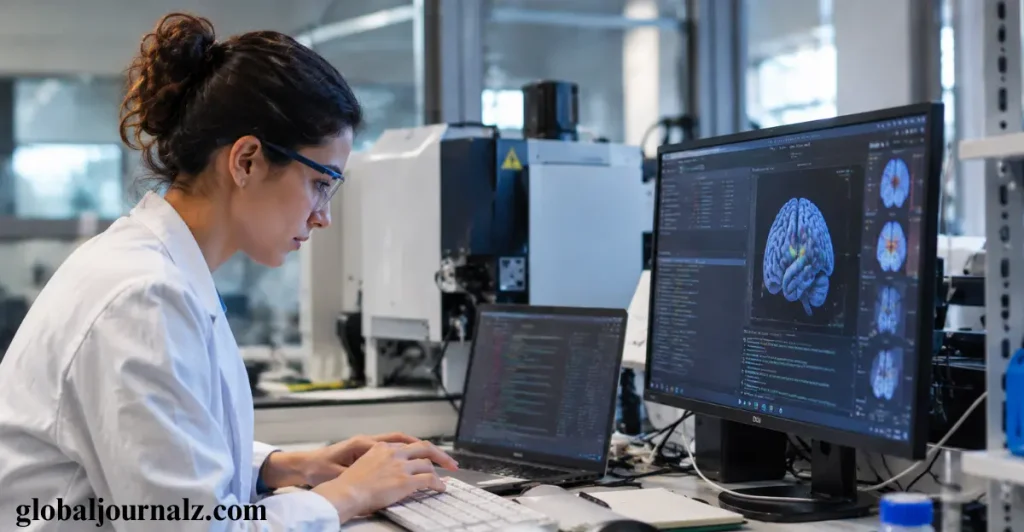
Explore the early breakthroughs in artificial intelligence and discover the innovations that paved the way for today’s smartest tools.
The Dawn of Machine Learning
Machine learning established the foundation of modern AI by enabling computers to learn from data, identify patterns and improve through algorithms rather than relying entirely on manual coding. In 1958, Frank Rosenblatt introduced the perceptron an early model inspired by human cognition that used inputs for classification. This development strengthened research into artificial neural networks and machine intelligence, opening new possibilities for computational learning and data-driven analysis.
During the 1980s renewed interest in neural networks encouraged researchers to explore more advanced learning techniques, particularly backpropagation which improved model training and information processing. These advances helped researchers develop more complex models and deep networks eventually contributing to deep learning. Together these milestones transformed early theoretical ideas into practical AI methods capable of recognizing patterns, processing information and solving increasingly sophisticated problems.
Natural Language Processing (NLP)
Natural Language Processing (NLP) has transformed how machines understand human language enabling language processing, language generation and improved language understanding throughout AI development. In 1966, Joseph Weizenbaum created Eliza, one of the earliest NLP programs which simulated a conversation with a specialist in psychotherapy. Although its capabilities were limited, Eliza demonstrated how computers could interact through language establishing an early foundation for conversational AI and future language models.
Statistical translation gained momentum in the 1990s, when IBM and other researchers shifted machine translation from rule-based methods toward statistical methods. This transition improved translation accuracy and usability making translation systems more effective at identifying linguistic patterns. These advancements strengthened NLP within AI development, supporting more sophisticated language models and technologies capable of interpreting context, processing human language and generating meaningful responses.
Mid-Era Breakthroughs
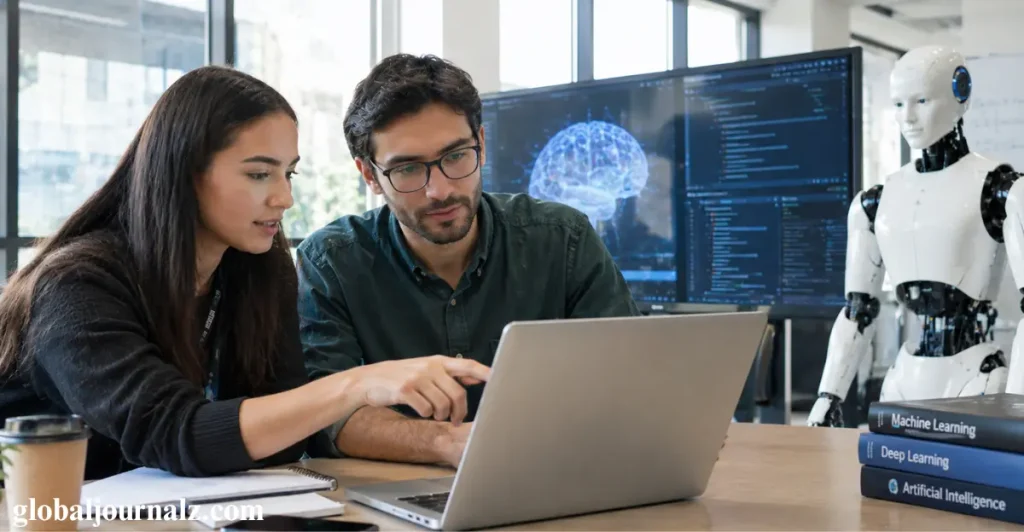
Discover how mid-era breakthroughs pushed artificial intelligence beyond basic computing and opened the door to smarter, more capable systems. Explore the innovations that shaped modern AI and set the stage for today’s revolutionary tools.
Deep Learning Revolution
AlexNet developed by Alex Krizhevsky Ilya Sutskever and Geoffrey Hinton achieved a major breakthrough in 2012 by winning recognition in the ImageNet competition and improving image recognition accuracy. Throughout the 2010s this achievement accelerated AI innovation and expanded deep learning a branch of machine learning that uses multilayer neural networks and deep networks to identify complex patterns. These developments also strengthened computer vision and automated image classification.
Another important milestone arrived in 2014 when Ian Goodfellow introduced GANs or generative adversarial networks which use competing neural networks to produce realistic synthetic data. This approach expanded image generation and data augmentation helping AI systems create new examples and improve training datasets. Together these advances shaped modern AI by making deep learning more powerful and broadening its applications in visual recognition, data synthesis and intelligent systems.
Reinforcement Learning
DeepMind’s AlphaGo marked a landmark achievement in 2016 when it defeated Lee Sedol, a world champion Go player, demonstrating the growing capabilities of AI in complex strategic games. This breakthrough showed how reinforcement learning enables agents to improve their decisions through experience by receiving rewards or penalties for their actions. By combining deep learning with strategic planning AlphaGo learned to evaluate possible moves and develop effective strategies rather than relying solely on predefined instructions.
Beyond mastering Go AlphaGo demonstrated the potential for AI mastery in challenging decision-making environments. Its success encouraged further research into intelligent agents capable of learning through repeated interactions and adapting their strategies to achieve specific goals. This milestone also highlighted how reinforcement learning can support increasingly sophisticated AI systems in complex tasks requiring planning, prediction and strategic reasoning.
Recent Breakthroughs in AI
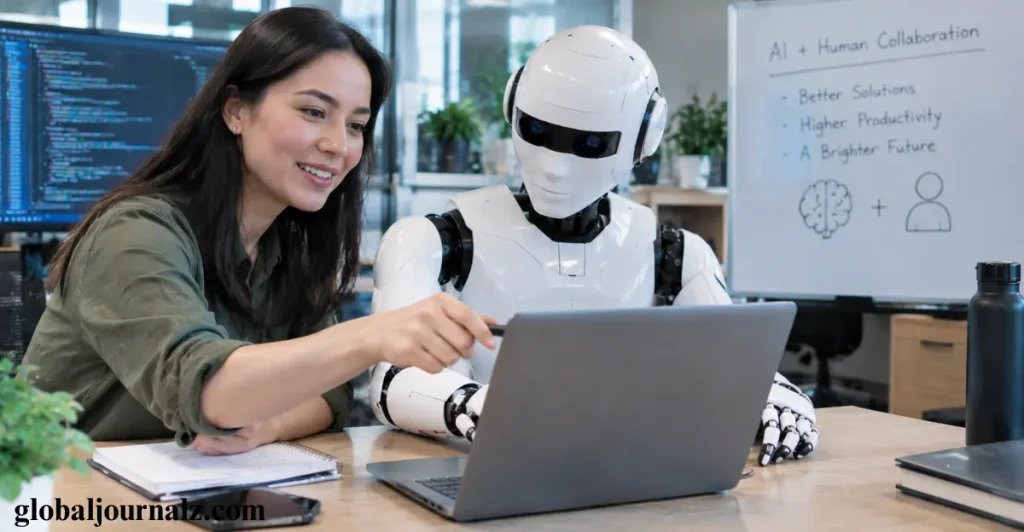
Discover how recent AI breakthroughs in generative AI, automation and intelligent assistants are transforming industries and reshaping the future of work.
Natural Language Processing and Understanding
BERT introduced by Google in 2018 transformed NLP by helping AI systems understand human language more effectively. Built on transformers, BERT analyzes context by examining how words relate to one another within sentences, improving tasks such as question answering and sentiment analysis. This development allowed language models to interpret meaning more accurately rather than simply matching individual words marking an important step toward more capable language understanding systems.
In 2020 OpenAI introduced GPT-3, a powerful language model with 175 billion parameters that demonstrated impressive abilities in text generation. It could produce coherent text for a wide range of AI applications including writing answering questions and assisting with coding tasks. These advances expanded the possibilities for natural language technologies enabling AI tools to generate more fluent responses, support creative work and help users communicate with machines through everyday language.
Advancements in Healthcare AI
AlphaFold developed by DeepMind and recognized as a major breakthrough in 2020 transformed Healthcare AI by predicting protein folding and helping scientists understand complex protein structures. This advancement strengthened research in biology and supported drug discovery allowing researchers to investigate diseases more effectively and explore new possibilities for developing treatments. By providing valuable insights into how proteins function AlphaFold has contributed to scientific progress and opened new opportunities for medical research.
Beyond protein research medical imaging has become an important area for AI models, particularly in cancer detection and medical diagnosis. Developments in 2022 highlighted how AI could analyze medical scans and help healthcare professionals identify abnormalities with greater accuracy. These technologies can support earlier diagnostics, improve treatment decisions and contribute to better patient outcomes. By helping streamline medical processes and identify health concerns sooner, Healthcare AI also has the potential to manage rising healthcare costs.
Breakthroughs from Google and OpenAI

Explore how Google and OpenAI are pushing AI forward with groundbreaking models and smarter tools that are transforming the way we work.
Google’s Contributions
TensorFlow, introduced by Google in 2015 became a major contribution to AI research by providing an open-source platform for machine learning and AI development. It enabled developers to build systems for image recognition, train advanced language models and simplify model deployment across different platforms. By making powerful tools more accessible, TensorFlow encouraged innovation and helped researchers and businesses develop practical AI solutions for a wide range of applications.
Another important milestone was LaMDA introduced by Google in 2021 to improve conversational AI. Designed for dialogue applications it aimed to support natural conversations and open-ended dialogue by generating relevant responses across different topics. Its focus on context understanding helped AI systems maintain more meaningful exchanges and respond appropriately to conversational cues. These developments strengthened Google’s role in advancing interactive technologies and making AI communication more natural and useful.
OpenAI’s Innovations
CLIP, introduced by OpenAI in 2021 advanced AI models by connecting text with images to improve image recognition and help systems understand textual descriptions. This approach expanded possibilities for image generation and various creative applications allowing AI to identify relationships between visual content and language. These developments strengthened AI’s ability to process multimodal information and support creative tasks making visual technologies more useful across different industries.
AI-powered coding tools have transformed software development through advances in code generation. OpenAI’s Codex contributed to tools such as GitHub Copilot which suggests relevant code snippets based on instructions written in natural language. By assisting with repetitive tasks and offering coding suggestions these tools can improve developer productivity and increase developer accessibility for people with different programming skills. Together these technologies represent important progress in AI innovation and technical problem-solving.
Collaborative Efforts and AI Ethics
Responsible AI development has made AI ethics and ethical considerations increasingly important for organizations such as Google and OpenAI. Their work highlights the need for bias mitigation, careful evaluation of AI models and the ethical use of emerging technologies. Google’s AI Principles emphasize responsible development while research into AI safety aims to identify risks and promote responsible AI practices. These efforts encourage developers to consider fairness, reliability and the potential effects of AI on society.
Transparency and collaboration help the wider research community advance AI through shared research, open-source projects and accessible findings. These practices support reproducibility allowing researchers to examine methods, verify results and identify limitations more effectively. Collaboration can also encourage innovation and inclusivity by bringing diverse perspectives into AI research and development. By balancing technological progress with accountability organizations can help create AI systems that are more trustworthy and beneficial to society.
The Future of AI: Trends and Predictions

Discover emerging AI trends and future predictions to understand how intelligent technology will reshape industries, boost productivity and redefine the way we work.
Multimodal AI
Multimodal AI represents a major advancement in artificial intelligence by combining different types of data including text, images and audio within unified models. Technologies such as CLIP demonstrate how AI can connect visual information with language, improving information processing across multiple sources. This versatility supports diverse applications, creating more interactive user experiences through better context awareness and a deeper understanding of information.
In everyday technology, multimodal AI can improve virtual assistants by allowing them to interpret spoken questions, written instructions and visual inputs together. It also supports augmented reality, where digital information interacts with the physical environment to create more immersive experiences. By combining different forms of input these systems can respond more naturally to users making AI tools more adaptable, informative and useful across education, entertainment, communication and other fields.
AI in Everyday Life
From smartphones to connected homes, AI has become an increasingly common part of daily life through smart devices, digital applications and automated services. Smart homes use automation to manage lighting, temperature and security systems while voice assistants help users complete everyday tasks through spoken commands. These technologies improve convenience by simplifying routine activities and allowing people to interact with devices more efficiently.
Meanwhile, AI supports personalization across streaming, shopping and healthcare services. Digital platforms analyze user preferences to recommend entertainment, suggest relevant products and provide more tailored experiences. In healthcare, AI can help organize information and support clinical decisions while personalized recommendations make online services more relevant. As these tools continue to develop, AI is shaping everyday experiences by making services more responsive to individual needs.
Advances in Autonomous Systems
Autonomous systems use AI to perform tasks with limited human intervention transforming transportation and logistics. Companies such as Waymo and Tesla have developed self-driving cars and other autonomous vehicles that use sensors and AI for navigation, object detection and decision-making. These technologies aim to improve road safety and make transportation more efficient although reliable performance in complex real-world conditions remains an important challenge.
Beyond road travel drones are expanding the potential of drone technology across industries. They can support package delivery, improve agriculture through crop monitoring and assist with environmental monitoring in hard-to-reach areas. During emergencies drones can also contribute to disaster response by surveying affected locations and helping teams assess conditions. These applications show how autonomous systems can improve efficiency, provide useful information and support tasks that are difficult or time-consuming for people.
AI and Sustainability
AI is becoming a valuable tool for sustainability helping researchers and organizations address pressing environmental challenges. Intelligent algorithms can improve energy management by analyzing energy consumption in homes, offices and large buildings. These insights can reduce unnecessary energy use support cost reduction and help organizations operate more efficiently. AI can also contribute to waste reduction by improving resource planning and identifying opportunities to use materials more effectively.
Addressing climate change also requires better environmental monitoring and reliable prediction methods. AI systems can analyze large datasets from satellites, sensors and weather records to identify environmental patterns and forecast potential risks. This information can support climate research and strengthen mitigation strategies including disaster preparation and resource conservation. Although AI systems also consume energy their responsible use can help communities make informed decisions and develop more sustainable environmental practices.
AI in Education
AI is transforming education by supporting personalization and improving learning experiences for students with different needs. Through adaptive learning and intelligent educational platforms systems can provide personalized content based on students’ progress, learning pace and learning styles. These tools help learners practice challenging concepts and receive targeted feedback while student engagement can improve through interactive activities and lessons suited to individual needs.
Beyond classroom learning AI can simplify administration through the automation of tasks such as grading and scheduling. These capabilities can give educators more time to focus on teaching, provide feedback and support students who need additional guidance. When used thoughtfully AI can help teachers identify learning gaps and create more inclusive classrooms. However educators remain essential for ensuring accuracy, protecting student information and maintaining meaningful human interaction throughout the learning process.
Conclusion
The latest AI breakthroughs represent more than technological progress; they are creating new opportunities to rethink how we approach everyday challenges. From smarter digital assistants to advanced automation and scientific discoveries AI continues to expand its role across different fields. However responsible development, data privacy and reliable results remain essential as these technologies become more widespread. Staying updated with emerging innovations can help businesses make informed decisions and individuals develop valuable skills. Not every new AI feature will suit every need so practical testing and careful evaluation are important. By embracing useful advancements while understanding their limitations we can make better use of AI’s growing potential. The next wave of breakthroughs may bring possibilities that are difficult to imagine today.
1. What are the most significant AI breakthroughs shaping technology today?
Recent AI breakthroughs include advanced reasoning models, multimodal systems, generative AI and AI-powered automation. These developments help machines understand information, create content and solve increasingly complex problems.
2. How are Google and OpenAI pushing artificial intelligence forward?
Google and OpenAI are developing advanced AI models that support reasoning, coding, research and multimodal interactions. Their innovations are making AI assistants more capable and useful across personal, educational and professional tasks.
3. Why are multimodal AI models considered a major technological leap?
Multimodal AI models can process combinations of text, images, audio and sometimes video within a single system. This allows users to interact with AI more naturally and handle different types of information in one workflow.
4. Can the latest AI breakthroughs make businesses more competitive?
Yes, AI can help businesses automate repetitive tasks, analyze information, improve customer service and support decision-making. The results depend on selecting suitable tools, integrating them effectively and reviewing their outputs.