 By Muhammad Bilal
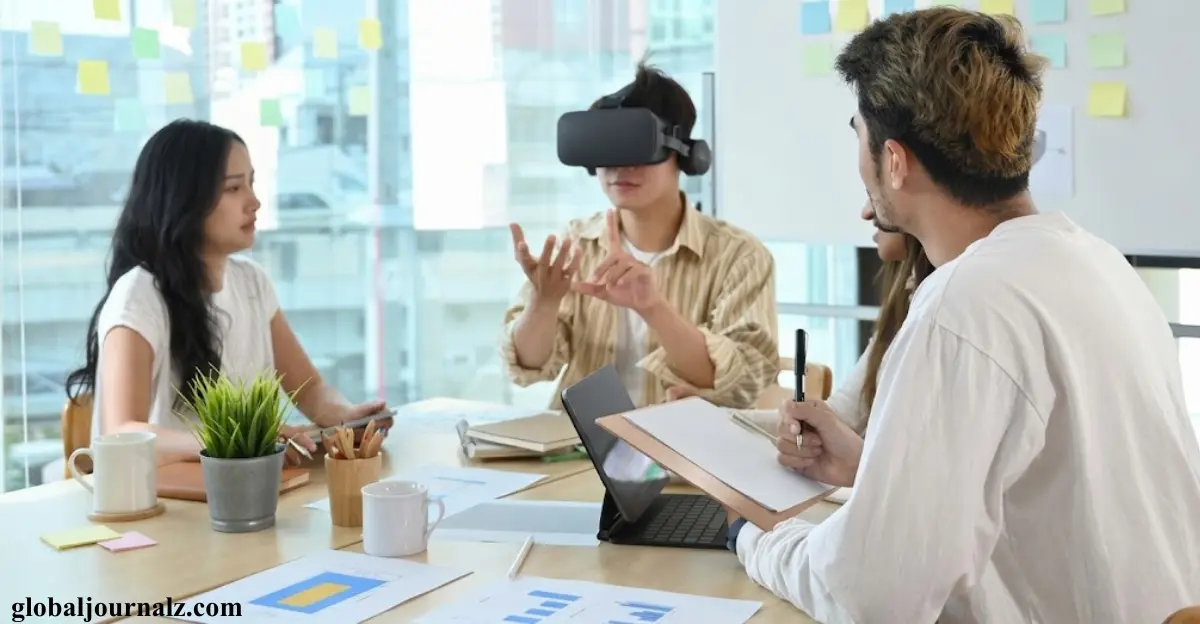
Computer technology is advancing rapidly bringing innovations that are reshaping industries and changing everyday life. Emerging trends such as artificial intelligence, quantum computing, robotics and advanced automation are opening new possibilities for the future. These technologies promise smarter solutions, faster processes and more connected digital experiences. Explore the future of computer technology and discover the key trends and innovations set to shape the next generation.
Table of Contents
1. Agentic AI & Model-First Infrastructure
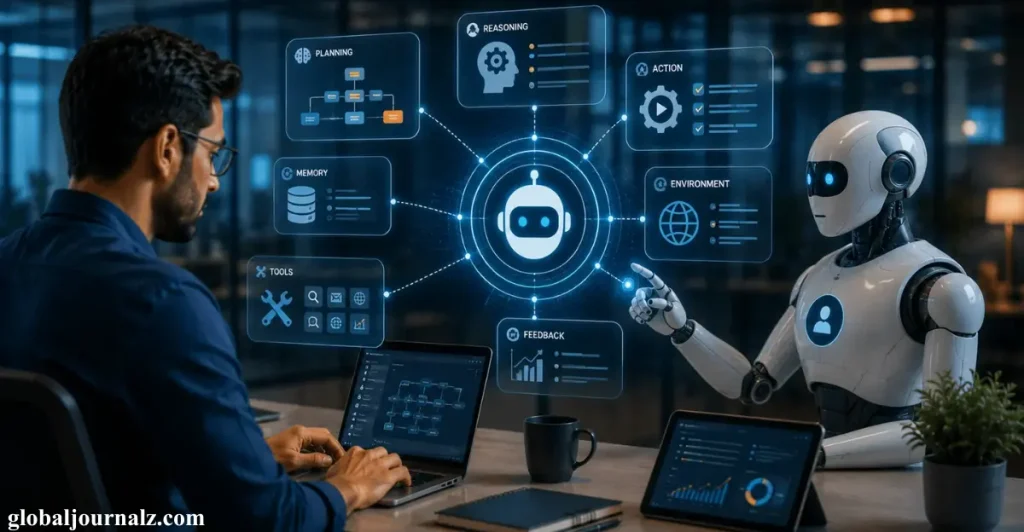
Agentic AI is becoming an important part of future computer technology because it can handle multi-step tasks through autonomous planning. Instead of responding to individual commands these systems can use APIs to complete complex workflows. Multi-agent systems allow different agents to work together while small language models (SLMs) and domain-specific models support focused tasks.
Watch these five developments shaping its future.
- Autonomous Planning: AI systems will plan tasks and make decisions based on defined goals. This will help businesses automate complex workflows with less manual input.
- Multi-Agent Collaboration: Specialized agents will work together to manage different parts of a task. This can improve coordination across software platforms and business operations.
- Small Language Models: SLMs will support faster and more efficient AI applications. Their focused capabilities can make them useful for devices with limited computing resources.
- Advanced Tool Integration: APIs and OS integration will allow AI agents to interact with different applications. This will make digital automation more flexible and practical.
- AI Governance and Privacy: Guardrails and auditing will help organizations monitor autonomous systems. Strong data privacy and compliance measures will remain essential for responsible AI use.
2. Quantum Computing Nearing Practical Utility
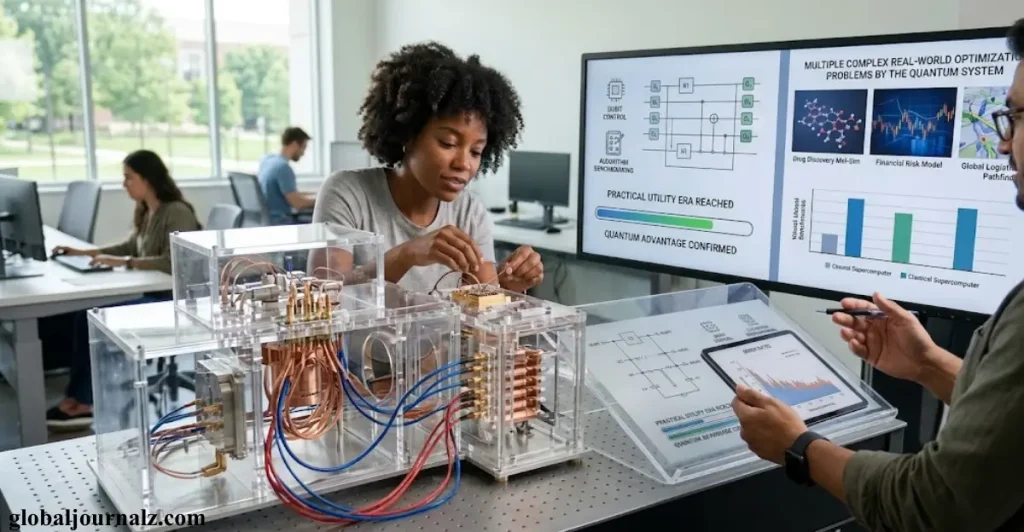
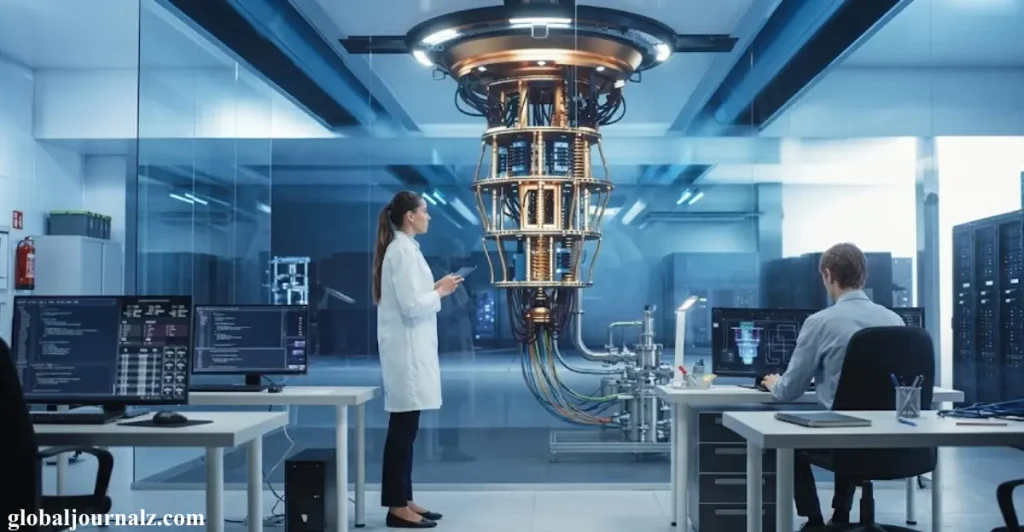
Quantum computing is moving toward practical applications through improvements in logical qubits and error correction. Current NISQ systems still face limitations because quantum information is sensitive to environmental disturbances. Researchers are developing hybrid algorithms that combine quantum processing units (QPUs) with traditional supercomputers. This approach may help solve selected problems that require advanced computational power.
Explore five areas where its future applications are gaining attention.
- Supply Chain Optimization: Quantum algorithms may help analyze complex logistics networks. They could support better planning for transportation and resource distribution.
- Molecular Simulation: Quantum computing could improve the study of molecular behavior. This may support discoveries in material science and pharmaceutical research.
- Energy Management: Future systems may help optimize power grids and energy distribution. These applications could improve planning for complex electricity networks.
- Advanced Material Science: Researchers are exploring quantum simulations to study catalysts and batteries. This could support the development of improved materials.
- Quantum Hardware Development: Error correction and topological qubits are important research areas. Better cryogenic systems may also help improve hardware stability.
3. Edge AI & Ubiquitous Hardware Processing
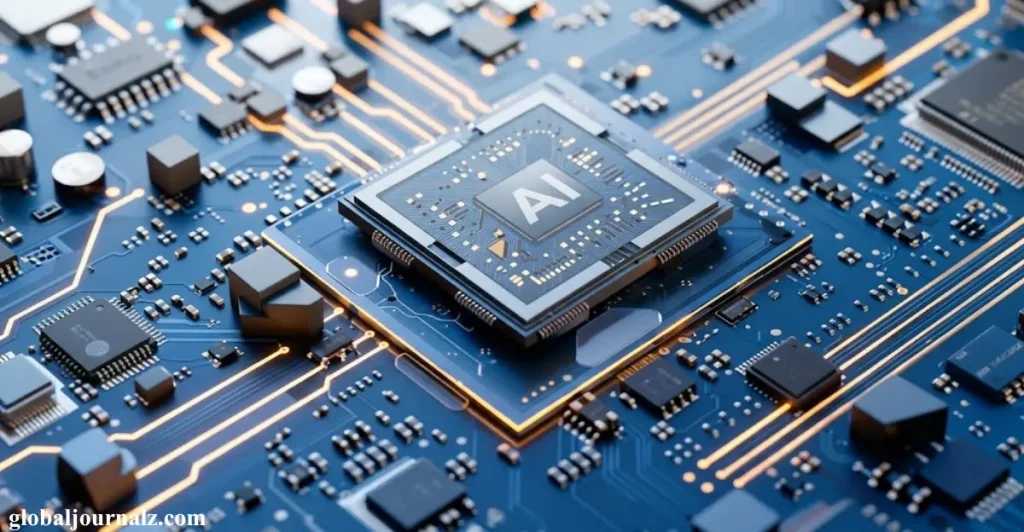
Edge AI brings artificial intelligence closer to the devices that generate and use data. Neural Processing Units (NPUs) support local inference by processing information directly on hardware. This reduces dependence on distant cloud servers and can provide lower latency. Applications such as autonomous vehicles and medical robotics may benefit from faster local processing.
Read five developments shaping the future of Edge AI.
- On Device Intelligence: NPUs will allow devices to run AI models locally. This can improve response times and reduce reliance on cloud computing.
- Improved Data Privacy: Local inference can keep sensitive information closer to its source. This supports data privacy and helps organizations manage data residency requirements.
- Smarter IoT Devices: Edge AI will improve sensor processing across connected devices. It can help systems respond quickly to changing conditions.
- Bandwidth Optimization: Processing information locally can reduce the amount of data sent to cloud networks. This may lower bandwidth requirements and improve connectivity.
- Federated Learning: Devices will be able to participate in local training without sharing all raw data. Model aggregation can combine learning updates to improve shared AI models.
4. Predictive Cybersecurity & Post-Quantum Cryptography
Predictive cybersecurity is changing how organizations identify and respond to digital threats. AI-powered threat detection can analyze network monitoring data and identify unusual activity. Autonomous defense systems may help manage security responses while zero trust and micro-segmentation limit unauthorized access. Authentication and risk scoring will also remain important for protecting digital infrastructure.
Explore five innovations that could shape the next generation of digital protection.
- Autonomous Threat Detection: AI systems will analyze network activity to identify suspicious patterns. Faster detection can help security teams respond to potential threats.
- Zero Trust Security: Zero trust requires continuous verification before granting access. Micro-segmentation can also limit movement across protected networks.
- Post-Quantum Cryptography: PQC aims to protect digital information against future quantum threats. NIST standards are helping guide the development of stronger cryptographic methods.
- Modern Data Encryption: Security systems will need to move beyond traditional RSA and ECC where appropriate. New encryption methods can help protect sensitive information against emerging risks.
- Digital Authenticity: Cryptographic provenance can help verify the origin of digital information. Immutable ledgers may also support reliable records and digital authenticity.
5. Green Computing & Sustainable IT

Green computing focuses on reducing the environmental impact of digital technology. Sustainable IT practices include algorithmic efficiency and techniques such as quantization and pruning. Methods like LoRA can also support more efficient AI model development. At the infrastructure level carbon aware computing can help schedule workloads when renewable energy is more available.
These five developments highlight the growing role of sustainable computing.
Energy-Efficient Algorithms: Algorithmic efficiency can reduce the computing resources needed for digital tasks. Quantization and pruning help make AI models smaller and more efficient.
Carbon-Aware Computing: Systems can schedule workloads according to energy availability. This can increase the use of renewable energy and reduce carbon emissions.
Sustainable Data Centers: Liquid cooling and dielectric fluids can support more efficient temperature management. Power Usage Effectiveness (PUE) helps measure how effectively data centers use energy.
Circular Electronics: Recycled materials and component reuse can reduce electronic waste. Modular hardware also makes it easier to repair and upgrade devices.
Resource Accountability: Sustainable IT requires attention to energy use and water consumption. Better monitoring helps organizations measure their environmental impact and improve resource management.
Conclusion
The future of computer technology will bring significant changes to how people live and interact with the digital world. Emerging innovations will create new opportunities in healthcare, communication and business. However advancements in cybersecurity, data privacy and responsible technology use will remain essential. Adapting to these developments will help individuals and organizations stay prepared for a rapidly changing digital environment. Continuous research and innovation will further expand what computers can achieve. Ultimately the next era of computing will be shaped by creativity, collaboration and responsible progress.
1. Which emerging technologies will shape the future of computing?
Artificial intelligence, quantum computing, robotics and cloud computing are expected to play major roles. These innovations will improve processing power, automation and digital problem-solving.
2. How could artificial intelligence change everyday computer use?
AI will make computers more capable of understanding information, assisting with tasks and providing personalized experiences. It may also improve productivity across education, healthcare and business.
3. What makes quantum computing an important future innovation?
Quantum computing uses advanced methods to process certain types of complex problems. It could support breakthroughs in scientific research, medicine and material development.
4. Will robots and automation become more common in the workplace?
Yes, robotics and automation are expected to handle more repetitive and precision-based tasks. This can improve productivity while allowing people to focus on creative and complex responsibilities.
5. How will future computer technology improve cybersecurity?
Advanced security systems may use AI, stronger encryption and real-time threat detection to protect digital information. However new technologies will also create security challenges that require continuous improvements.