 By Muhammad Bilal
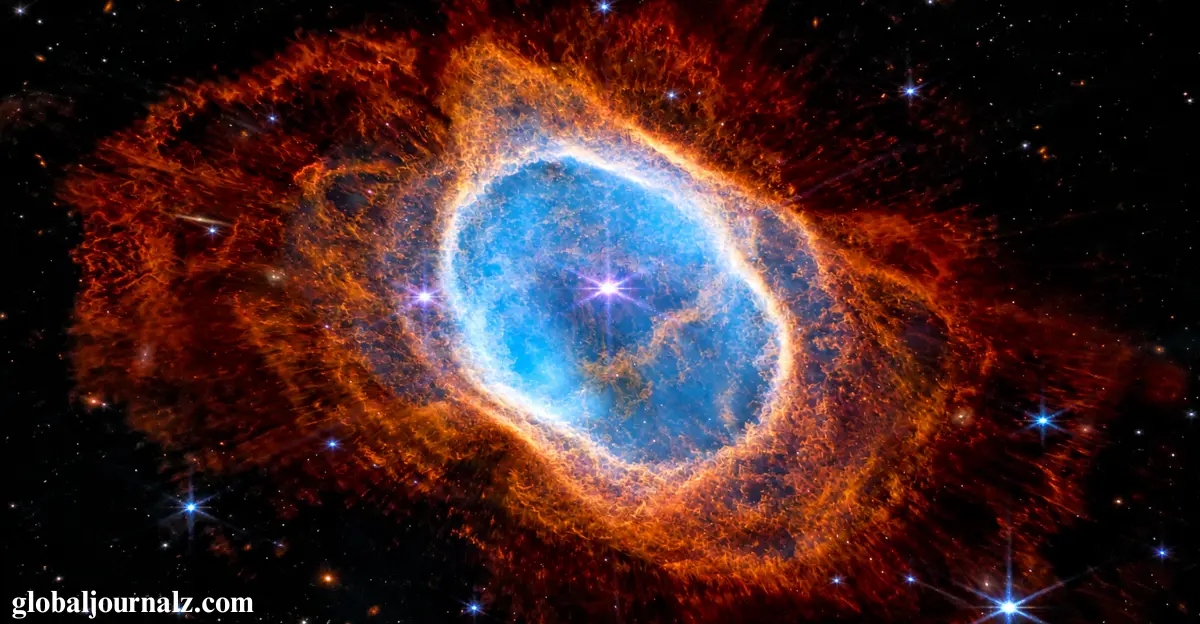
NASA’s latest space exploration missions have delivered groundbreaking discoveries that profoundly advance our understanding of the universe. By utilizing advanced orbital telescopes and robotic rovers, scientists are capturing critical data from the local solar system to deep space. These findings explain Earth’s climate and distant worlds. These discoveries advance astrophysics and improve safety for future space travel.
Table of Contents
1. Earth’s Energy Imbalance and Accelerated Global Warming
NASA uses Cloud and Earth’s Radiant Energy System (CERES) and satellite instruments to monitor Earth’s energy imbalance. Recent data show that the planet’s surplus energy reached about 1.25 watts per square meter over the past decade, up from about 0.5 watts in the early 2000s. Changes in Earth’s reflectivity albedo contribute to this rapid imbalance. Melting ice and fewer clouds allow more sunlight to warm Earth.
Scientists also study how industrial sulfur pollution affects aerosol particles that reflect sunlight into space. Lower sulfur emissions mean less sunlight is reflected and more energy is absorbed across Earth’s climate system. This growing warming debt helps explain rising surface temperatures and the acceleration of global warming.NASA tracks these changes to understand Earth’s energy balance.
2. Deep Space Anomalies: “Goth” Brown Dwarfs and Hypersoft X-Rays

Through advanced technology NASA uses the SPHEREx Spacecraft and Chandra X-ray Observatory to explore deep space anomalies. Scientists study Goth brown dwarfs which are failed stars with unusual cloudy atmospheres and distinct chemical composition. These isolated objects drift through interstellar space and help researchers understand stellar evolution and compare them with gas giants in our solar system.
Meanwhile Chandra observations have identified 84 X-ray sources across six neighboring galaxies. Some may involve white dwarfs gathering matter before Type Ia supernovae occur. This rapid matter accretion can trigger powerful stellar explosions and help scientists identify missing supernova progenitors. These findings expand our understanding of high-energy astrophysics and unexplained cosmic events.
3. The Launch and Vision of the Nancy Grace Roman Space Telescope
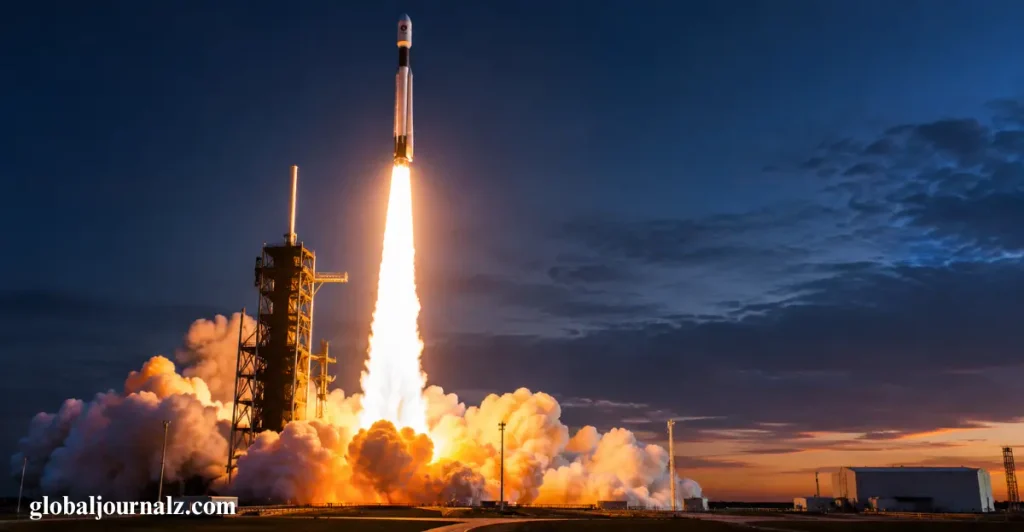
In a major step forward NASA’s Nancy Grace Roman Space Telescope aims to transform infrared astronomy and explore the universe. This $4 billion flagship observatory will study distant galaxies from a stable orbit nearly a million miles away. Its wide-angle infrared field of view could cover an area 100 to 200 times larger than Hubble’s while maintaining sharp images. This technology will improve large-scale cosmic mapping.
The telescope will investigate dark matter and dark energy to explain the universe’s accelerating expansion. Its planned surveys could also discover thousands of distant worlds and expand the known exoplanet catalog. These advanced space exploration capabilities will help scientists map galaxies and understand cosmic evolution. The mission may also reveal how galaxies change over time.
4. Astrobiology and Human Safety Safeguards for Mars Voyages

Preparing for future exploration requires NASA scientists to study astrobiology and space biology experiments to understand human survival on Mars. Research published in Science Advances examines how microgravity affects the human genome and whether short exposures cause DNA damage or changes in cellular dynamics. These findings help researchers understand genetic changes and protect astronaut health during long space missions.
Beyond genetic research scientists must assess Martian dust because airborne particles may pose health risks inside space habitats. Reliable toxicity data can guide life-support systems and improve safety guidelines for future crews. Engineers are developing radiation shielding and water recycling alongside oxygen supplies and crew health monitoring. These safeguards will protect astronauts during future Moon and Mars missions and deep-space travel.
5. James Webb’s Discovery of Organized Weather Systems on Distant Worlds
The James Webb Space Telescope (JWST) has helped scientists study unusual weather on SIMP 0136 which lies about 20 light-years away from Earth. This distant brown dwarf shows changing clouds and sharp temperature differences across its atmosphere. By analyzing infrared observations researchers can identify organized weather patterns and examine how heat moves through these remote celestial environments.
Scientists have identified three atmospheric states that reveal recurring changes in cloud cover and temperature. Detailed JWST data help researchers map vertical cloud layers and understand atmospheric circulation on distant worlds. This research advances exoplanet characterization and improves models of planetary climate. Studying these weather systems reveals how atmospheres shape distant worlds.
6. Perseverance Rover Breaks Records and Uncovers Ancient Crust on Mars

NASA’s Perseverance Mars Rover has achieved a major milestone in Mars exploration by setting an impressive off-world driving record. The rover has traveled across the Red Planet while exploring Jezero Crater and its rugged rim. It studies ancient crust and analyzes rocks estimated to be around 4 billion years old. These findings help scientists reconstruct planetary history and understand the early Martian environment.
During its mission the rover collected 29 diverse samples of rock and soil to investigate ancient river systems and possible hydrothermal activity. These materials may preserve clues about ancient habitable environments and potential microscopic life. Advanced autonomous navigation allows Perseverance to travel across difficult terrain while gathering valuable geological evidence. Its findings reveal Mars’ water history and potential ancient life.
Conculsion
NASA‘s modern space missions are yielding transformative observations that bridge the gap between theoretical physics and tangible cosmic discovery. Next-generation telescopes and orbital observatories are rapidly expanding our stellar catalogs tracking dark matter and decoding remote planetary weather patterns. Closer to home critical research into planetary energy balances and space biology ensures human safety both on Earth and during long-duration astronaut missions. Furthermore the record-breaking geological surveys on Mars continue to unlock the planet’s water history and the potential for past microscopic life.
1: How does NASA monitor Earth’s energy imbalance and what is causing it to increase?
NASA tracks this shift using specialized satellite instruments like the CERES system. Data show that Earth traps twice as much heat now due to melting polar ice sheets. This warming is accelerated by reductions in industrial pollution which removed particles that used to reflect sunlight into space.
2: What makes the Nancy Grace Roman Space Telescope different from the Hubble Space Telescope?
The Nancy Grace Roman Space Telescope is a flagship observatory designed to transform infrared astronomy. Its wide-angle view covers an area up to two hundred times larger than Hubble while maintaining sharp clarity. This technology allows scientists to perform massive surveys to track dark matter and discover thousands of new planets.
3: What has NASA’s Perseverance rover discovered about the ancient history of Mars?
The Perseverance rover broke driving records while exploring Jezero Crater to analyze rocks estimated to be four billion years old. By collecting twenty-nine diverse soil and rock samples the rover provided vital evidence about past water activity. These materials help scientists understand if Mars ever supported microscopic life.