 By Muhammad Bilal

Artificial intelligence is advancing rapidly and changing how people work, learn and solve problems. New developments in generative AI, AI agents, healthcare and robotics are creating new opportunities across industries. At the same time AI safety and cybersecurity are becoming increasingly important. Understanding these changes can help businesses and individuals prepare for the future. Explore the biggest AI developments happening right now and discover how they are shaping everyday life.
Table of Contents
1. Generative AI Is Becoming More Advanced

Generative AI is changing how people create content, images and computer code. Businesses use these tools to improve productivity and save time. Students and professionals also use AI for research and learning. These tools are becoming useful across many industries. They are also helping people explore ideas and complete creative projects more efficiently.
Modern AI models can work with text, images, audio and video. They help users complete different tasks through a single platform. However AI can still produce inaccurate information. Human review remains important for reliable results. Checking AI-generated content helps improve its accuracy and quality.
2. AI Agents Are Automating Complex Tasks

AI agents can follow instructions, plan steps and perform tasks with limited supervision. Businesses use them to organise information and manage workflows. They can also support customer service and daily operations. This helps reduce repetitive work and improve efficiency. As these tools develop they may handle more complex business processes.
AI agents allow users to complete tasks with fewer manual steps. They can collect information, summarise reports and assist with scheduling. But complex tasks still require monitoring. Human oversight helps prevent mistakes and protect sensitive data. Clear instructions also help AI agents deliver more useful results.
3. AI Is Transforming Healthcare

Artificial intelligence helps healthcare professionals analyse medical information and images. It can identify patterns and support medical research. AI tools may also help doctors detect potential health problems. Medical experts must review the results before making decisions. These developments can support healthcare services and improve efficiency.
AI is also supporting personalised healthcare and patient record management. These tools can help organise information and assist with treatment planning. Still patient privacy and data accuracy remain important. Qualified healthcare professionals must remain responsible for medical decisions. Careful testing is necessary before using AI in clinical settings.
4. AI Is Improving Robotics and Automation
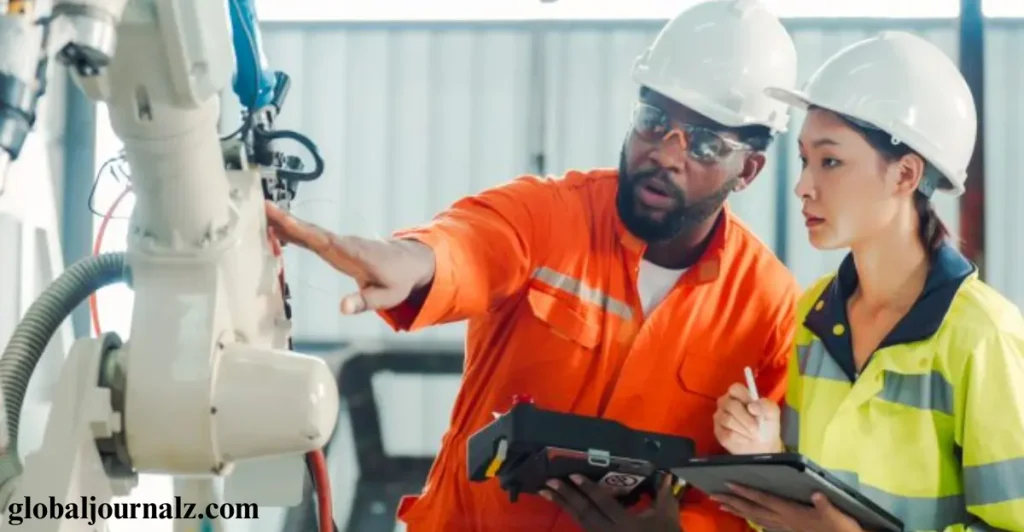
AI-powered robots are becoming more capable of performing complex tasks. They are used in manufacturing, warehouses and agriculture. These machines can inspect equipment and handle repetitive activities. Their use can improve efficiency in many workplaces. Businesses can also use automation to reduce delays and maintain consistent operations.
Advances in computer vision help robots recognise objects and respond to their surroundings. AI-powered machines can assist with deliveries, cleaning and other tasks. Nevertheless many activities still require human supervision. Safety and proper worker training remain essential. Continued development may allow robots to perform more tasks in changing environments.
5. AI Safety, Cybersecurity and Regulation Are Growing Priorities

As AI adoption increases, data protection and cybersecurity are becoming more important. AI tools can identify unusual activity and help detect threats. However, cybercriminals may also use AI to create convincing scams. Strong security measures are essential for reducing these risks. Businesses must also train employees to recognise suspicious activity.
Governments and technology companies are focusing more on AI safety. Key concerns include privacy, bias and accountability. Clear policies can help businesses use AI responsibly. Balancing innovation with safety will remain important as the technology develops. Regular evaluations can also help organisations identify risks and improve trust in AI systems.
conclusion
Artificial intelligence is transforming industries through generative AI, smart automation and advanced robotics. These developments are helping businesses improve productivity and solve problems more efficiently. AI is also supporting healthcare research and creating new opportunities across different fields. At the same time, data privacy, cybersecurity and responsible use remain important concerns. Learning about these advancements can help individuals and businesses prepare for future changes. As AI continues to evolve, balancing innovation with human expertise will be essential.
What Is Agentic AI and How Does It Differ from Generative AI and OpenAI’s GPT-6.1 Soul?
Agentic AI performs tasks independently while generative AI creates content. GPT-6.1 Soul’s specific features require verified information.
Are the $1.8 Billion Biological Dataset Project and OpenAI’s Dots and Space?
The $1.8 billion biological dataset project aims to support scientific research using large-scale biological data. OpenAI’s Dots and Space refer to newer AI-related concepts, but their specific features need verified sources.
Which Challenges Affect AI Development the Most?
Major challenges include data privacy, inaccurate results, cybersecurity risks and high development costs. Responsible testing and human supervision can help reduce these risks.
How could AI biological datasets improve healthcare?
Large biological datasets can help AI models predict cellular behaviour, support disease research and identify potential treatments.
Can AI replace scientists in biological research?
AI can assist with data analysis and predictions but scientists are still needed to design experiments, validate results and assess safety.