 By admin
The United States is renewing diplomatic contact with Myanmar’s military-backed leadership under President Donald Trump, marking a significant shift in Washington’s approach since the 2021 military coup. Recent discussions have focused on issues affecting American interests, including the release of a detained U.S. businessman and efforts to shut down online scam operations targeting Americans. Officials have also explored the possibility of broader cooperation involving Myanmar’s rare-earth mineral resources. These developments have raised questions about the future of U.S. foreign policy, the impact on Myanmar’s pro-democracy movement, and whether renewed engagement could improve relations without overlooking ongoing human rights concerns.
Table of Contents
Donald Trump and Myanmar Relations

The Donald Trump administration has opened direct diplomatic contact with Myanmar’s military regime, marking a significant change from Washington’s long-standing isolation policy following the 2021 coup. Talks with military leader Min Aung Hlaing have raised questions about the future of US sanctions, diplomatic relations and international engagement with the military junta. Reuters reported on the renewed contact.
Despite the new engagement, Myanmar’s military leadership remains on the US sanctions list over human rights abuses. The diplomatic shift has prompted debate about whether official contact with senior military figures could advance practical US interests while changing Washington’s approach to a regime that has faced years of international criticism. The developments place Myanmar at the centre of wider discussions about international relations and targeted sanctions.
Michael Vance Meeting and US Diplomatic Contact
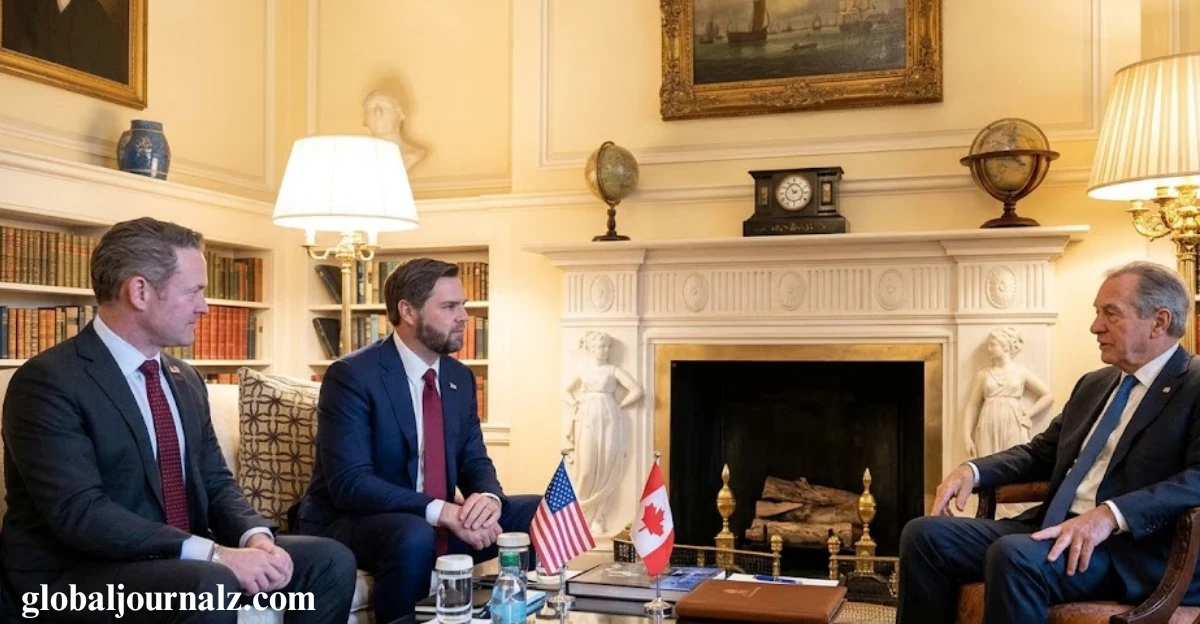
Michael Vance, the US Assistant Secretary of State for Intelligence and Research, reportedly met Myanmar leader Min Aung Hlaing in Nay Pyi Taw on 15 and 16 September. The meetings focused partly on securing the release of Adam Castillo, a US citizen detained in June. The discussions represented a rare high-level diplomatic contact between Washington and Myanmar’s military-backed authorities. Reuters reporting.
The diplomatic efforts followed earlier contact in Tokyo in June, involving US officials and representatives connected to Myanmar. Discussions reportedly involved Castillo’s release, the local American Chamber of Commerce, and broader mutual interests. Washington has also maintained communication with opposition groups and representatives opposing military rule, reflecting an effort to engage with multiple sides while pursuing diplomatic and security objectives. Channel NewsAsia.
Myanmar Economy and Donald Trump’s Tariff War
Donald Trump’s tariff war brought renewed attention to Myanmar’s economy when his administration announced 40% tariffs on Myanmar’s exports to the United States in July last year. The announcement came as Myanmar faced severe economic disruption following years of conflict and military rule. The proposed levies placed additional pressure on trade relations and highlighted the importance of access to the US market for businesses seeking international opportunities. Reuters reported on the tariff negotiations.
In response, Min Aung Hlaing sent a personal letter praising Trump’s leadership and expressing interest in maintaining vital trade with the United States. He described the country as the extraordinary Economy of the United States and the Number One Market in the World. The exchange illustrated how tariffs, economic pressure and national prosperity became part of the diplomatic conversation, alongside broader questions about international business and economic cooperation.
Min Aung Hlaing’s Response to Donald Trump
Min Aung Hlaing responded to Donald Trump’s tariff letter with sincere appreciation, describing it as an encouraging invitation to continue participating in the American economy. His message praised Trump’s strong leadership, calling attention to the US president’s role in pursuing national prosperity and presenting him as a true patriot. The response sought to emphasise the importance of maintaining trade relations between the two countries. Myanmar’s official statement.
The wording also reflected a diplomatic strategy built around praise, including Trump’s own hyperbolic phrasing and distinctive eccentric capitalisation. For Myanmar’s military leadership, positive engagement with the US president could offer an opportunity to pursue political favour, international recognition and business opportunities. However, the exchange did not itself end the sanctions or resolve the wider concerns surrounding the military coup and the government’s international standing.
Myanmar Civil War and International Isolation
Myanmar’s civil war, raging since the 2021 military coup, has deepened the country’s international isolation. The military takeover removed the elected government and triggered armed resistance, widespread displacement and continuing violence. Allegations of serious abuses have led to international condemnation, while proceedings and accusations involving Myanmar have brought attention to institutions including the International Criminal Court and the International Court of Justice.
The conflict has also shaped Myanmar’s relationships with Russia, China and other foreign governments. Images and reports of destroyed villages, smouldering debris and damaged communities illustrate the human cost of prolonged military rule. Although renewed US contact may create opportunities for dialogue, it also raises questions about whether diplomatic engagement can address the conflict, improve accountability and respond to concerns about a regime accused of grave abuses.
Aung San Suu Kyi and Myanmar’s Political Crisis
Aung San Suu Kyi, Myanmar’s democratically elected leader, was removed from power when the military seized control in 2021. The coup crushed the country’s democratic transition and led to the detention of opposition figures, political repression and continued restrictions on dissent. Her imprisonment and the wider political crisis have remained central to international criticism of Myanmar’s military government and its leadership under Min Aung Hlaing.
Washington’s changing diplomatic approach now presents a challenge for US foreign policy. Direct talks may help address specific issues, including detained Americans and criminal operations, but they also raise concerns about sanctions, human rights and the future of Myanmar’s democracy. The policy shift highlights the tension between practical diplomatic interests and pressure for political accountability, as Myanmar continues to face international criticism and a prolonged conflict.
Conclusion
The renewed diplomatic contact between Donald Trump’s administration and Myanmar’s military-backed government signals a possible change in U.S. policy after years of limited engagement following the 2021 coup. Washington appears focused on practical goals such as combating online fraud, securing the release of detained Americans, and exploring access to critical mineral resources. However, the talks have also raised concerns about human rights, democratic freedoms, and the risk of giving Myanmar’s military leaders greater international legitimacy. The long-term impact will depend on whether these discussions produce meaningful results and how the United States balances its strategic interests with support for Myanmar’s people. For now, the renewed engagement represents an important development in relations between the two countries, but its broader consequences remain uncertain.
FAQs
Why is Donald Trump’s administration renewing diplomatic contact with Myanmar?
The administration is pursuing discussions on issues such as online scam operations that target Americans and the release of a detained U.S. businessman. Broader cooperation involving Myanmar’s rare-earth minerals may also be under consideration.
Who did U.S. officials meet with in Myanmar?
U.S. Assistant Secretary of State for Intelligence and Research Michael Vance reportedly met Myanmar’s military leader, Min Aung Hlaing, in Naypyitaw in September 2026. Further talks reportedly took place in Tokyo the following month.
Why is Myanmar important to the United States?
Myanmar is strategically important because of its location in Southeast Asia, its role in regional security, and its deposits of rare-earth minerals used in advanced technology. U.S. officials are also concerned about scam networks operating in the country and defrauding Americans.
How has the 2021 military coup affected U.S.-Myanmar relations?
The coup removed Myanmar’s elected government and led Washington to impose sanctions on military leaders and military-linked entities. The United States subsequently limited high-level engagement, making the renewed talks a notable change in its diplomatic approach.
Could renewed diplomatic contact change U.S. policy toward Myanmar?
The discussions could lead to greater cooperation on security and economic issues, but a wider policy shift is not guaranteed. Human rights concerns, continuing conflict, and questions about the military government’s legitimacy remain major obstacles
 Muhammad Bilal