 By admin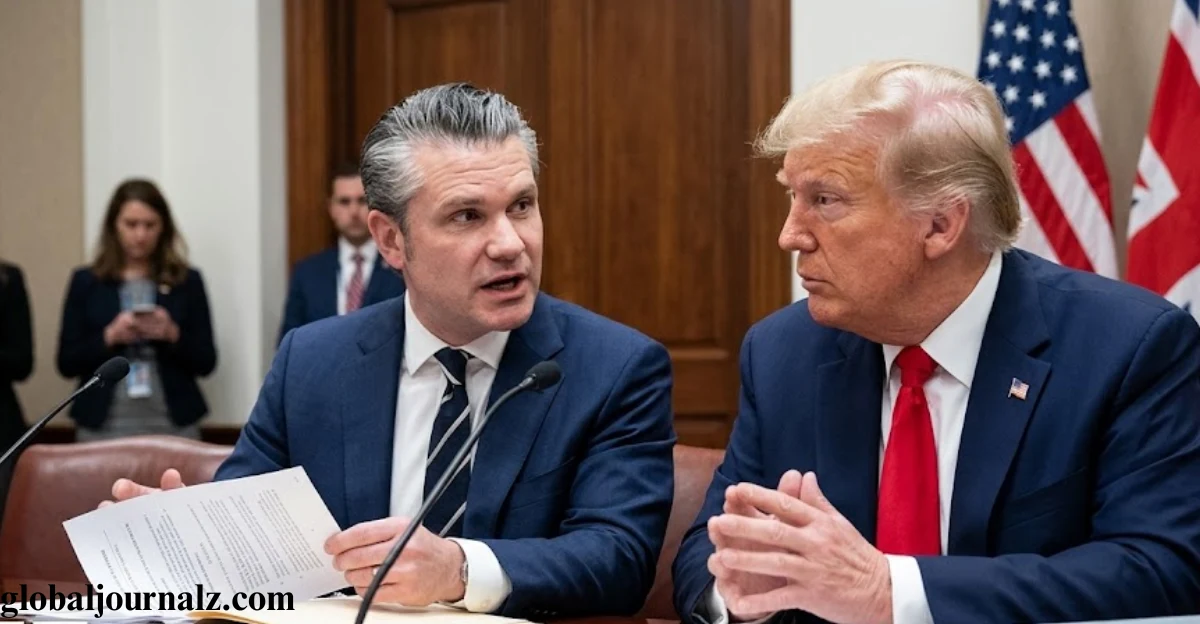
The Pentagon has confirmed that it has stopped using Anthropic’s AI tools, marking a major escalation in the dispute between the U.S. Defense Department and the company behind Claude. The move follows the Pentagon’s decision to designate Anthropic a national security supply-chain risk after disagreements over how its AI could be used for military purposes. Anthropic had previously provided Claude for classified government work and intelligence analysis, making the decision particularly significant for the U.S. military’s growing reliance on artificial intelligence.
Table of Contents
Pentagon Ends Anthropic AI Use
The US Department of Defence has made its position on Anthropic’s AI tools official, with the globaljournalz reporting that the Pentagon ceased the use of Anthropic products on national security grounds.
A department official described the company as a supply chain risk in a statement issued on Monday, while Secretary of Defence Pete Hegseth had previously been involved in discussions beginning in February and continuing into late August. The decision followed a period of delay over the department’s continued use of the technology.
Claude Model and Military Operations

Within the department, Anthropic’s Claude model had been used for research, analysis, and intelligence gathering connected to military operations. Former US defence officials and contractors said the Pentagon had relied on AI during military operations, including work involving Iran, where the system was considered a critical tool for sorting vast quantities of information.
Anthropic and Government AI Deployment
Anthropic has worked with the US government and military since 2024, providing an advanced AI company and its tools to government agencies for classified work. Within the Pentagon, Claude has been used in military settings, while Anthropic has maintained safety guardrails limiting how its AI products can be deployed, including concerns about unfettered access, mass surveillance, and autonomous weapons.
National Security Supply Chain Risk
Hegseth has described Anthropic as a national security supply-chain risk, referring to the law governing how companies and countries considered a threat to the US can be treated. The dispute over Anthropic has been described as unprecedented and unlawful by the company, while the Trump administration has defended its position; Anthropic sued over the designation, turning the issue into a legal fight involving the courts, the government, and questions surrounding national security risk.
Pentagon Contracts with Tech Companies
Beyond Anthropic, the Pentagon has maintained contracts with major tech companies, including Google, xAI, and OpenAI, whose OpenAI tools have been widely adopted in recent months. Across military departments, growing AI use has expanded the role of artificial intelligence within the defence department, reflecting the government’s broader reliance on government technology for military and administrative work.
Pentagon Data Platform and Maven Smart System
According to the Pentagon’s statement on Monday, cited by the BBC, Anthropic and Claude had been widely used across Pentagon-related work, including applications connected to a data platform. Interviews and information from multiple sources have linked the technology to the Maven Smart System, showing how Pentagon AI tools incorporated Anthropic products into systems used to process and analyse information.
Maven and Pentagon Intelligence Platform
Maven, operated by Palantir, is described as the Pentagon’s primary platform for organising intelligence and data, with Claude becoming deeply integrated into the system. Lauren Kahn, a senior research analyst at Georgetown’s Center for Security and Emerging Technology, said removing the technology would not be simple because it was not merely plug and play, while a former US defence official similarly described the process as painful to remove once systems are fully integrated.
Trump and Anthropic Leadership
At the EPA, an Anthropic Co-founder, Dario Amodei, was discussed in news media reports involving the West Wing, the White House, and Trump, amid tensions between the Anthropic boss, defence contractors, and the AI sector. Former US defence officials said artificial intelligence had become increasingly important to the Pentagon, while some officials spoke with anonymity because they were not authorised to speak to the media. Hegseth’s position on Anthropic and the government’s broader relationship with OpenAI formed part of the same debate.
Anthropic Phase-Out and Pentagon Use
Hegseth gave the Pentagon a six-month deadline to phase out Anthropic beginning 27 February, during a period when the US and Israel attacked Iran and Pentagon employees continued using Anthropic’s Claude tools. The Mythos models and Claude were used across the whole period, while the controversy focused on their role in intelligence gathering and analysis through Palantir’s Maven system. Palantir, a defence tech firm associated with billionaire ally President Donald Trump, Peter Thiel, remained central to the Pentagon’s AI infrastructure.
Maven Data and Military Intelligence
For analysts and defence officials, Maven has handled visual data, including satellite imagery and drone footage, while Claude and other large language models have supported work involving military targets, intelligence and analysis. The technology has also been used to turn information into one-page briefs for the chain of command, with a demonstration involving Palantir earlier this year showing how AI could support military intelligence.
Maven and Allied Intelligence Sharing
Maven has supported US allies by connecting intelligence with a wider defence technology and data platform designed for intelligence gathering. Visual data, satellite imagery, drone footage, and large language models can be brought together to help assess military targets, while the Pentagon, Palantir, and Claude remain linked to broader intelligence analysis and allied information sharing.
Anthropic and White House Relations
Tensions between Anthropic and the Pentagon have also affected its relationship with the White House, as the clash has unfolded around Trump, the Anthropic boss Dario Amodei, and the government’s use of AI. Amodei visited the White House twice, including last week, while defence contractors, the government, and the wider artificial intelligence sector continued to navigate the dispute involving OpenAI, the Pentagon, Claude, Palantir, and Maven.
Conclusion
The Pentagon’s decision to end its use of Anthropic’s AI tools highlights the growing tension between military demands and AI companies’ safety restrictions. Anthropic refused to allow unrestricted use of Claude for mass domestic surveillance and fully autonomous weapons, leading to a dispute that ultimately resulted in its blacklisting. The Defense Department has since expanded agreements with other major AI companies as it seeks to reduce reliance on a single provider. The conflict also raises broader questions about how advanced AI should be used in national security and how much control technology companies should retain over military applications. With the legal dispute continuing, the relationship between Anthropic and the U.S. government remains closely watched.
FAQs
Why did the Pentagon stop using Anthropic’s AI tools?
The Pentagon stopped using Anthropic products after designating the company a national security supply-chain risk. The dispute centered largely on Anthropic’s restrictions around mass domestic surveillance and fully autonomous weapons. AOL.com
Why did the Pentagon blacklist Anthropic?
The Pentagon and Anthropic disagreed over restrictions on how Claude could be used for military purposes. Anthropic maintained that it could not permit certain uses, while the Pentagon sought broader access to its AI capabilities. AP News
What is Anthropic’s Claude AI used for?
Claude is Anthropic’s AI model and has been used by government and military personnel for tasks including research, analysis, intelligence work, and processing large amounts of information. AOL.com
What AI companies is the Pentagon using instead?
The Defense Department has reached agreements with companies including OpenAI, Google, Microsoft, Amazon Web Services, NVIDIA, SpaceX, and Reflection AI as it expands its military AI capabilities. Reuters
Is Anthropic still fighting the Pentagon’s decision?
Yes. Anthropic has challenged the designation in court. In September 2026, a federal appeals court declined to block the Pentagon’s blacklisting order, while the company said it was considering further legal options.
 Muhammad Bilal