 By Muhammad Bilal
 Stonehenge has long been linked to ancient rituals and astronomy, but a striking theory from the 1960s suggested it may have worked like a prehistoric computer. The idea focused on how the monument’s stones could track the movements of the Sun and Moon and help people understand celestial cycles. It offered a new way to think about one of the world’s most mysterious ancient sites. Discover how this unusual theory changed the way Stonehenge was understood.
Table of Contents
An astronomical observatory
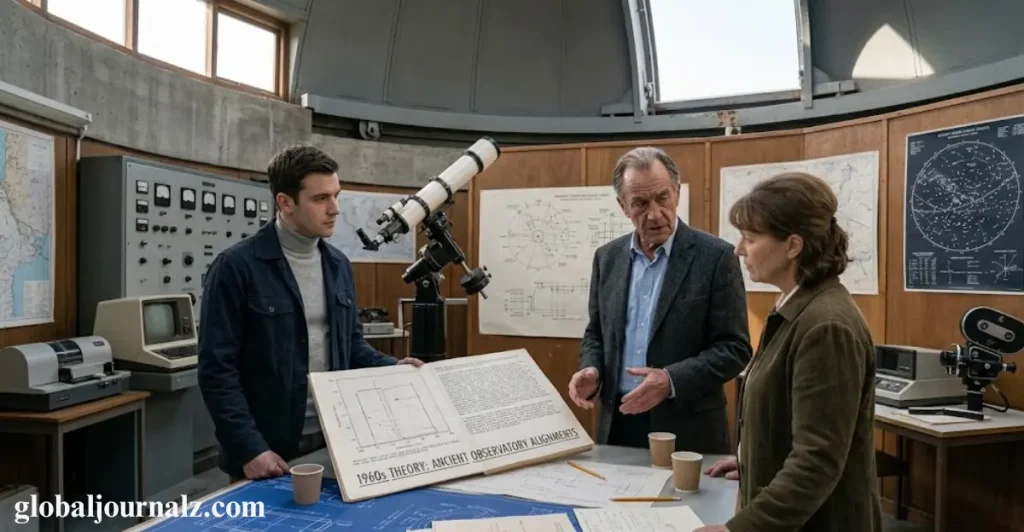
In the 1960s, Gerald Hawkins suggested that Stonehenge may have been more than a ceremonial site and could have worked as an astronomical observatory. He studied how the stones, arches and horizon were positioned, finding possible connections with the Sun and important seasonal points in the sky.
Hawkins tested these ideas using an electronic computer at the Harvard-Smithsonian Observatory to calculate the positions of the Sun and Moon during the period when Stonehenge was built. Several alignments appeared to correspond with celestial rising and setting points, while the possible lunar movements offered an especially intriguing part of his research.
This interpretation gave Stonehenge a possible role in ancient astronomy, suggesting that its builders closely watched the sky, Sun and Moon. Hawkins later developed these ideas in Stonehenge Decoded, showing how early computer calculations could provide another way to examine the monument’s purpose.
Critics of the theory

Hawkins was convinced that Stonehenge had an important connection with the Sun and Moon and could have served as both a temple and an observatory. His theory suggested that the site’s stones and 56 holes were arranged to track movements in the sky and possibly predict events such as eclipses.
The main criticism was that some of Hawkins’s calculations relied on details that may not have had the meaning he gave them. Archaeologist Richard Atkinson accepted that Stonehenge had some astronomical significance, but he urged researchers to be careful when interpreting its alignments.
Research since the 1960s has changed the way Stonehenge is understood. Archaeologist Michael Parker Pearson says the monument was built in several stages over more than 1,500 years, making the idea of a single prehistoric computer difficult to support. Its solar and lunar alignments are also not precise enough to work as a timekeeping device.
Stonehenge and the Stars
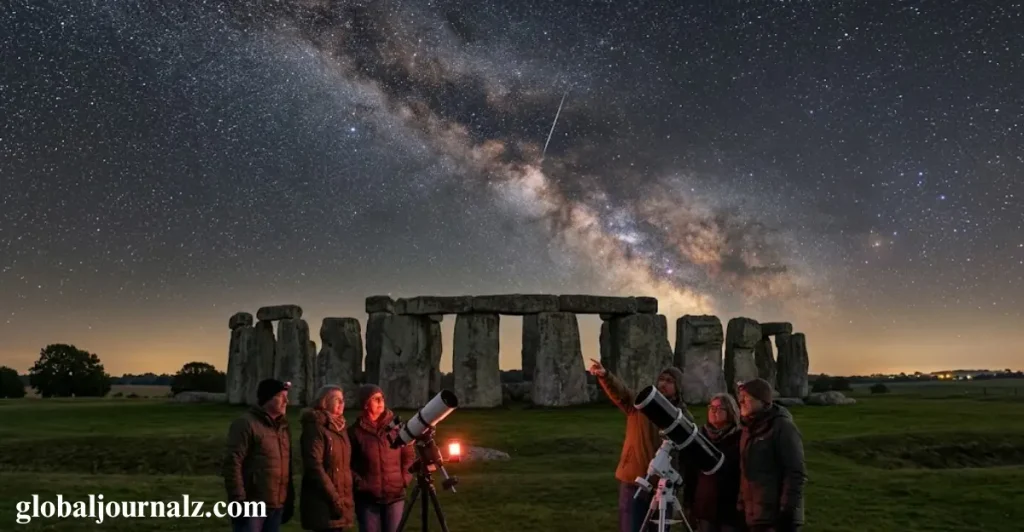
Precision surveys of Stonehenge recorded the positions of its stones and filled-in holes, giving researchers detailed information to enter into early computers. When this data was combined with modern astronomy programs, it revealed possible patterns linking the monument with the Sun, Moon and changing positions across the sky.
These findings led to the idea that the builders around 2600 BC may have possessed advanced knowledge of astronomy. Stonehenge on Salisbury Plain could have functioned as a Neolithic observatory, helping people identify the midsummer sunrise, organise calendars and possibly anticipate an eclipse.
The theory also presented Stonehenge as more than a collection of ancient stones, with its layout potentially working like an astronomical computer. This interpretation changed how researchers approached the monument, connecting its carefully arranged features with the observation of celestial cycles and the practical needs of prehistoric communities.
Sun and Moon Alignments

Stonehenge contains carefully positioned stones that appear to create specific alignments with the Sun at different times of the year. Some sightlines correspond with sunrise and sunset, while the most recognised example is the midsummer sunrise, when the Sun rises in alignment with the monument’s structure.
The connection with the Moon is more complex because lunar movements follow changing cycles across the sky. Researchers have therefore examined whether particular stones could have marked important lunar positions, giving the monument a possible role in observing recurring celestial cycles.
These possible Sun and Moon alignments suggest that Stonehenge may have been designed with careful attention to movements above the horizon. Rather than viewing the stones as isolated structures, studying their positions as a connected system reveals how solar and lunar events may have influenced the monument’s original design.
Conclusion
Gerald Hawkins’s theory of Stonehenge as a prehistoric computer was a remarkable idea that changed the way researchers looked at the ancient monument. His work drew attention to the possible connections between its stones, the Sun and Moon, and important movements in the sky. Although later research has challenged several parts of his explanation, there is still evidence that astronomy may have played a role in Stonehenge’s design and use. The monument was built and changed over many centuries, suggesting that its purpose was more complex than that of a simple astronomical machine. Even if Hawkins’s theory was not completely correct, it opened new questions about how people in ancient Britain understood the sky and used it as part of their beliefs and traditions.
1. What was Gerald Hawkins’s theory about Stonehenge?
Gerald Hawkins suggested that Stonehenge may have been used to observe the Sun and Moon. He believed its stones and holes could help track important movements in the sky. This led to the idea that the monument worked like a prehistoric computer.
2. How did Hawkins study Stonehenge?
Hawkins used an electronic computer at the Harvard-Smithsonian Observatory to study the monument’s alignments. He calculated where the Sun and Moon would have appeared when Stonehenge was built. Some of the results seemed to match the positions of these celestial bodies.
3. Why was Hawkins’s theory criticized?
Some researchers questioned whether all of the stones and holes had been designed for astronomical purposes. Archaeologists also found that certain features Hawkins used in his calculations may have had other explanations. This made the idea of Stonehenge as a precise astronomical machine difficult to support.
4. Was Stonehenge really used as a prehistoric computer?
There is no strong evidence that Stonehenge was a computer in the modern sense. Later research suggests that its design and purpose developed over many centuries. However, the monument may still have been connected to observations of the Sun and Moon.
5. Why is Stonehenge linked to astronomy?
Several parts of Stonehenge appear to line up with important positions of the Sun, especially during key times of the year. Some possible connections with the Moon have also attracted attention from researchers. These features suggest that observing the sky may have been one part of the monument’s wider purpose.