 By Muhammad Bilal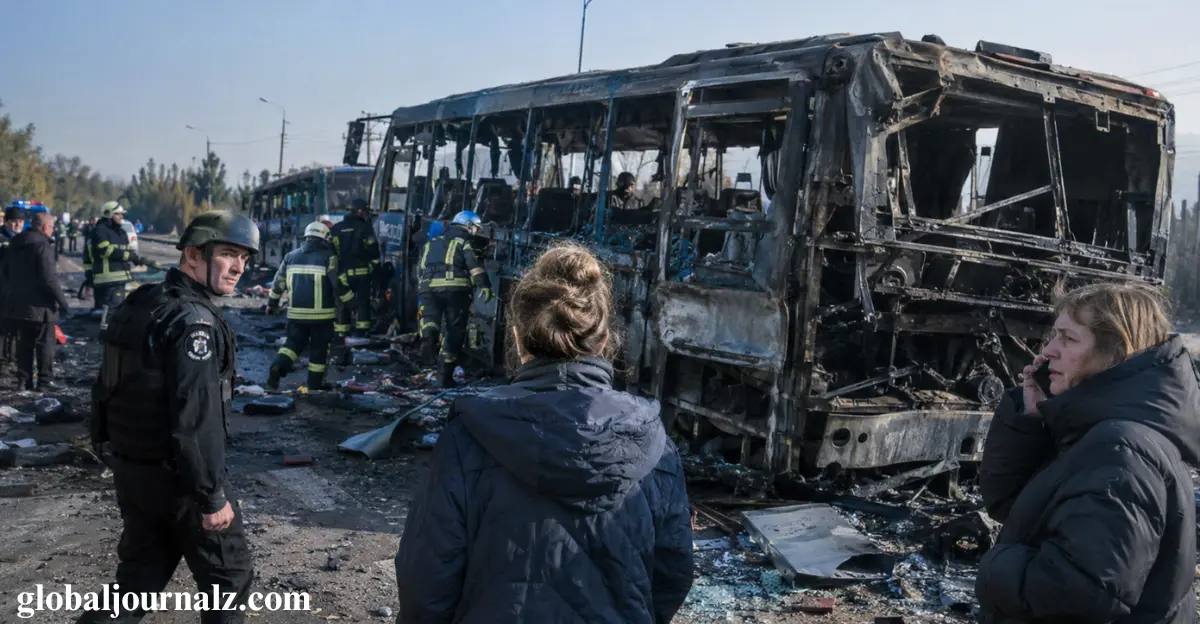
At least 30 people were killed after a Russian strike hit buses in Ukraine, according to Ukrainian officials, marking one of the deadliest attacks amid a surge in violence across the country. The incident has intensified concerns over civilian safety as Russian attacks continue to target areas far from the front line. The deaths have also drawn fresh attention to the growing human cost of the war and its impact on everyday travel. Stay with the latest developments as more details emerge about the strike and those affected.
Key Facts
- At least 30 people were killed in a Russian strike involving buses in Ukraine, according to officials.
- The attack targeted civilians, highlighting the continuing risks faced by people away from active battle zones.
- Russian attacks have surged, contributing to a worsening security situation across Ukraine.
- Ukrainian officials reported the deaths as the country continues to face intense Russian military strikes.
- The incident underscores the human cost of the war, with civilians continuing to bear the consequences of the escalating violence.
Table of Contents
Russian Strike on Kramatorsk
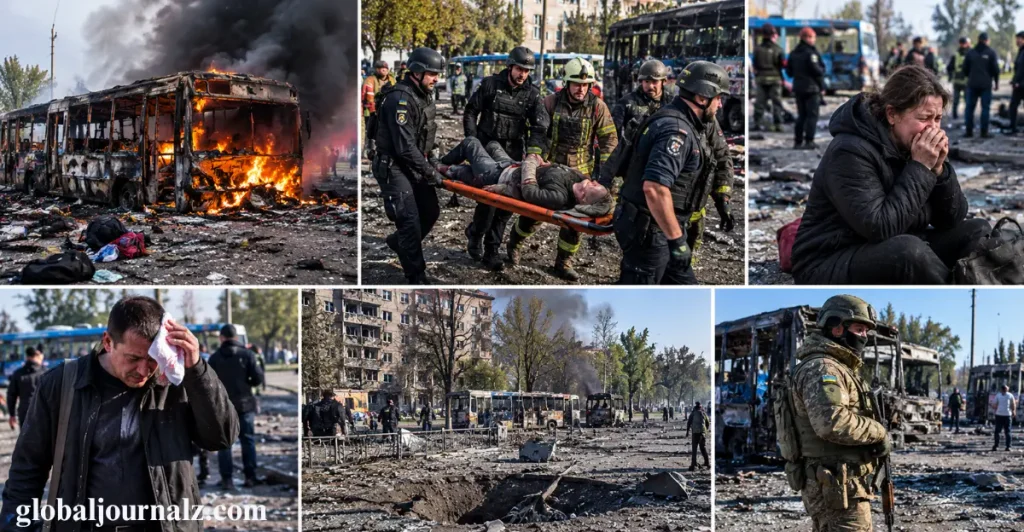
At least 30 people were killed after a Russian strike hit two civilian buses in Kramatorsk. Rescue officials said the attack involved a Russian glide bomb and caused severe civilian casualties. The buses were carrying passengers in the eastern front-line city when the strike caused widespread destruction.
Images released by local prosecutors showed the burning metal shell of a bus with debris and victims across the road. The attack has drawn strong condemnation from Ukrainian officials who described it as a strike against the civilian population. Another three people were killed in nearby Bilenke.
Kramatorsk Bus Attack
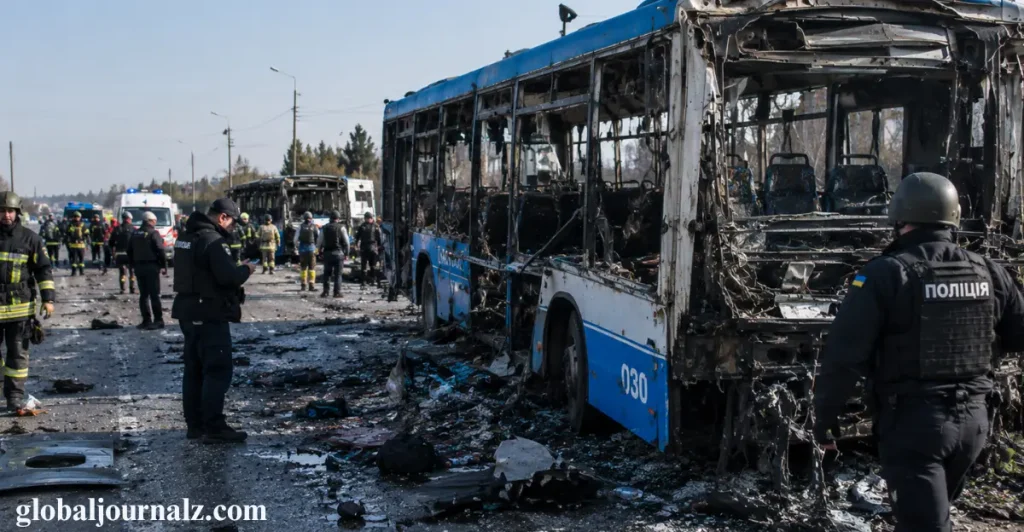
The deadly Kramatorsk bus attack left at least 30 people dead and another 18 wounded according to Donetsk regional head Vadym Filashkin. Officials said the buses were carrying passengers when they were hit. Emergency workers later dealt with the wreckage and victims at the scene.
Following the strike Kramatorsk City Council called it a horrific crime committed against civilians. Local authorities said there were no military targets at the location. Public transport was ordered to stop in Kramatorsk and neighbouring Slovyansk as officials urged people to move away from the dangerous front line.
Russia’s Escalating Attacks
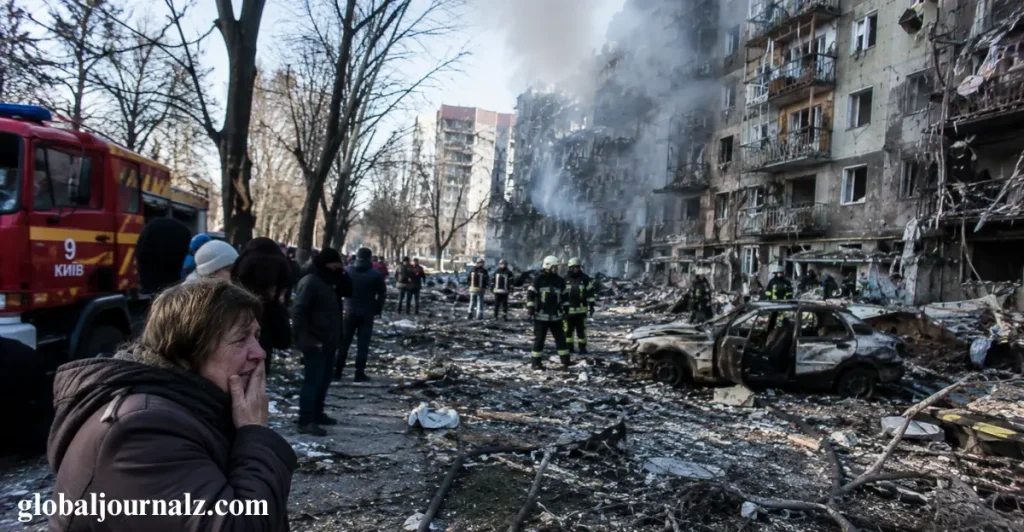
The attack in Kramatorsk comes during a sharp surge in Russian attacks across Ukraine. According to the UN more civilians had been killed by August this year than during the whole of 2025. The increase has included strikes on residential areas and other locations where civilians are present.
A separate attack on a five-storey block of flats in Pryluky killed 22 people including five children. Three of the children were only one year old. The deaths have added to growing concern over rising civilian casualties as Russian attacks continue across multiple parts of Ukraine.
Ukraine’s Donbas War
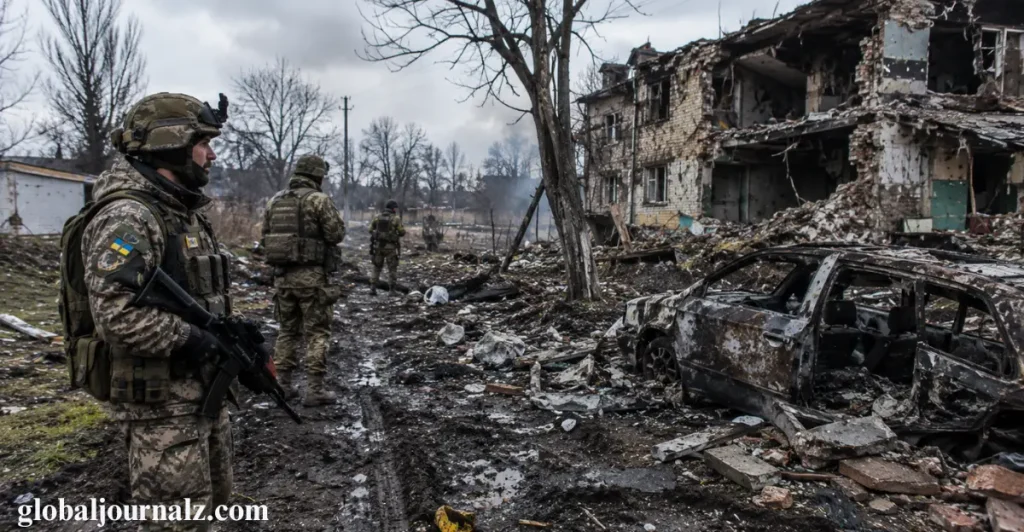
Kramatorsk and neighbouring Slovyansk form part of a strategic fortress belt that Russia is attempting to seize. The area lies within Donbas which includes Donetsk and Luhansk. Russian forces control most of Luhansk and are seeking to capture the remaining Ukrainian-held territory in Donetsk.
For much of the war Kramatorsk has served as a logistics and supply hub for Ukrainian forces. Russian attacks have become more frequent as its military moves closer to the city. Glide bombs have repeatedly targeted Kramatorsk and Slovyansk with several attacks reported in a single day.
Zelensky Demands Action
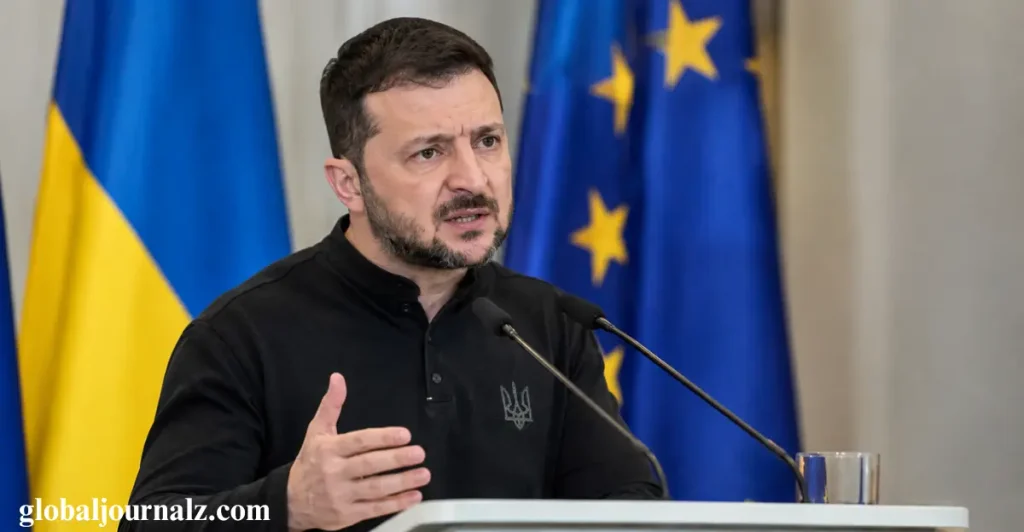
Ukrainian President Volodymyr Zelensky said the Kramatorsk strike would not go without a response. He called on Kyiv’s allies to take concrete action and provide new defence packages to strengthen Ukraine’s protection. Zelensky also accused Russia of trying to destroy civilian life across Donbas.
During a visit to Kyiv UK Foreign Secretary Ed Miliband announced further sanctions on Russia. The measures target Putin’s war machine, the shadow fleet, oil companies and crypto financing. Miliband said Britain would continue supporting Ukraine for as long as necessary during the conflict.
Kyiv Under Russian Attacks
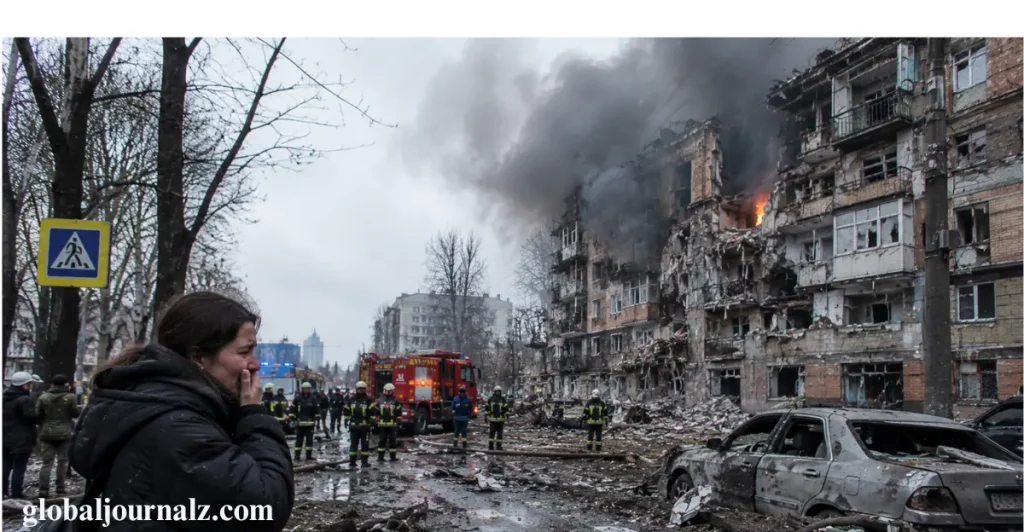
Beyond the eastern front line Kyiv has faced continuing air raids from Russian forces. Kyiv mayor Vitali Klitschko said Thursday’s attacks killed three people and injured 14 others. Two of those injured were reported to be in a critical condition following the latest strikes on the capital.
The attacks are also disrupting schools, businesses and public transport across Kyiv. Russian strikes on Ukrainian infrastructure have damaged the energy grid and caused power outages. Water supplies have also been affected with local authorities warning that pressure was falling across parts of the city because of power cuts.
Ukraine’s Air Defence Crisis
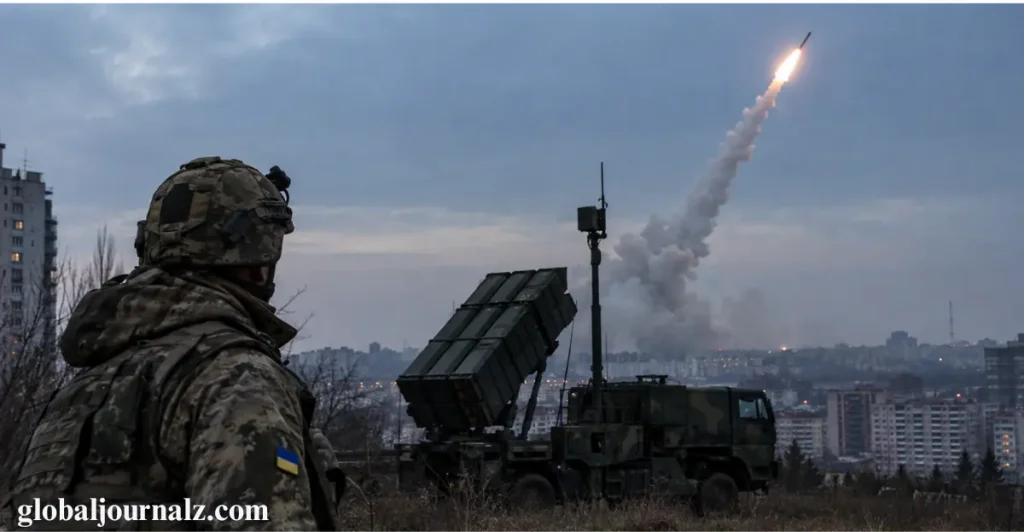
Ukraine faces a major air defence challenge because interceptor missiles are in short supply around the world. This leaves the country with limited ability to stop incoming Russian ballistic weapons. Ukrainian authorities have also warned of intelligence suggesting preparations for a possible major Russian onslaught.
Meanwhile Russian forces have continued targeting Ukrainian data centres and logistics warehouses during their long-range strikes. Families in Kyiv have responded to warnings by moving toward metro stations and shelters. With defensive systems under pressure civilians continue to rely heavily on early warnings for protection from incoming attacks.
Conclusion
The deadly strike on buses in Kramatorsk has highlighted the devastating impact of Russia’s escalating attacks on Ukrainian civilians. With at least 30 people killed and many others wounded, the incident has deepened concerns over safety in front-line communities. The wider surge in Russian strikes is also placing greater pressure on Ukraine’s air defences and civilian infrastructure. Kramatorsk remains a strategically important area as Russian forces continue their campaign in the Donbas. Ukrainian leaders are calling for stronger international support, additional defence systems and tougher pressure on Moscow. As attacks continue across the country, civilians remain at the centre of the war’s mounting human cost. Follow the latest developments as Ukraine responds and international efforts to support the country continue.
1. What happened in Kramatorsk?
A Russian strike hit two civilian buses in Kramatorsk, killing at least 30 people and injuring others. Officials said the attack involved a Russian glide bomb and caused severe destruction. The incident has renewed concerns about civilian safety near the front line.
2. How many people were killed in the bus attack?
Ukrainian officials reported that at least 30 people died in the Kramatorsk strike. Another 18 people were reportedly wounded in the attack. Three additional deaths were also reported in nearby Bilenke.
3. Why is Kramatorsk important in the war?
Kramatorsk is a strategically important city in Ukraine’s Donbas region. It has served as a logistics and supply hub for Ukrainian forces during the conflict. Its location makes it important as Russian forces seek to capture more territory.
4. What has Volodymyr Zelensky said about the attack?
Ukrainian President Volodymyr Zelensky condemned the strike and called for stronger international action. He urged Ukraine’s allies to provide additional defence support and weapons. He also accused Russia of continuing attacks against civilian life in Donbas.
5. How are Russian attacks affecting civilians in Ukraine?
Russian strikes have caused rising civilian casualties while damaging homes, infrastructure and public services. Attacks on energy facilities have also contributed to power and water disruptions. Ukraine continues to seek stronger air-defence systems to protect civilians from further attacks.
 admin
admin