 By Muhammad Bilal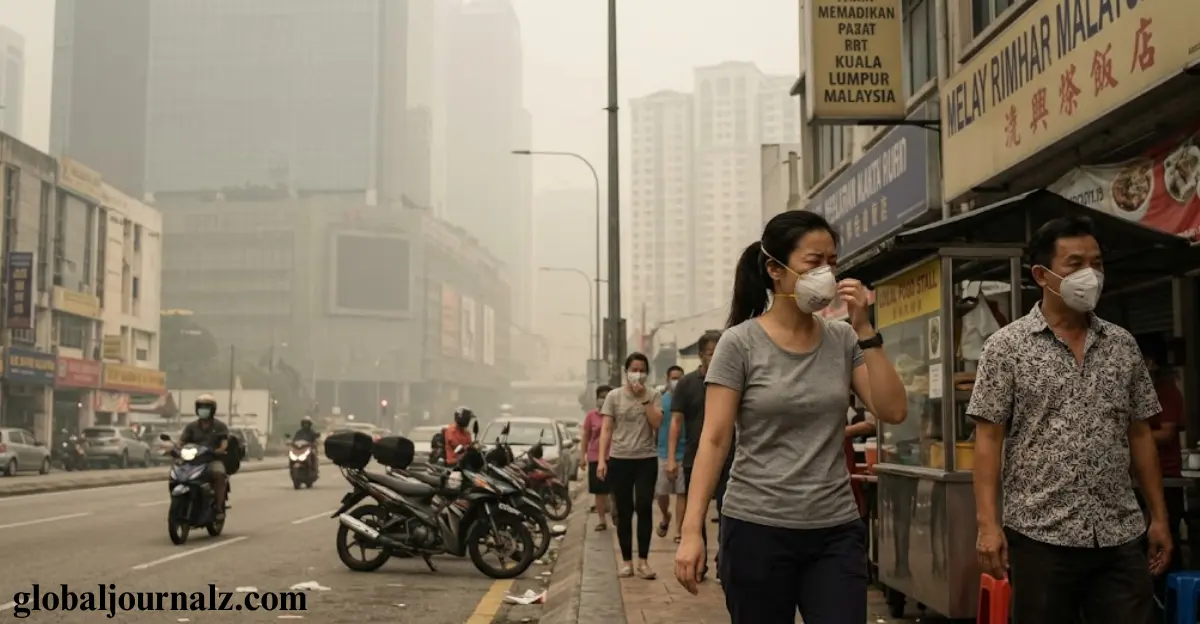
Indonesia is facing a severe wildfire crisis, with toxic haze spreading from burning areas into Malaysia and the Philippines. Smoke from Sumatra and Kalimantan is affecting air quality across Southeast Asia, reducing visibility and disrupting daily life. The worsening pollution is also raising serious health concerns, with respiratory infections increasing in affected communities. As dry conditions and El Niño add to the fire risk authorities are struggling to contain the spreading blazes. Here’s a closer look at the wildfire crisis, cross-border haze health impact and the latest developments across the region. Stay updated with the latest Indonesia wildfire news, haze conditions, air-quality risks and their impact across Malaysia Singapore and the Philippines.
Table of Contents
Toxic Haze Spreads Across South East Asia as Wildfires Burn
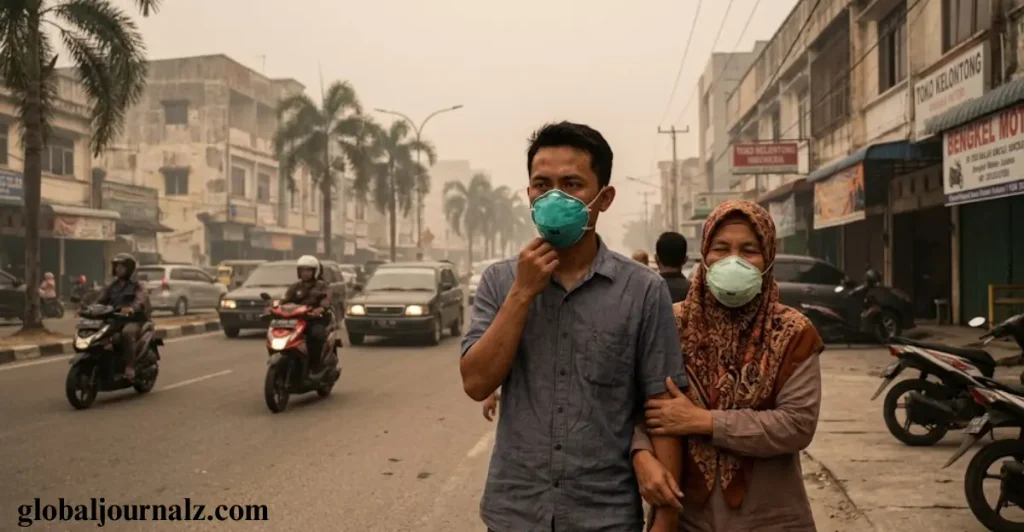
The toxic haze from Indonesia’s wildfires is spreading across South East Asia, reaching Malaysia, Singapore and the Philippines. Weeks of fires have created dangerous conditions in several areas, while schools in Banjarbaru have been closed after thick smoke made visibility extremely poor across the city.
The pollution is also creating serious health concerns, with more than 50,000 respiratory infections linked to land and forest fires between July and August. Residents in Palawan have reported headaches, sore throats and eye irritation, while Singapore continues to monitor rising air pollution and prepare measures to protect people.
Much of the fire activity is concentrated across Borneo, particularly in Indonesia’s Kalimantan region. Smoke has pushed air quality into the unhealthy range in parts of Sarawak, while dense haze continues to reduce visibility and affect communities across several countries in the region.
Thirty Years Later We Still Have Really Bad Air Quality
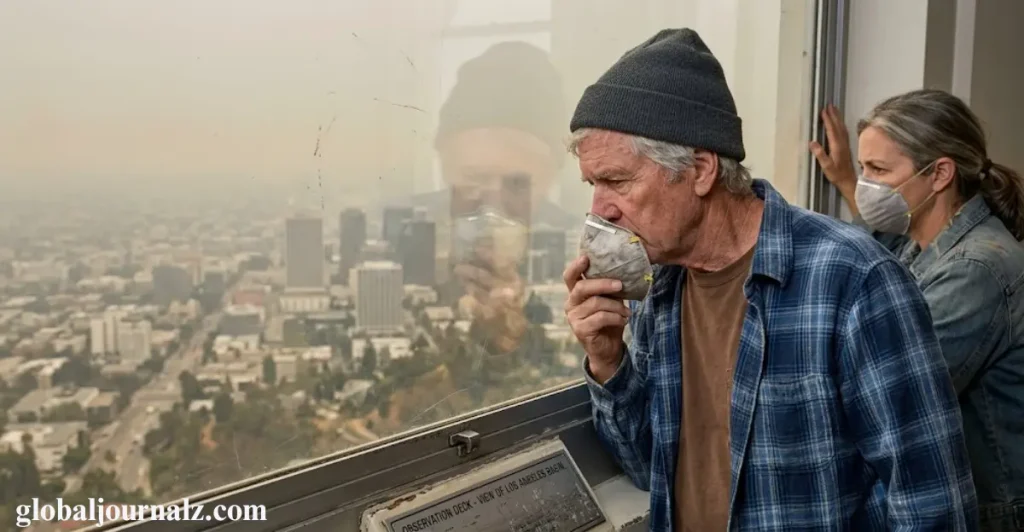
In Kuching, Sarawak, the current haze has reminded residents of earlier pollution crises that affected the region. Jennifer Kang described being unable to see the ground while her plane approached the runway, highlighting just how severely the thick smoke has reduced visibility in the city.
The latest conditions have also revived memories of the 1997 haze crisis, when pollution disrupted flights, tourism and economic activity for an extended period. Although researchers and authorities now understand more about the causes of fires, continuing problems with air quality show that the underlying challenges remain.
The concern is increasingly moving beyond simply coping with another period of haze. Better land management, stronger enforcement and greater protection of forests and peatlands could help prevent fires from becoming widespread and reduce the chances of another major haze crisis affecting neighbouring countries.
Bridge and Train Station Disappear in Thick Haze
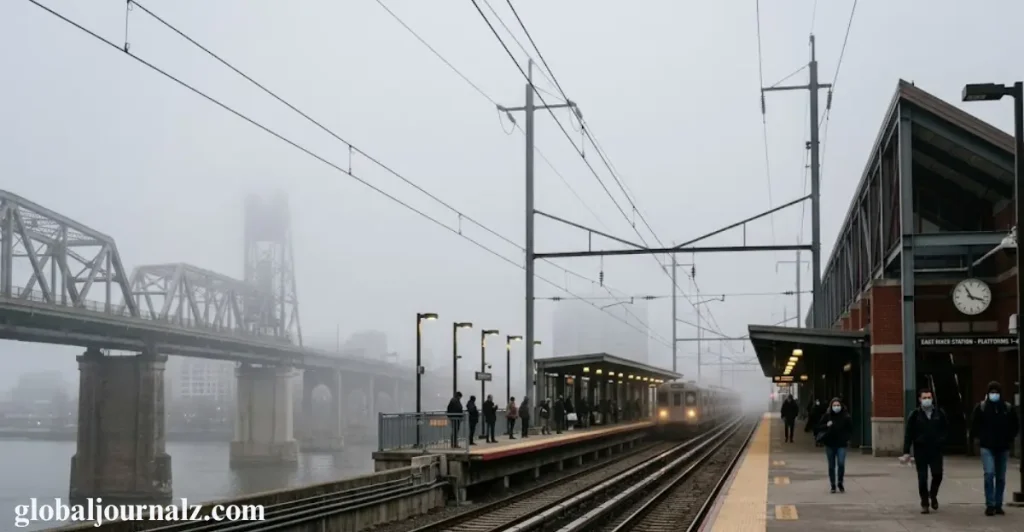
The scale of the pollution is especially visible in Palembang, where thick smoke has almost hidden some of the city’s most recognizable landmarks. Images from South Sumatra show the Ampera Bridge surrounded by dense haze, making much of the structure difficult to see from above.
- Thick Haze Makes Ampera Bridge and Train Station Almost Disappear Across Palembang
- Dense Wildfire Smoke Causes Extremely Poor Visibility Across the City
- Ampera Bridge Vanishes Behind Heavy Haze as Air Quality Worsens
- Toxic Smoke Covers Major Roads and Disrupts Daily Travel in Palembang
- Heavy Haze Raises Growing Health and Safety Concerns for Residents
A light rail transit station in Palembang has also been partly concealed by the heavy smoke covering the area. Such poor visibility can make transportation more difficult and create additional challenges for residents who must travel through areas affected by deteriorating air conditions.
The scenes from Palembang demonstrate that wildfire smoke can affect major urban centres far from the main burning areas. As fires continue across Indonesia, the combination of heavy haze, reduced visibility and polluted air is becoming an increasingly serious problem for local communities.
Indonesia’s Wildfire Problem Goes Back Decades
Indonesia’s forest and peatland fires have roots stretching back decades, particularly through major changes in land use. During the Suharto era, large areas of rainforest and peatland in Kalimantan were opened for logging, plantations and large development projects, changing landscapes that are vulnerable to fire.
Industrial land use remains associated with many fires, while drought and El Niño conditions can make burning spread more rapidly. Drained peatlands, timber estates and oil palm plantations can become especially vulnerable, allowing fires to continue for long periods and making them difficult for firefighters to control.
The situation is different from traditional uma bukit practices, which are smaller-scale, community-managed and closely monitored. Fires connected with large-scale development can spread much farther and create wider environmental and public health impacts, helping explain why Indonesia’s wildfire problem continues to return.
Indigenous People Refuse Blame for Wildfires
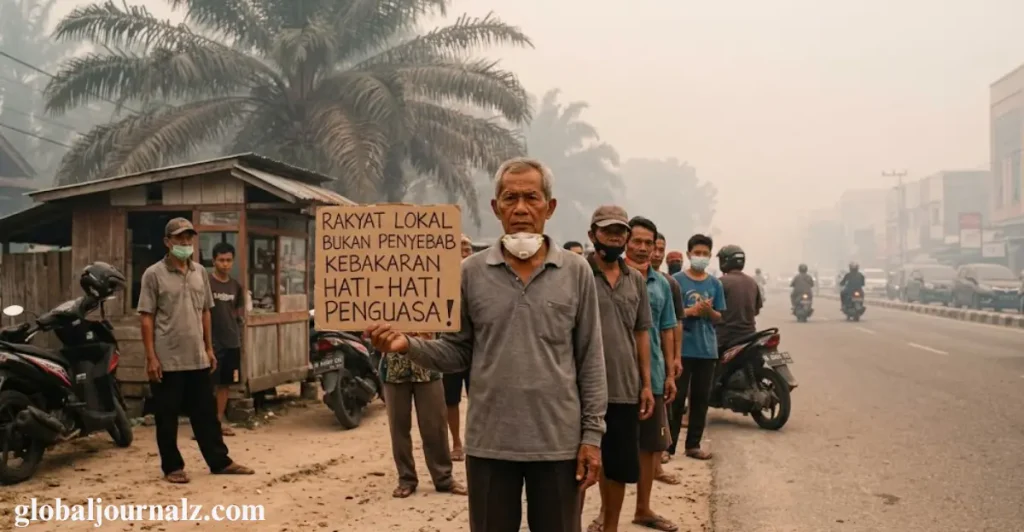
For generations, Indigenous communities in Kalimantan have relied on small, controlled fires to prepare farmland, using the resulting ash to enrich the soil. Among the Dayak Kanayatn people, this method is called uma bukit, a traditional form of hill farming that remains closely connected to their cultural practices.
The process is usually carried out on small plots of land, often below two hectares, with customary rituals followed before cultivation begins. Farmers later move to another area after several years, giving the previous land time to recover naturally. This approach is very different from uncontrolled burning across large areas.
Indigenous representatives strongly reject claims that their traditional methods are behind major forest fires. Community leader Tono says Dayak farmers are often made scapegoats, while research into major fires in 1982 and 1997 raised concerns that attention was frequently directed toward small farmers instead of larger industrial operators.
Wildfires Bring Back Fears of 2015 Haze Crisis
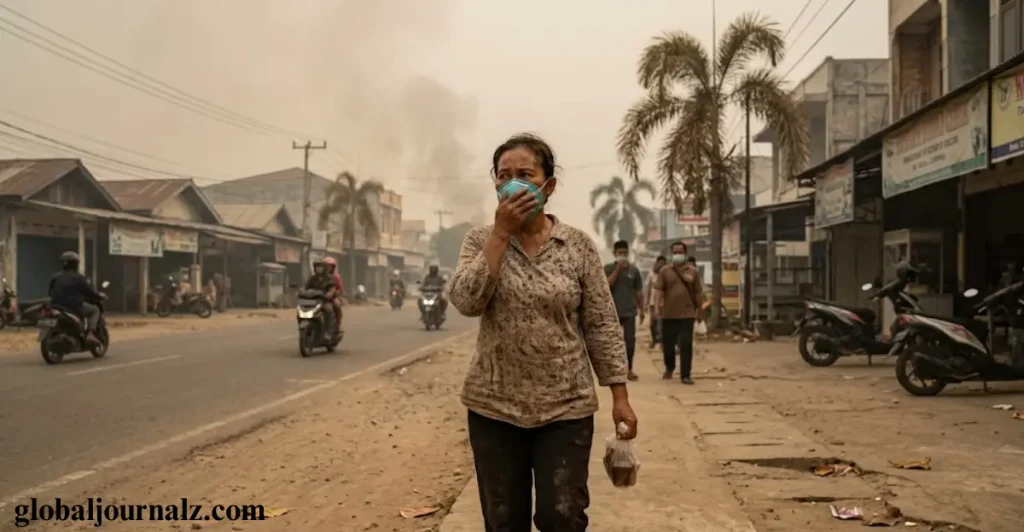
Memories of Indonesia’s devastating 2015 haze crisis are returning as fires spread again across the country. That year, during a powerful El Niño, around 2.6 million hectares of land burned between June and October, producing toxic smoke that affected millions of people and stretched far beyond Indonesia.
The disaster also caused 24 deaths as fires swept through forests and carbon-rich peatlands. Thick pollution eventually spread across Southeast Asia, creating months of dangerous smog in neighbouring countries and disrupting normal life across the region. Later El Niño years, including 2019 and 2023, also brought widespread fires.
The scale of 2015 remains an important warning as current conditions develop. In my view, the previous crisis shows why early action matters, particularly when dry weather and vulnerable landscapes combine to make fires harder to control and allow smoke to travel across national borders.
Wildfires in West Kalimantan Blacken Ground
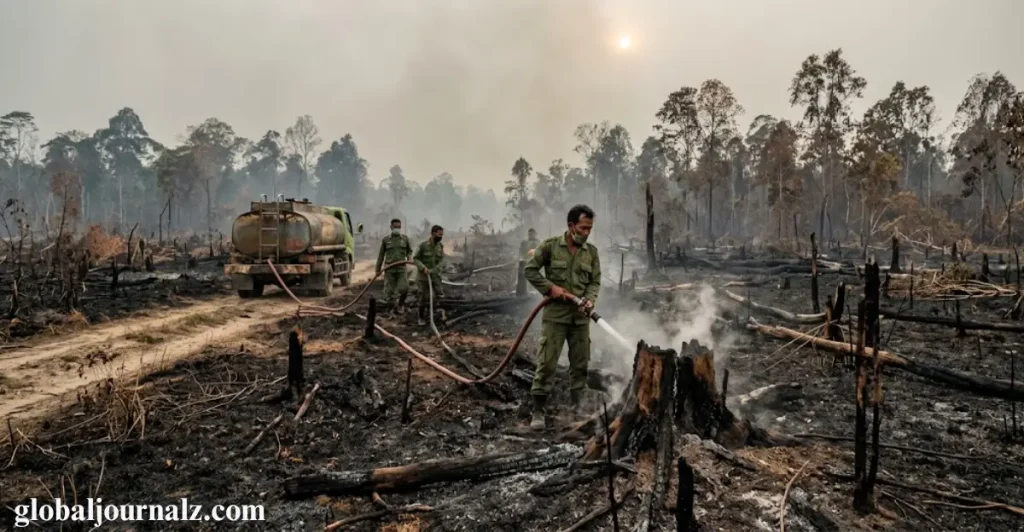
Fresh evidence of the fires can be seen around Ketapang in West Kalimantan, where sections of a palm oil plantation have been left completely blackened. Images of scorched ground show how quickly fire can transform plantation landscapes, leaving large areas covered in ash and burnt vegetation.
The damage is particularly visible along roads cutting through the plantation, with blackened earth extending across both sides. Thick haze hanging over the area adds another indication of the continuing fire activity and makes the extent of the damage even more striking.
Scenes like these offer a direct view of the physical impact left behind by the wildfires. From an environmental perspective, repeated burning across plantation and forest areas can damage vegetation and soil while contributing further smoke to the wider haze affecting nearby communities.
Haze Shuts Schools in One of Worst-Hit Indonesian Cities
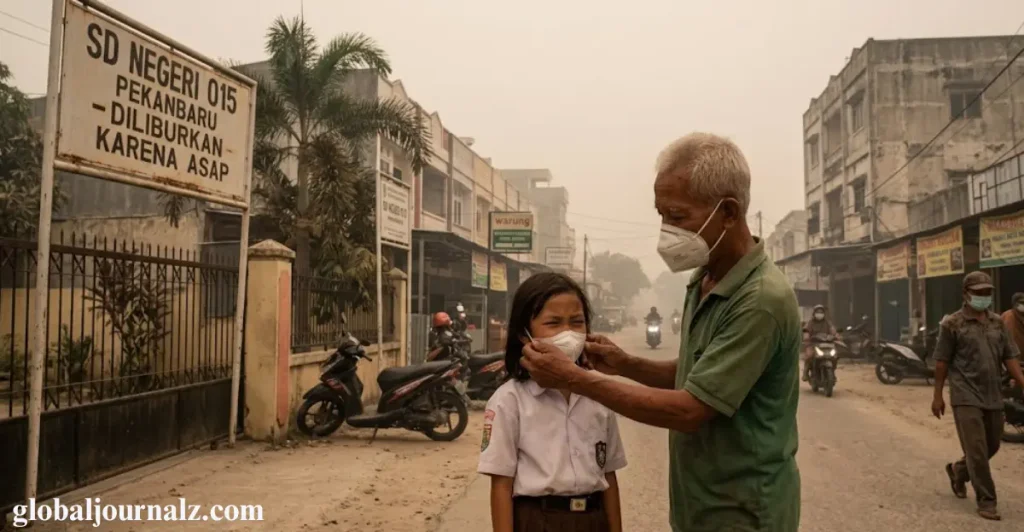
In Pengayuan village in Banjarbaru, the worsening haze has disrupted education and affected families living close to burned land. A kindergarten near a wildfire site suspended classes for 10 days and moved lessons online as visibility fell to only a few metres during the morning.
Residents have also struggled to keep smoke outside their homes, even after sealing gaps and openings. One mother reported that her three-year-old daughter developed a cough, sore throat and runny nose, while the thick haze repeatedly entered their house despite efforts to block it.
For local families, these fires are becoming a recurring part of every dry season, but this year’s conditions have felt particularly severe. Looking at the situation closely, the combination of school closures, poor visibility and health complaints shows how wildfire smoke can quickly become a daily community problem.
How Did Haze From Indonesia Reach the Philippines?
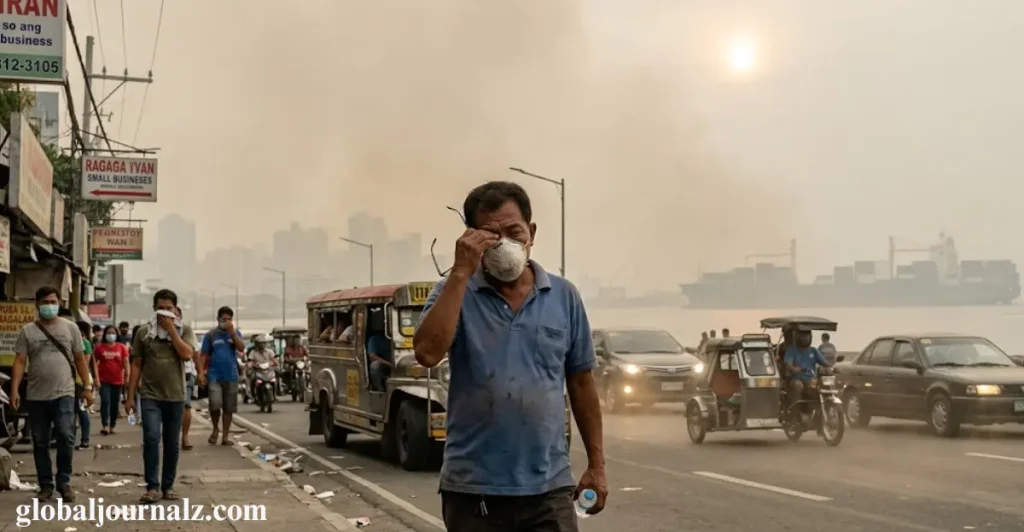
The haze reaching the Philippines is being linked to winds associated with the habagat, the Filipino term for the southwest monsoon. At this time of year, the weather system moves from the southwest of the equator, helping carry smoke and polluted air northward from Indonesian fire zones.
The same monsoon has brought heavy rainfall and severe flooding across large parts of the Philippines during August. Millions have already faced disruption from seasonal flooding, meaning the arrival of wildfire haze adds another environmental challenge for communities dealing with difficult weather conditions.
The effects have been reported across Metro Manila, Luzon and the Visayas, showing how far smoke can travel from its original source. This movement of polluted air is a reminder that Indonesia’s wildfire problem can quickly become a regional issue when weather patterns carry haze across national boundaries.
More than 50,000 Cases of Respiratory Infections in Indonesia
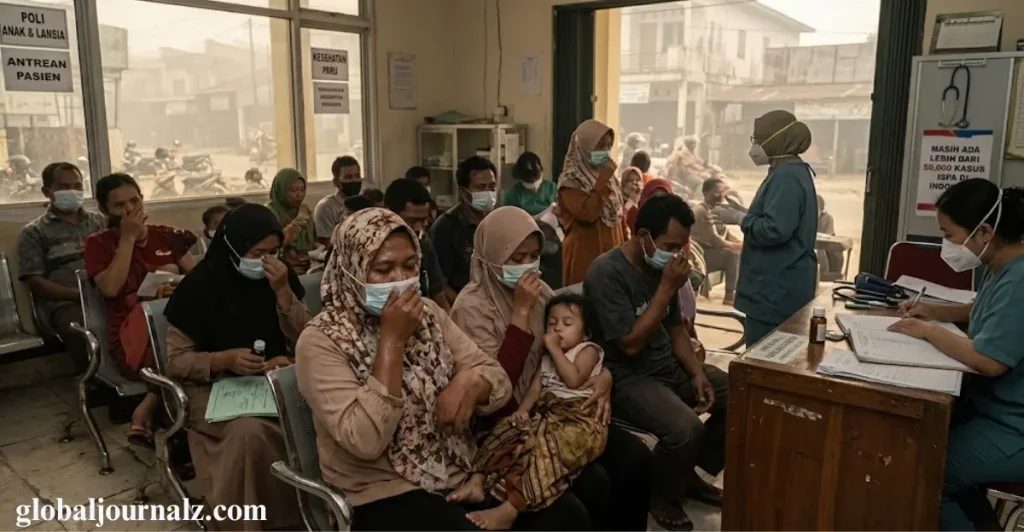
Indonesia is facing a growing health crisis as the Health Ministry records more than 50,000 cases of respiratory infections linked to land and forest fires between July and August. More than 12,000 children under five are among those affected, while hundreds of health workers have been sent to the worst-hit provinces with masks and oxygen supplies.
- Wildfire Haze Triggers More Than 50,000 Respiratory Infection Cases
- Thousands Seek Medical Help as Toxic Smoke Spreads Across Indonesia
- Children and Vulnerable Groups Face Growing Health Risks
- Smoke From Forest Fires Drives Sharp Rise in Breathing Problems
- Health Officials Warn as Haze Spreads Beyond Fire-Hit Areas
The impact is also being felt beyond Indonesia, with Malaysia reporting rising cases of asthma and conjunctivitis as smoke crosses the border. Continued exposure to polluted air can worsen breathing problems, particularly among young children and people who are more vulnerable to poor air quality.
The rising number of cases shows how quickly wildfire smoke can become a wider public health emergency. Medical assistance, protective masks and oxygen supplies are becoming increasingly important as communities remain exposed to smoke and haze for extended periods.
Haze in Kindergarten Class So Thick ‘You Couldn’t See Your Feet’
In Banjarbaru, in South Kalimantan, a kindergarten has reopened after classes were suspended for up to two weeks because of severe haze. Teaching assistant Rizma Nur Fatimah said the smoke became so thick that children could not see their own feet, while haze continued entering homes despite closed doors and windows.
The conditions have disrupted education and affected families living near wildfire areas, with several children and parents experiencing respiratory illnesses. Seasonal fires are familiar to local residents, but stronger winds have reportedly made this year’s haze worse and allowed smoke to spread more heavily through the community.
The situation highlights how dangerous haze can become inside places designed to protect young children. When smoke enters classrooms and homes despite efforts to block it, schools may have little choice but to suspend lessons and reduce children’s exposure until air conditions improve.
Volunteer Firefighter Dies Battling Wildfires
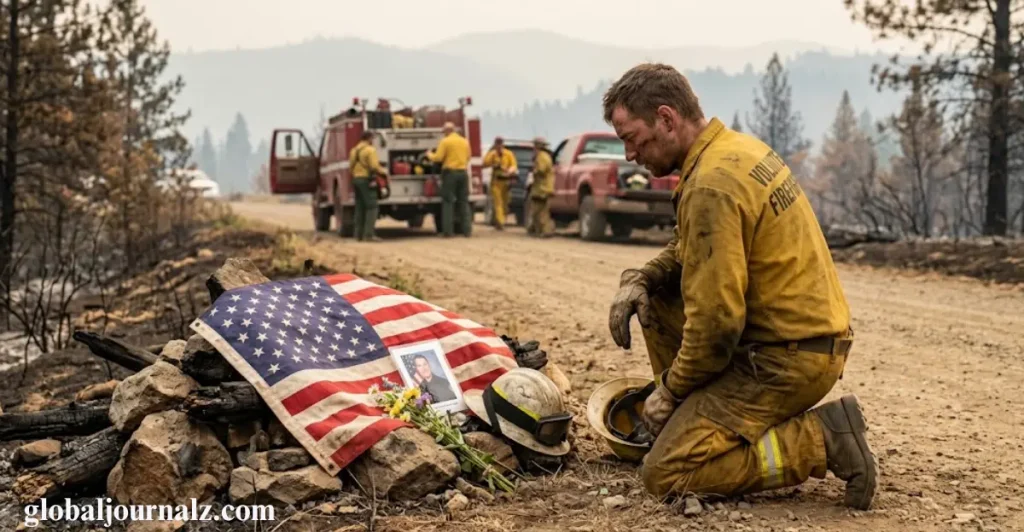
The human cost of the fires has become particularly clear in Central Kalimantan, where volunteer firefighter Akhmad Rijani died while helping combat land and forest fires. He led the Serbu Api firefighting team in Palangka Village, Palangka Raya, before collapsing while responding to a wildfire site on Rungan Road.
Rijani was evacuated and received treatment at Betang Pambelum Hospital for six days before he died. Following the incident, Palangka Raya authorities introduced mandatory health screenings for wildfire volunteers and firefighting personnel before they begin daily operations during the continuing fire emergency.
The death has highlighted the serious risks faced by people working directly around large fires. Extreme heat, thick smoke and long hours in difficult conditions can place enormous pressure on firefighters, making health checks and appropriate safety measures essential during prolonged wildfire operations.
Stench From Wildfires Seeps Through Our Masks
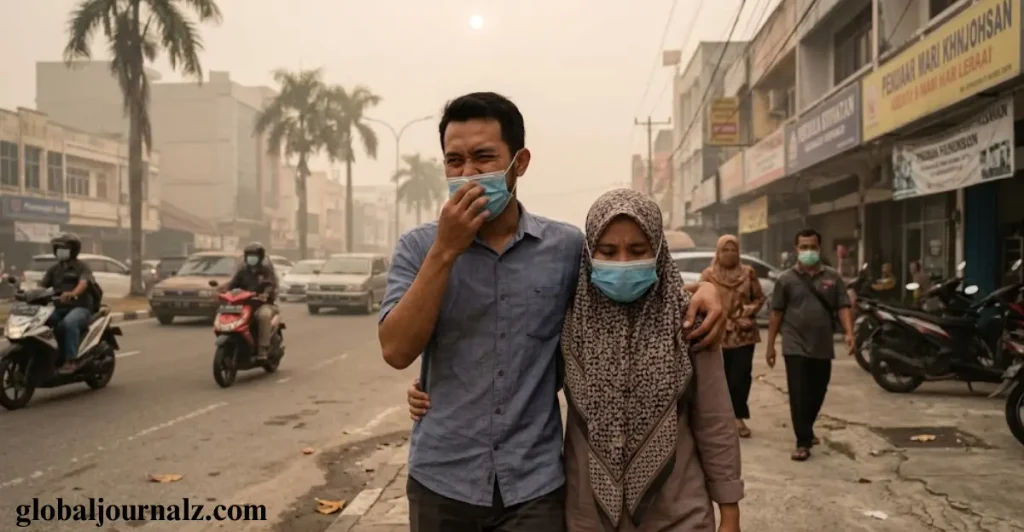
Conditions in Banjarbaru have become severe enough for the smell of burning to remain noticeable even through a high-filtration mask. A thick white haze covered much of the journey from Banjarmasin, while the air felt significantly worse and made breathing uncomfortable.
In the Guntung Payung area, recently burned peatland appeared blackened, with white smoke continuing to rise from the ground. Around Banjarbaru, about 1,263 hectares have burned over the past two months, including areas near the international airport and surrounding protected forest.
The continuing smoke from peatland is particularly concerning because fire can remain active beneath the surface even after visible flames disappear. This can make affected areas difficult to identify and control, while the persistent smell provides another indication that burning may still be taking place underground.
Singapore on Edge as It Eyes Air Pollution Levels
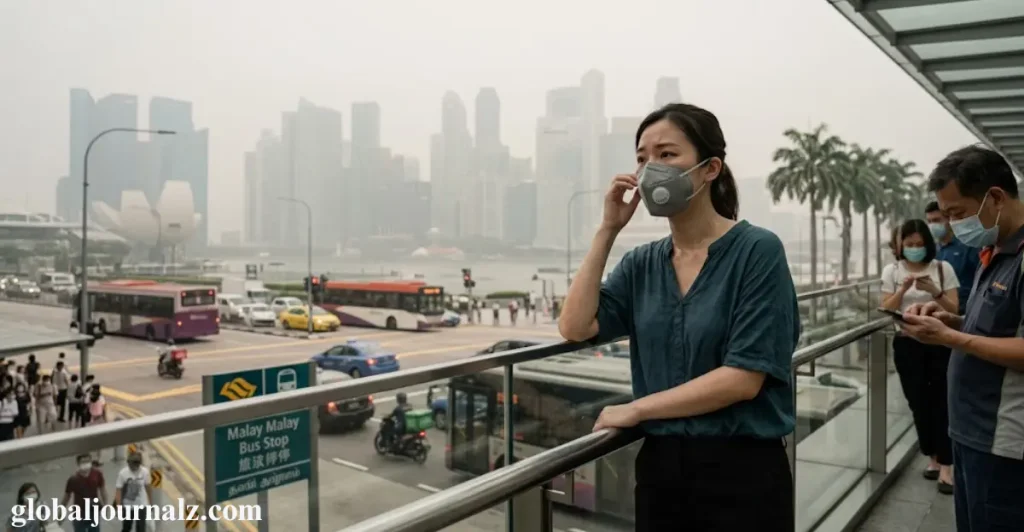
Singapore is closely monitoring air pollution as wildfire smoke from neighbouring Indonesia continues to raise concerns. Memories of severe haze episodes in 2013 and 2015 remain strong, when schools closed, daily activities were disrupted and N95 masks became difficult to find.
- Singapore Closely Monitors Air Pollution as Indonesian Haze Spreads
- Air Quality Concerns Grow as Smoke Moves Toward Singapore
- Singapore Prepares for Haze as Wildfire Conditions Worsen
- Residents Face Rising Health Risks From Fine Smoke Particles
- Authorities Keep Haze Plans Ready Amid Ongoing Wildfires
Warnings surrounding the super El Niño have renewed fears that Singapore could again experience dangerous haze conditions. The government and retailers have stockpiled N95 masks, while schools are preparing to minimise outdoor activities if pollution levels become unsafe.
Preparations are also being made for the Formula 1 Grand Prix, which is expected to attract hundreds of thousands of people in early October. Plans include additional masks and medical assistance, reflecting concerns that worsening air pollution could affect major public events as well as everyday life.
Conclusion
Indonesia’s wildfires have created a growing haze crisis that is spreading far beyond the burning areas. Toxic smoke has reached Malaysia, Singapore and the Philippines, affecting air quality across Southeast Asia. Poor visibility, school closures and rising respiratory infections show the serious impact on local communities. The current conditions are also bringing back memories of the devastating 2015 haze crisis. Dry weather and El Niño could make fires harder to control if conditions continue to worsen. Stronger fire prevention, better land management and regional cooperation will be crucial in reducing the impact. Without sustained action, Indonesia’s recurring wildfires could continue threatening public health across the region.
Why is haze from Indonesia spreading to other countries?
Wildfire smoke from Indonesia is spreading across borders as seasonal winds carry polluted air over long distances. The haze has reached Malaysia, Singapore and the Philippines, affecting visibility and air quality in several areas. Weather patterns such as the southwest monsoon can help move smoke far from the original fire zones.
How is the Indonesia wildfire haze affecting public health?
The haze is linked to rising respiratory infections, along with coughing, sore throats, asthma and eye irritation. Indonesia has recorded more than 50,000 respiratory infection cases connected to land and forest fires. Children, older people and those sensitive to polluted air can face greater health risks during severe haze.
Why are Indonesia’s wildfires so difficult to control?
Many fires occur in peatlands, where burning can continue underground even after visible flames disappear. Dry conditions and El Niño can make forests and peat more vulnerable to fire and allow flames to spread quickly. Large affected areas and persistent smoke can also make firefighting operations more difficult.
Is the current haze similar to Indonesia’s 2015 wildfire crisis?
The current conditions have revived memories of the devastating 2015 haze crisis, when millions of people across Southeast Asia were affected by dangerous smoke. Around 2.6 million hectares burned that year, while pollution spread across several neighbouring countries. The comparison has raised concerns about another prolonged regional haze event.
How can people protect themselves from wildfire haze?
People can reduce exposure by staying indoors when air quality becomes unhealthy and limiting strenuous outdoor activities. Wearing a suitable mask, keeping windows closed and following local air-quality guidance can help reduce smoke exposure. Schools and authorities may also restrict outdoor activities when haze levels become particularly severe.
 admin
admin