 By admin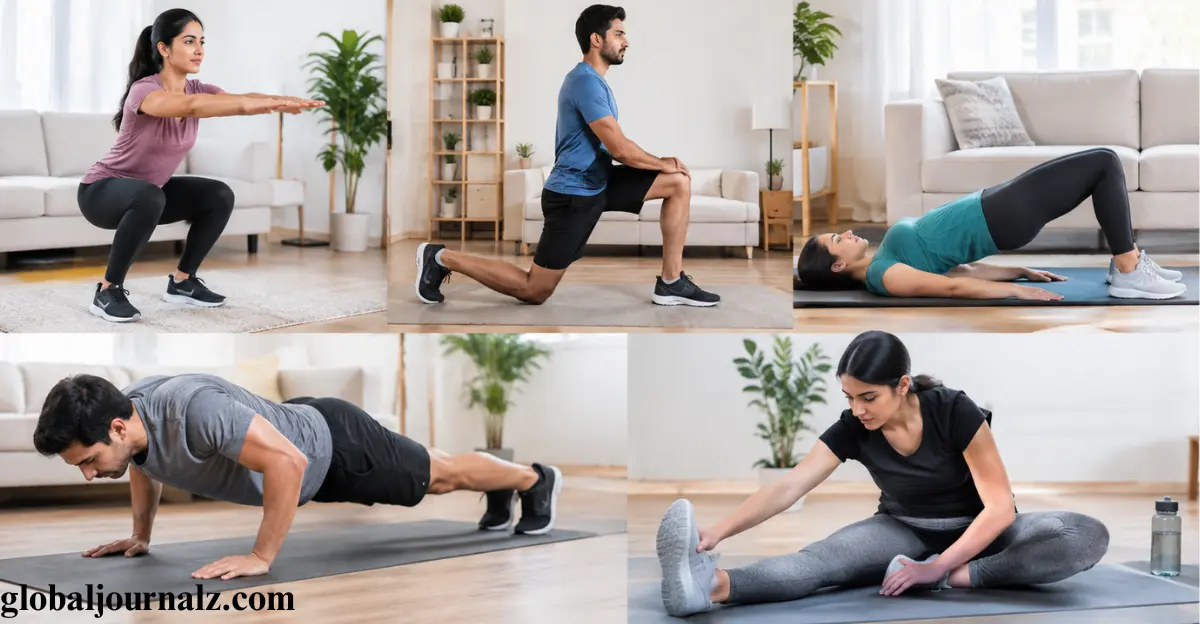
Simple movements at home can become the first step toward better strength, flexibility and daily mobility when they are performed with the right approach. Physical therapists often recommend beginner-friendly exercises that focus on balance, core stability, joint health and improving overall body function without needing expensive equipment. From gentle stretches to basic strength routines, these exercises help people build confidence while creating a consistent fitness habit. Discover practical at-home workouts and expert-backed tips that can support your wellness journey, and start adding these easy exercises to your routine today.
Table of Contents
Key Facts
- Beginner home exercises can improve strength, flexibility, balance and daily movement without requiring a gym membership or complex equipment.
- Physical therapists often recommend simple routines that focus on safe movements, proper form, and gradual progress to reduce the risk of injury.
- Stretching exercises, bodyweight workouts, and mobility drills can support joint health and muscle function when practiced consistently.
- A regular at-home exercise routine can help improve posture, energy levels and overall physical confidence over time.
- Starting with easy exercises allows beginners to build a strong foundation before moving toward more advanced fitness activities.
Exercises to do at home
Build a healthier routine with simple exercises that fit naturally into your daily life and help improve strength, movement and confidence from home.
1. Squat
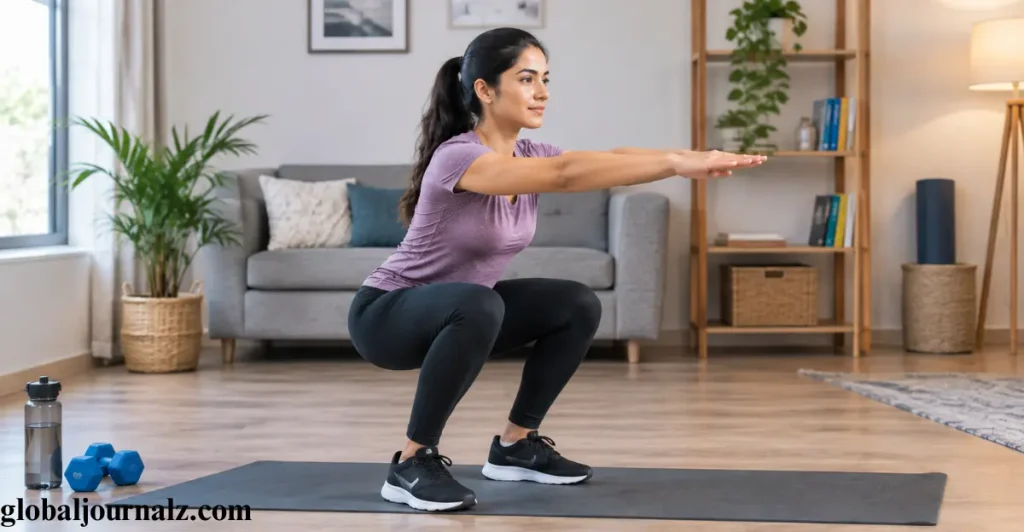
Squats are one of the most useful movements for building lower body strength, working the legs, core, hips and lower back in one controlled exercise. They can also support knee and hip health when performed with proper alignment, while changing the squat depth makes the movement easier or more challenging depending on your ability.
For someone managing lower-body weakness or occasional lower back pain, controlled squatting can be a practical addition to a strength routine. Keeping the feet stable, engaging the core and bending the knees comfortably helps create a smoother movement without putting unnecessary stress on the joints.
I’ve found that squats feel much better when I focus on steady movement rather than trying to reach maximum depth. Starting comfortably and gradually improving control has always made the exercise easier to perform consistently while building noticeable strength in my legs.
2. Bridge
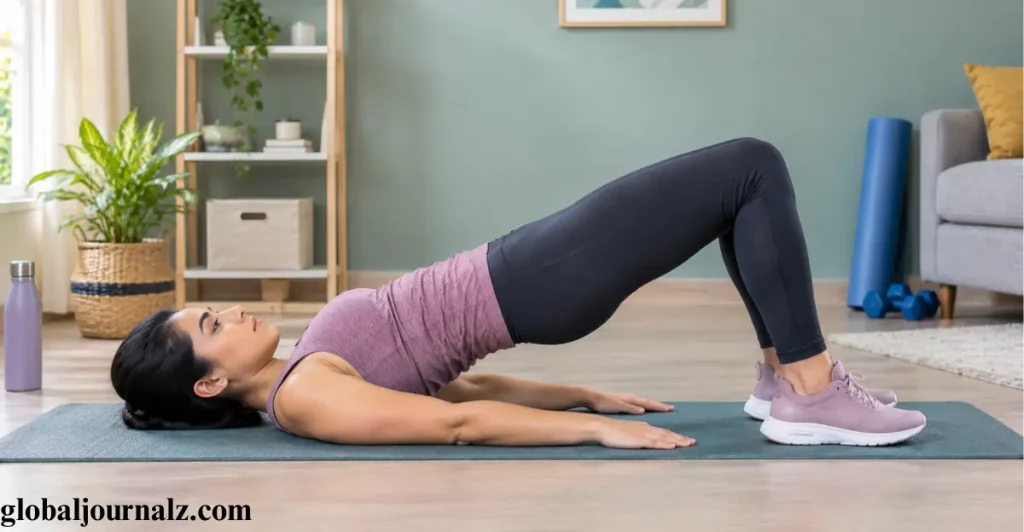
Bridges strengthen the glutes, core, and lower back while also encouraging better hip mobility and lower-body control. Since the exercise is performed while lying down, it offers a simple way to activate important muscles without placing heavy demands on the joints.
Lifting the hips slowly and lowering them with control helps keep the movement focused on the intended muscles. Regular practice can improve stability around the hips and pelvis, which may help reduce stiffness and make everyday movements such as walking, bending, or standing feel more comfortable.
In my experience, I get the most from bridges when I pause briefly at the top instead of rushing through each repetition. That small pause helps me feel the glutes working properly and keeps my lower back from taking over the movement.
3. Knee push-up
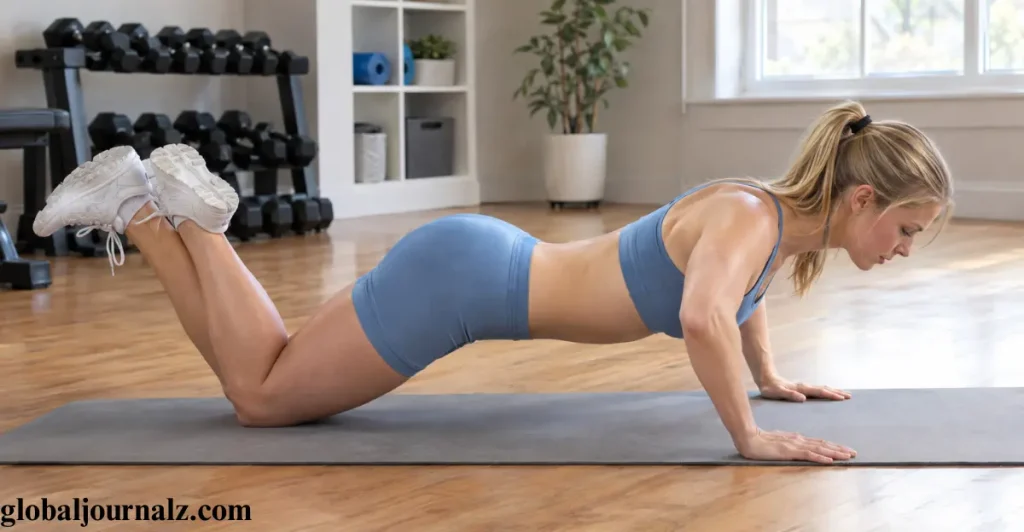
A knee push-up provides an easier starting point for developing upper body strength while still training the chest, shoulders, triceps and core. Compared with a full push-up, this variation reduces the overall load and can feel more manageable for beginners who are still building strength and confidence.
Maintaining a straight line from the knees through the hips and shoulders helps keep the exercise controlled. It can also prepare the body for more demanding push-up variations by improving pressing strength, stability and movement coordination without immediately requiring a full bodyweight repetition.
I’ve found that doing fewer knee push-ups with controlled form is far more useful than rushing through a large number. Once the movement starts feeling comfortable, increasing repetitions gradually makes progressing toward regular push-ups feel much more natural.
4. Banded rotation pull apart
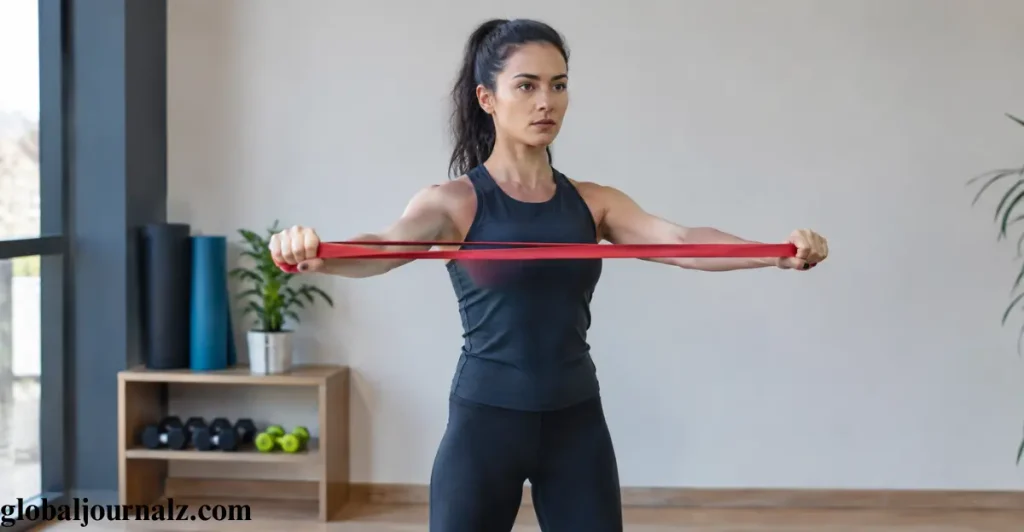
The banded rotation pull apart is designed to strengthen the shoulder and upper back muscles while encouraging better control through the upper body. Because it is performed standing, the core muscles also help stabilize the body, making it useful for improving overall posture and movement control.
This exercise can be especially helpful when working on areas around the upper back, neck, or shoulders. Using manageable resistance and keeping the motion smooth allows the muscles to work without relying on momentum, while consistent practice can improve upper-body stability.
From my experience, using a lighter band makes this movement much easier to control. I prefer pulling gradually and keeping my shoulders relaxed because it creates a cleaner motion and lets me properly feel the upper back working throughout each repetition.
5. Downward dog to high plank
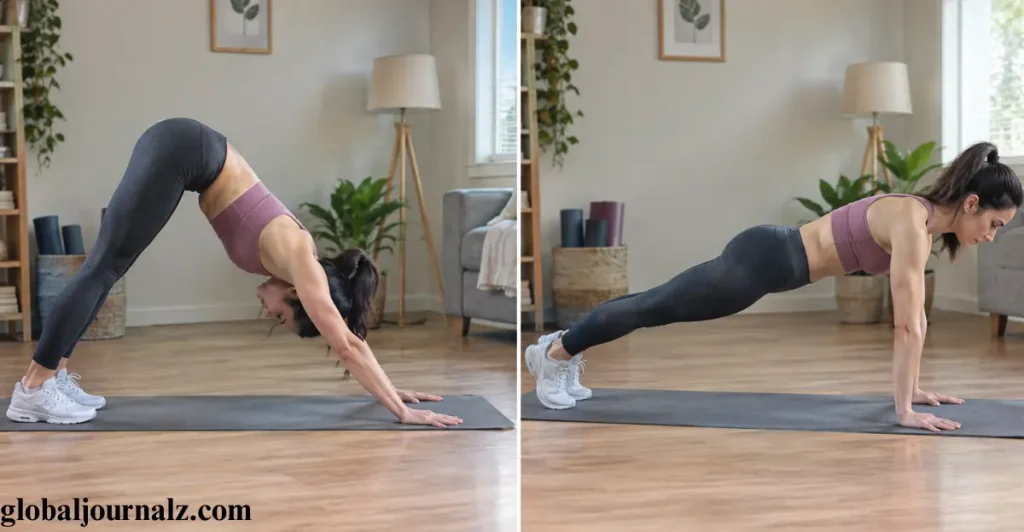
The downward dog to high plank is a useful combination for training the shoulders, arms, and core while also opening up the hamstrings and calves. Moving between these positions creates a balance of strength and flexibility, making the exercise suitable for improving overall mobility and body control.
Rather than treating it as a fast transition, controlled movement helps keep the body aligned and makes each position more effective. The forward shift into high plank challenges upper-body stability, while returning to downward dog gives the back of the legs a gentle stretch.
For me, this movement feels most effective when I pause for a moment in both positions. That small pause gives my core time to stabilize and lets me notice the stretch through my hamstrings before moving again.
6. Side lunge
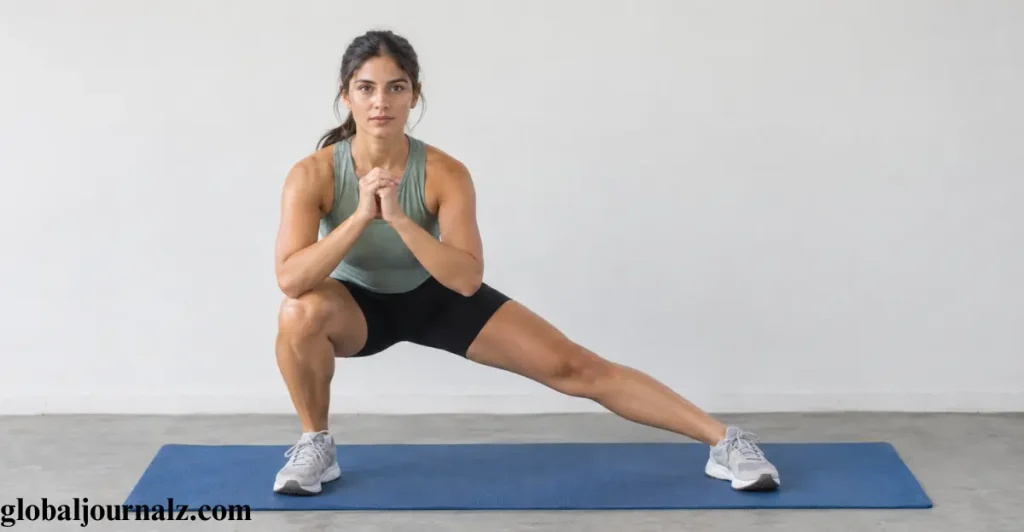
The side lunge works the glutes, quads and inner thighs while introducing sideways movement into a workout. It can also help develop hip mobility, balance, and stability because the body has to control weight as it shifts from one side to another.
Taking a comfortable step outward and lowering the hips gradually keeps the movement controlled and allows the working leg to handle the load. This makes side lunges a useful alternative to forward lunges when you want more variety and movement in different planes.
One thing I’ve learned with side lunges is that a wider step is not always better. I get much smoother movement when I choose a distance that lets me keep my foot grounded and my hips controlled throughout the repetition.
7. Bicycle crunch
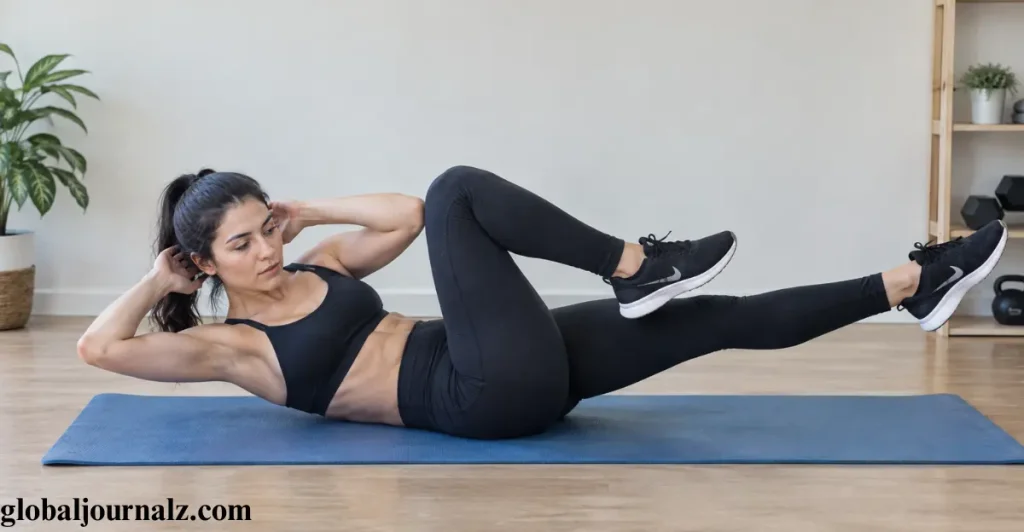
The bicycle crunch gives the core a demanding workout by engaging the rectus abdominis and oblique muscles through alternating rotation. Along with abdominal strength, the movement requires coordination between the torso and legs, which can support better posture and balance.
Controlled repetitions are more useful than simply increasing speed, as rushing can reduce tension in the abdominal muscles. Keeping the torso steady while rotating from side to side allows the core to remain engaged and makes the exercise more deliberate.
When I first worked on bicycle crunches, slowing the pace made a noticeable difference in how much I felt the abdominal muscles working. Now I focus more on clean rotation and steady breathing than counting as many repetitions as possible.
8. Banded fire hydrant
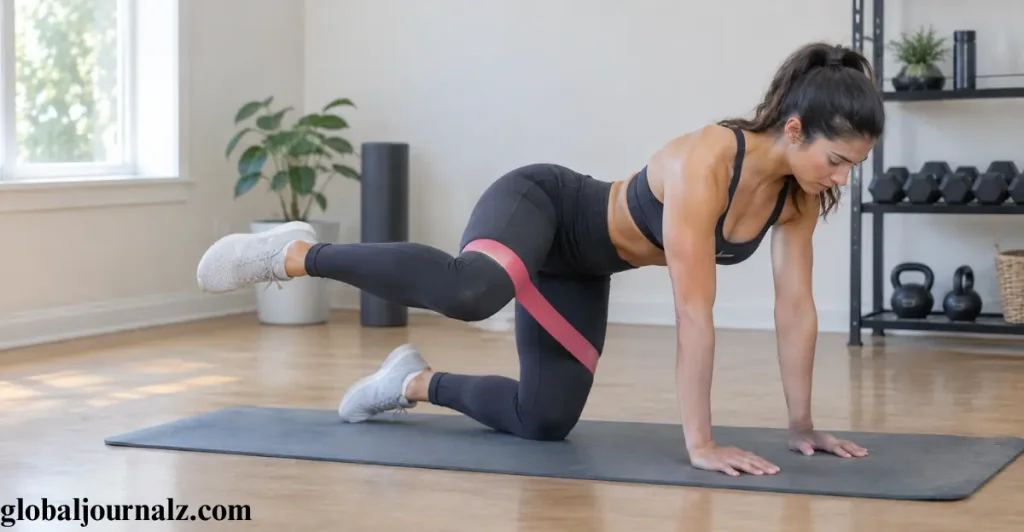
The banded fire hydrant targets the glutes, especially the gluteus medius, while helping develop hip strength, balance and lower body strength. The added resistance from a band increases the challenge, making a simple leg-lifting movement more effective for building muscular control.
Keeping the supporting side stable while moving the opposite leg outward helps maintain proper form. A suitable resistance level allows the hips to stay square and the movement to remain controlled, rather than relying on momentum to lift the leg.
What works best for me is starting with moderate resistance and concentrating on the outward movement. I can feel the glutes engage more clearly when I lift slowly, hold briefly, and return the leg without allowing my hips to rotate.
Conclusion
Easy exercises at home can be a great place to start if you want to become more active without making your routine complicated. Simple movements like squats, bridges, knee push-ups, and stretches can help build strength, improve flexibility and make everyday movement feel easier. The important thing is to start at a comfortable level and pay attention to your form instead of trying to do too much at once. As your body gets used to the exercises, you can slowly increase the number of repetitions or try more challenging movements. Staying consistent, even with short workouts, can make a real difference over time. Listen to how your body feels, give yourself time to improve and choose exercises that you can comfortably fit into your day.
FAQs
1. What are the best easy exercises to do at home?
Squats, bridges, knee push-ups and simple mobility exercises are good starting options for beginners. They can help improve strength, flexibility, balance and everyday movement without expensive equipment. Start slowly and focus on comfortable, controlled movements.
2. How often should beginners exercise at home?
Beginners can start with short workouts several times a week and gradually build consistency. The goal is to give your body enough time to adjust while avoiding excessive soreness or fatigue.
3. Can home exercises improve strength and flexibility?
Yes, regular bodyweight exercises and stretching can help develop strength, mobility and flexibility over time. Exercises such as bridges, side lunges, and downward dog can work different muscle groups while supporting movement.
.
 Muhammad Bilal