 By Muhammad Bilal
Volkswagen is preparing for another major workforce reduction as its board approves plans to cut around 50,000 jobs amid sweeping efforts to reduce costs and reshape the German carmaker. The move adds fresh pressure to employees as Volkswagen faces intense competition, changing market conditions and the costly shift toward electric vehicles. The scale of the planned cuts highlights how deeply the company is restructuring its operations and long-term strategy. Explore the key details behind Volkswagen’s latest job-cutting plan and what it could mean for the company’s future.
Key Factors
- Volkswagen’s board has approved plans for another 50,000 job cuts as part of its wider restructuring strategy.
- The cuts are linked to efforts to reduce costs and improve the company’s financial performance.
- Volkswagen is facing growing competition in the global car market, particularly from lower-cost manufacturers.
- The shift toward electric vehicles is forcing the company to rethink production, investment and workforce needs.
- The planned reductions could have a major impact on German factories, employees and Volkswagen’s future operations.
Table of Contents
What Is Behind Volkswagen’s Massive Job Cuts?
Volkswagen’s decision to cut another 50,000 jobs is part of a wider turnaround programme aimed at reducing costs and improving competitiveness. The company has been dealing with falling profits, weaker sales and growing competition from Chinese brands, creating pressure to reshape its global workforce.
The challenges are spread across several major markets, with China seeing weaker sales while the US market has also been affected by tariffs on car imports. At the same time, Chinese automakers are gaining ground with newer technologies and lower production costs, making the competitive environment increasingly difficult for Volkswagen.
Volkswagen is also simplifying its product strategy, planning to produce 50% fewer models and reduce the complexity of its offering by 75% by 2035. The company says focusing on its strongest vehicles and increasing production of each model should help lower costs while adapting to changing customer demand.
Why Is Volkswagen Losing Ground to Chinese EV Makers?
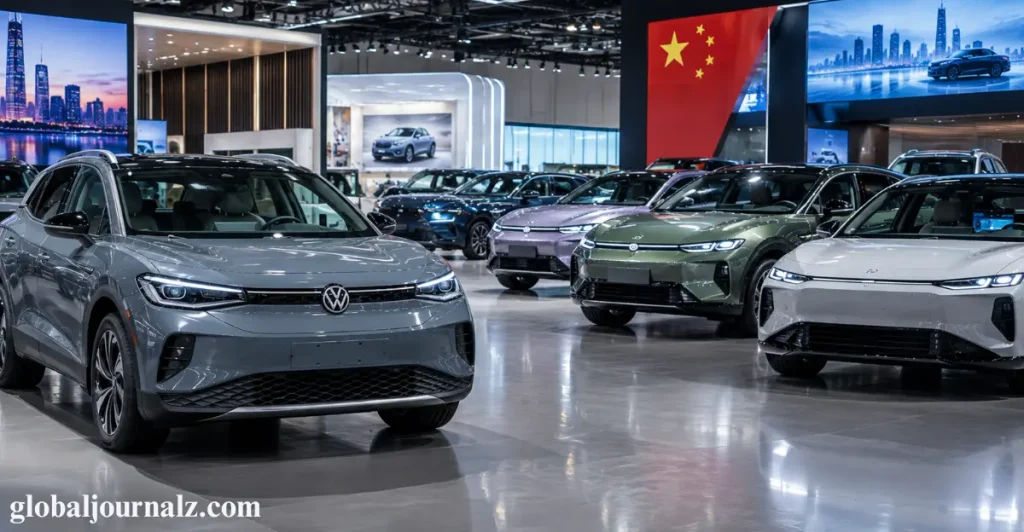
Volkswagen is struggling in China because it was slow to adapt to the fast-growing EV/PHEV segment, which now dominates new-car sales. While Chinese automakers built strong advantages through vertical integration, producing batteries, motors and chips in-house, Volkswagen remained more dependent on suppliers.
- Chinese EV makers are offering lower prices and competitive features.
- Volkswagen has been slower to adapt to the rapid shift toward electric vehicles.
- Local brands are moving faster with new models and technology.
- Chinese automakers benefit from stronger local supply chains and lower cost structures.
- Volkswagen is also facing declining sales in China as consumer preferences change.
Chinese brands can therefore achieve lower costs while offering advanced software, screens and connectivity at competitive prices. Volkswagen’s profitable petrol-car business once made delaying the electric vehicle transition seem reasonable, but that delay has now left the company struggling to catch up as electric cars reshape China’s market.
Volkswagen’s profitable petrol-car business once made delaying the EV transition seem reasonable. But as electric cars became central to China’s market, that delay left the company struggling to catch competitors that had already built their products and supply chains around EV technology.
Which German Plants Face an Uncertain Future?
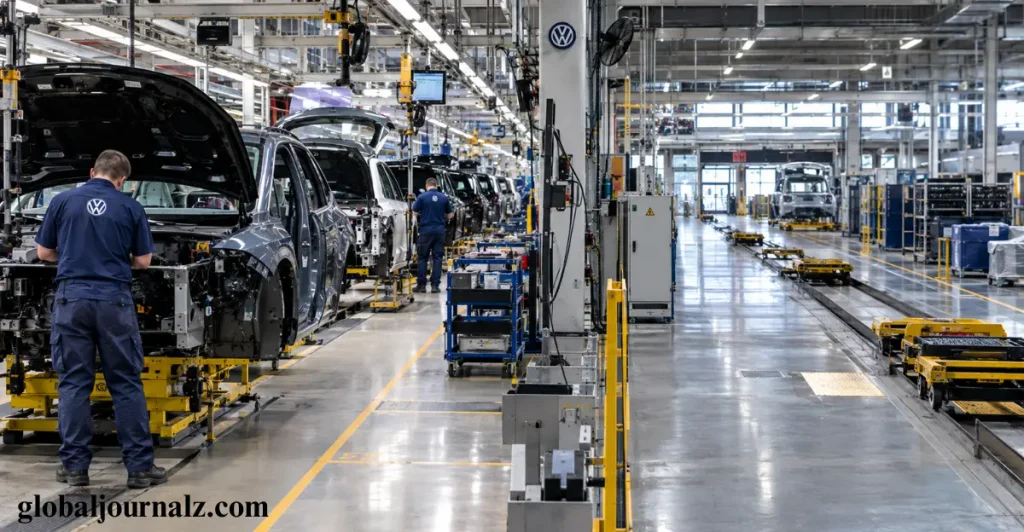
Four German plants Emden, Zwickau, Neckarsulm, and Hannover face an uncertain future under Volkswagen’s restructuring plan. Their current models are expected to be phased out from 2031 onward, pushing the company to explore alternative uses for these sites.
The pressure comes from overcapacity, weak demand in China, U.S. tariffs and stronger Chinese competitors. Volkswagen is also planning another 50,000 job reductions worldwide, adding further uncertainty for workers across its German production network.
The transformation plan aims to simplify Volkswagen’s operations and improve efficiency by reducing its model range and production complexity. The future of these four plants will depend on whether the company can find sustainable roles for them as its manufacturing strategy changes.
How Will Volkswagen’s Restructuring Affect Workers?
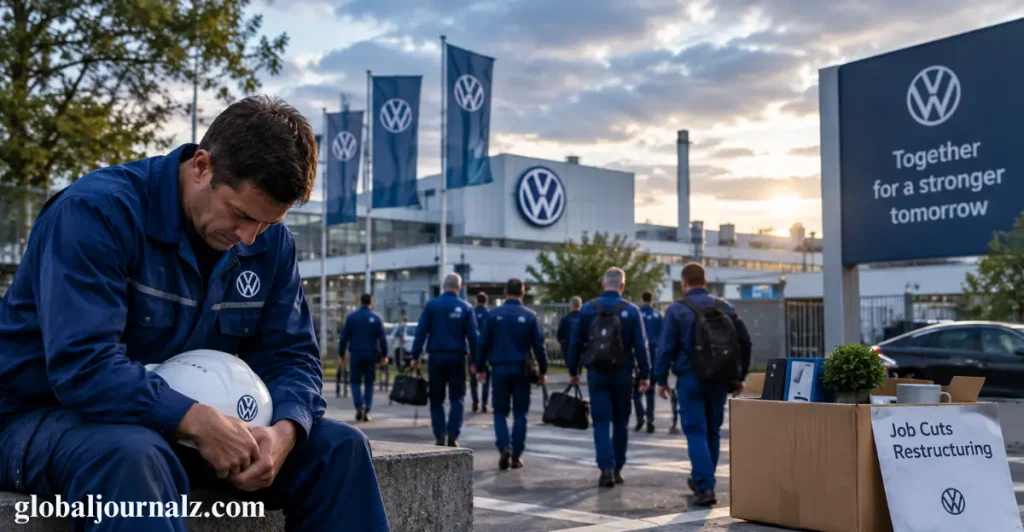
Volkswagen’s restructuring will directly affect workers as the company plans to cut another 50,000 jobs worldwide, on top of around 50,000 reductions already underway. The company has not yet detailed how the new cuts will be distributed across its brands, regions and management roles.
Employees at Emden, Zwickau, Hannover and Neckarsulm also face uncertainty because Volkswagen cannot currently guarantee competitive production allocations at these plants from 2031 onward. The company is assessing alternative uses for the sites as it works to reduce excess capacity across Europe.
The restructuring is being shaped through negotiations with unions and employee representatives, who support efforts to improve competitiveness but want the burden shared fairly. For workers, the biggest concern is whether Volkswagen’s new strategy can protect industrial jobs while reducing costs and adapting production to changing market demand.
What Does Volkswagen’s 2030 Strategy Mean for the Company?
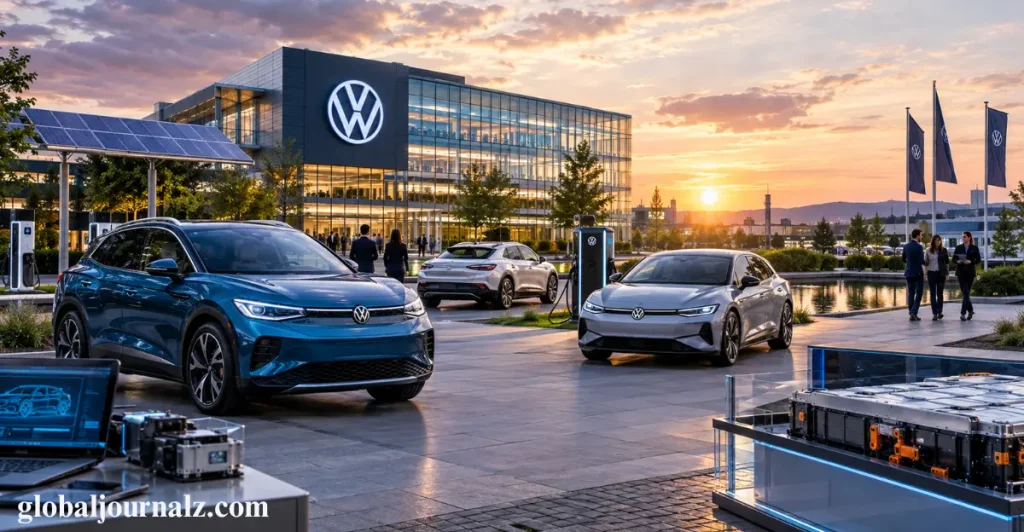
Volkswagen’s 2030 strategy represents a broader transformation of the company as the automotive industry moves toward electric mobility, advanced technology and more efficient production. The plan is focused on making the business leaner while strengthening its position in key global markets.
- Volkswagen plans to strengthen its position in electric vehicles and become more competitive globally.
- The company aims to achieve an 8–10% operating return on sales by 2030 through major efficiency improvements.
- Volkswagen will reduce costs by simplifying vehicle platforms, production and internal operations.
- Its China strategy focuses on faster local development, lower costs and stronger competition with Chinese EV brands.
- The plan also means major restructuring, including significant workforce reductions and a stronger focus on profitable growth.
The strategy also puts greater emphasis on reducing costs, improving productivity and increasing profitability. Volkswagen aims to simplify its operations and invest in areas such as electric vehicles, batteries, software and new automotive technologies that could shape its future growth.
At the same time, the changes will have a major impact on Volkswagen’s workforce and manufacturing network. Job reductions and production adjustments are expected as the company restructures its operations to compete more effectively in an increasingly challenging global car market.
Conclusion
Volkswagen’s decision to cut another 50,000 jobs shows how seriously the company is responding to growing pressure across the global automotive industry. Rising competition, weaker demand and the rapid growth of Chinese EV makers have made major changes increasingly difficult to avoid. The restructuring aims to lower costs, simplify production and improve Volkswagen’s ability to compete in a fast-changing market. However, the scale of the cuts creates significant uncertainty for employees and several German manufacturing sites. Volkswagen’s success will depend on how effectively it balances cost reductions with investment in electric vehicles, software and future technologies. The company now faces the challenge of turning a painful restructuring into a stronger and more competitive business.
1. Why is Volkswagen cutting another 50,000 jobs?
Volkswagen is cutting jobs to reduce costs and improve competitiveness as it faces weaker sales, stronger competition and the expensive transition to electric vehicles. The restructuring is also intended to simplify production and improve the company’s financial performance.
2. Which Volkswagen plants are facing uncertainty?
The Emden, Zwickau, Neckarsulm and Hannover plants are facing an uncertain future as their current models are expected to be phased out from 2031 onward. Volkswagen is exploring alternative uses for these sites as it changes its manufacturing strategy.
3. How will the job cuts affect Volkswagen workers?
The planned reductions could create significant uncertainty for employees across Volkswagen’s global operations. Workers at several German plants may face changes as production and model strategies are adjusted, with the company negotiating the restructuring with unions and employee representatives.