 By admin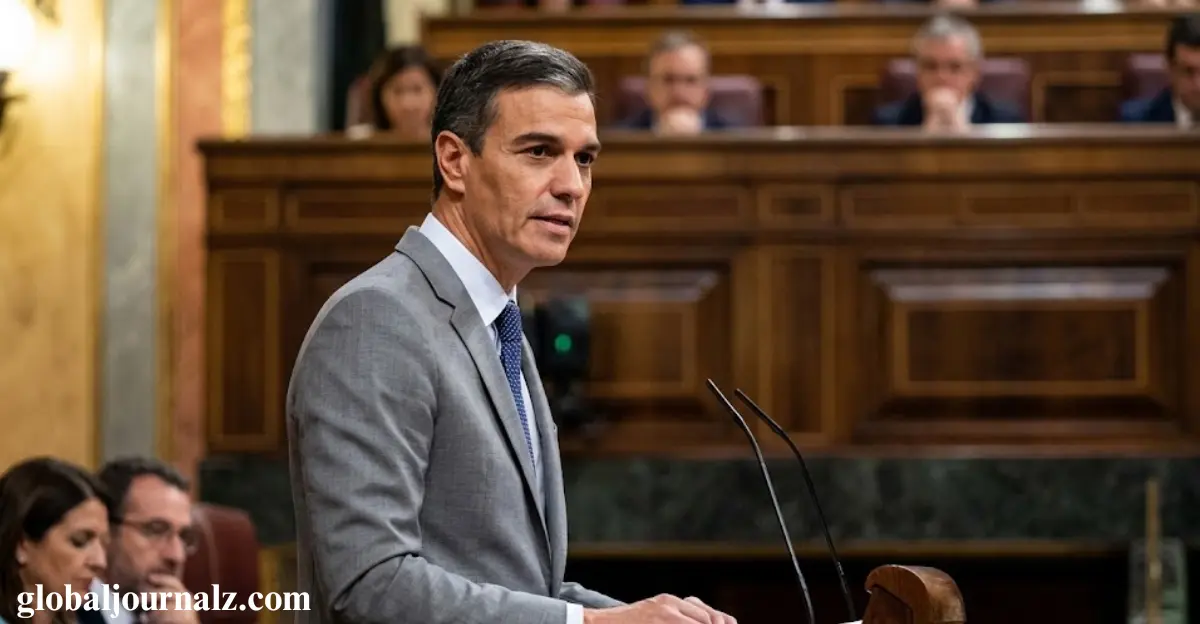
Spain is heading toward an early general election after Prime Minister Pedro Sánchez faced a major parliamentary defeat over his government’s housing measures. The decision comes amid growing public anger over rising rents, evictions and housing affordability, with tens of thousands taking to the streets to demand action. Sánchez has called the election for 5 october 2026, seeking a stronger mandate to advance his agenda.
Table of Contents
Sánchez’s Leadership and Reform Pressure

On Monday, Spanish Prime Minister Pedro Sánchez announced an early election for 29 November after recent defeats in parliament left his minority government struggling to advance legislation addressing the housing crisis. The snap election followed the rejection of two decree laws designed to protect tenants, strengthen protections against eviction, and respond to pressure in the rental market.
The dispute gained wider attention after an 87-year-old woman was removed from her home following a sharp rent rise, while nationwide protests increased demands for housing reform.
In his televised address, Sánchez presented the vote as an opportunity to secure a broader progressive majority that could help his government pursue further reforms and overcome resistance from elites.
He linked the need for stronger leadership with challenges that had intensified in recent months, including corruption scandals, cost-of-living issues, immigration, and acknowledged mistakes. He also identified housing, inequality, public services, and access to housing among the problems to solve, placing these issues within the wider pressure facing his government.
Against this backdrop, the left-wing coalition government has been operating without a stable majority in parliament, with the ruling Socialist party working alongside its junior partner, the Sumar alliance. Spain had been expected to hold its next general election in the summer of 2027, but the prime minister, who has been in office since June 2018, has now brought the vote forward after the latest parliamentary setbacks.
The Socialist party formed the coalition after the last election in 2023, when the conservative People’s Party won most seats, leaving Sánchez dependent on support from other parliamentary groups.
Opposition Parties and Election Response
Opinion polls have placed the conservatives as the largest party, while the hard-right Vox party has remained part of the wider political landscape surrounding the government. Majority calculations have continued to depend on agreements and support from left-wing parties, as well as Catalan, Basque, nationalist, and pro-independence groups. Following Monday’s announcement, People’s Party leader Alberto Núñez Feijóo, the opposition leader, entered the election response as parties prepared to appeal to Spaniards.
Election Choice and Public Reaction

Saturday brought renewed public outcry as tens of thousands of people gathered in the streets over the housing situation and the wider political debate. Maricarmen Abascal became a visible part of the coverage through images from Europa Press and Getty Images, showing her short hair, blanket around her shoulders, and wheelchair after the eviction from her Madrid home. Voters have faced an election shaped by demands for change alongside concerns about decline, lies, incompetence, division, and corruption.
Maricarmen Abascal and Rent Crisis
Madrid, alongside Valencia and Barcelona, has remained central to calls for greater protections for tenants as Spain’s housing crisis continues to draw attention. Maricarmen Abascal, 87, was forcibly evicted from her Madrid home on 23 September following a legal glitch involving her landlord, with the rent figures rising from €500, £428, and $572 to €2,650, while €1,650 was also cited against her €300 monthly pension. More than 70 years in the apartment preceded the eviction, after which Abascal was taken to hospital on a stretcher.
Maricarmen Abascal and Housing Anger
Her lawyer said she will be able to return to her home following the incident, which generated widespread anger over housing conditions and protections for vulnerable tenants. The left-wing coalition government responded to the pressure through decree laws, including measures linked to suspension of evictions and longer rental leases.
Under the proposals, certain leases could receive a two-year extension through 2028, while other housing measures were connected to 2030, tax increases, tourist apartments, residential properties, and vulture funds.
Rental Contracts and Housing Market
The second decree became controversial because it introduced automatic renewal for some rental contracts as the government sought to respond to major demand and rising housing pressure. The left, including the tenants’ organisation Sindicato de Inquilinas, supported stronger intervention, while the political right criticised the government’s attempt to intervene in the housing market. With fewer homes available to be rented, prices were raised, according to Juan Bravo of the People’s Party, who argued that the government’s housing decrees should instead focus on creating more homes.
Spain Parliament and Sánchez’s Leadership
Infographic representations of Spain’s parliament show its semicircular seating chart, with the Popular Party, or PP, marked blue, the Socialist Party, or PSOE, in red, Vox in green, Sumar in pink, ERC in yellow, Junts in light blue, Bildu in teal, and PNV in dark green.
This parliamentary balance forms an important backdrop to Sánchez’s leadership, particularly as the government has faced political pressure during recent months. Alongside housing disputes, corruption scandals have added another layer to the challenges surrounding his leadership.
Begoña Gómez Corruption Investigation
April brought further scrutiny when Begoña Gómez, the prime minister’s wife, was charged with corruption following a two-year criminal investigation. She was accused of having a relationship involving an advance connected to her private career amid wider allegations that she denies and says should be dismissed.
Sánchez has described the case as a right-wing attempt to undermine the coalition, placing the investigation within the broader political dispute surrounding his government.May saw police raid the Socialist party’s headquarters in Madrid as part of an investigation into allegations involving an operative who was allegedly paid for a misinformation campaign, claims the party denied.
In June, attention also turned to former transport minister José Luis Ábalos, who was jailed for 24 years after being found guilty in connection with a network involving kickbacks and the sale of face masks during the Covid-19 pandemic.
Ceuta Migration Crisis
Spanish prime minister Sánchez has also faced scrutiny over his handling of the Ceuta migration crisis during the summer, when tens of thousands of people entered the territory from Morocco without authorisation. The resulting migration crisis placed additional pressure on the government, particularly over its approach to the border. At the same time, immigration became another source of political pressure, adding to the wider challenges confronting the government.
Conclusion
Pedro Sánchez’s decision to call an early election puts Spain’s housing crisis at the center of the political debate. The move comes as rising rents, housing costs, and growing public frustration continue to put pressure on the government. The rejection of key housing measures has also highlighted the challenges Sánchez faces in gaining support for his policies. The upcoming election will give voters a chance to decide the country’s political direction and approach to the housing crisis. Housing affordability, economic concerns, and government stability are likely to remain major issues throughout the campaign. The result could have a significant impact on Sánchez’s political future and Spain’s response to its housing challenges.
FAQs
Why did Pedro Sánchez call an early election?
Sánchez called the election after Parliament rejected key housing measures proposed by his minority government, highlighting his difficulty in securing enough support to govern. Reuters
When will Spain’s early election take place?
Spain’s snap general election is scheduled for 29 November 2026. euronews
What caused the recent housing protests in Spain?
Protests have been driven by rising housing costs, expensive rents, evictions, and concerns about access to affordable homes. Large demonstrations took place across Spain in early October. Reuters
What housing measures did Sánchez’s government propose?
The government proposed measures including stronger protections for vulnerable tenants, restrictions on certain evictions, and changes affecting rental arrangements. Parliament rejected the package. The Guardian
Who is challenging Sánchez in the election?
The main opposition challenge comes from the conservative People’s Party (PP), while the far-right Vox is also gaining support. Polling has generally placed the PP ahead of Sánchez’s Socialists, although the election outcome remains uncertain. Reuters
 Muhammad Bilal