 By admin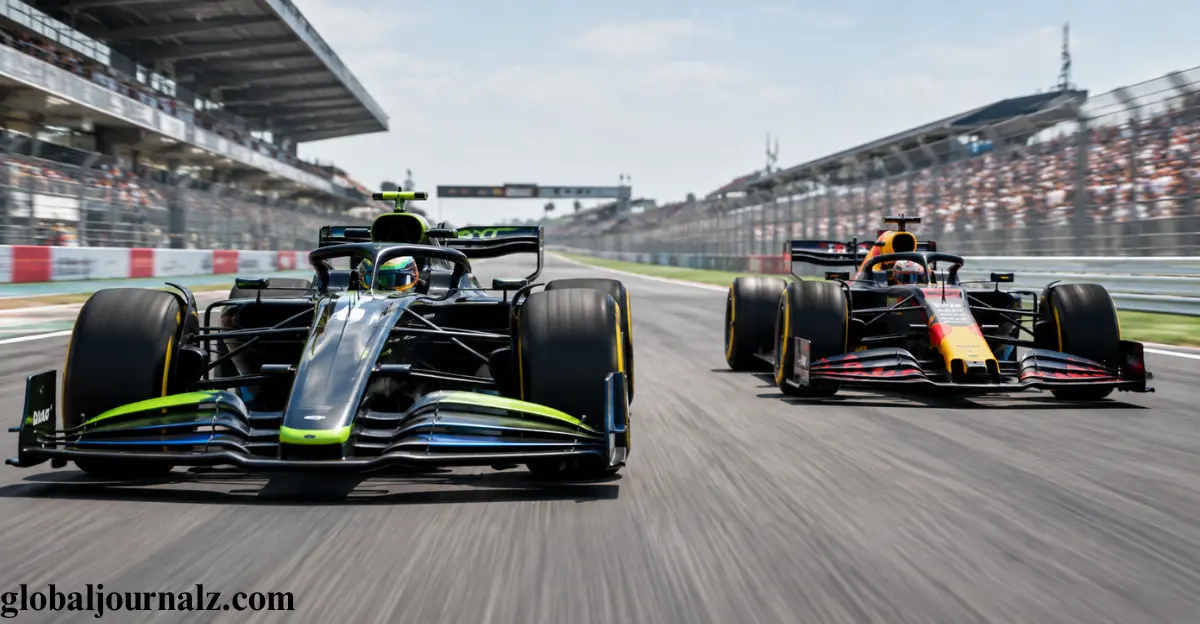
Formula 1® cars can blast down a straight at more than 350 km/h (217 mph), yet their most remarkable performance happens when they slow down and attack a corner. An F1 car can accelerate from 0 to 100 km/h in around 2.5 seconds, while its driver can face up to 6 G under heavy cornering and braking. These figures show why F1 speed is about far more than the number on the speedometer. Explore how fast F1 cars really go and what that incredible speed feels like from the cockpit and around the track.
Table of Contents
How Fast Is an F1 Car in a Straight Line?
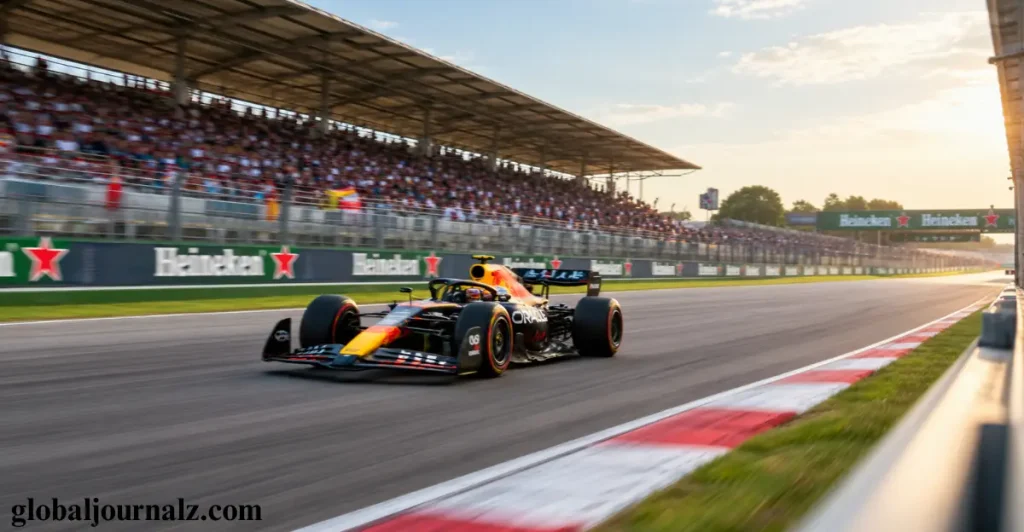
A modern Formula 1 car can reach about 340 to 360 km/h (210 to 225 mph) on long straights, with Monza, Las Vegas and Baku often allowing higher speeds through long straights and low-downforce setups, while Monaco and Singapore are much slower due to their tight layouts.
Altitude can also affect top speed because thinner air creates less drag; at Mexico City, the circuit sits over 2,200 metres above sea level and produced the official race speed record of 372.5 km/h (231.4 mph). This shows how track design, altitude and aerodynamic setup can significantly change straight-line performance.
F1 is not the fastest single-seater in a straight line, with IndyCars reaching higher speeds on American ovals, but F1 cars gain their advantage through cornering, braking and aerodynamic grip. That balance lets them carry greater speed around a complete lap rather than simply chasing the highest speed-trap figure.
What Is the Fastest an F1 Car Has Ever Gone?
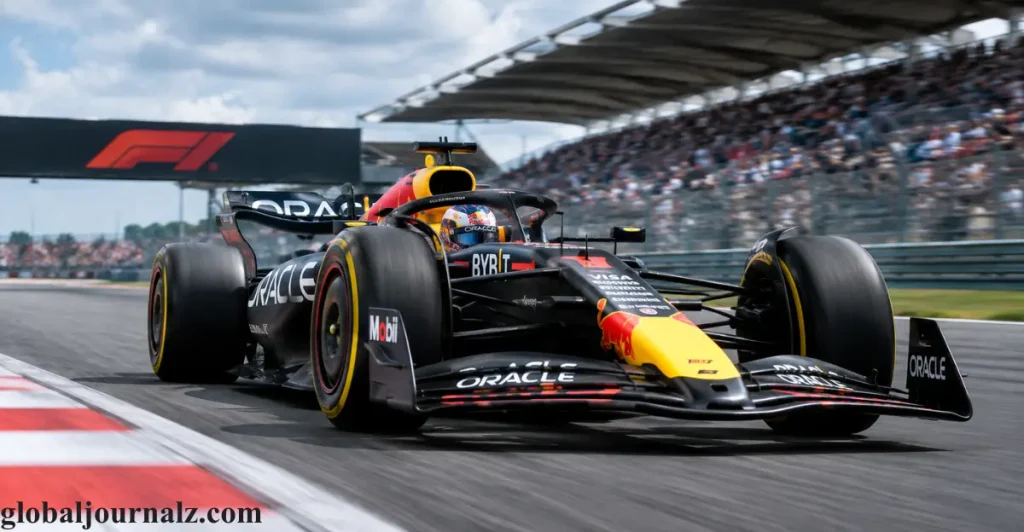
The fastest verified F1 speeds come from three standout runs: Valtteri Bottas reached 372.5 km/h (231.4 mph) at the 2016 Mexican Grand Prix, while his Williams recorded an unofficial 378 km/h (234.9 mph) during 2016 Baku qualifying with DRS and a slipstream. The absolute F1 speed record is higher still, with a modified Honda BAR F1 car reaching an FIA-verified 397.36 km/h (246.9 mph) at Utah’s Bonneville Salt Flats in 2006.
These figures were achieved under very different conditions from normal racing. Mexico City’s high altitude reduced air density and drag, Baku’s run benefited from DRS and slipstream, while the Bonneville car was modified for a flat-out straight-line attempt with no corners to slow it down. That makes the 397.36 km/h run the highest officially recorded speed by an F1-based machine.
The records also highlight how fast earlier generations of F1 cars could be in a straight line. The Bonneville run came before the hybrid era, while Bottas’ two records from 2016 have remained unbeaten through subsequent regulation changes, showing just how extreme the straight-line performance of those mid-2000s and mid-2010s cars could be.
How Quickly Does an F1 Car Accelerate?
From a standing start, an F1 car can reach 0 to 100 km/h (0 to 62 mph) in about 2.5 seconds and 0 to 200 km/h (0 to 124 mph) in roughly 4.5 to 5 seconds. The initial launch is limited mainly by tyre grip, rather than the car’s roughly 1,000-horsepower output.
A powerful road-going supercar with launch control can therefore stay surprisingly close to an F1 car during the first couple of seconds. Once the cars are moving faster, however, the F1 car’s aerodynamics begin generating more grip and it quickly builds a much larger advantage.
Acceleration is only part of the performance story because an F1 car must also slow down extremely quickly. It can shed around 200 km/h in just a couple of seconds, using its braking system and aerodynamic grip to reach a hairpin over an exceptionally short distance.
What Do the G-Forces Feel Like?
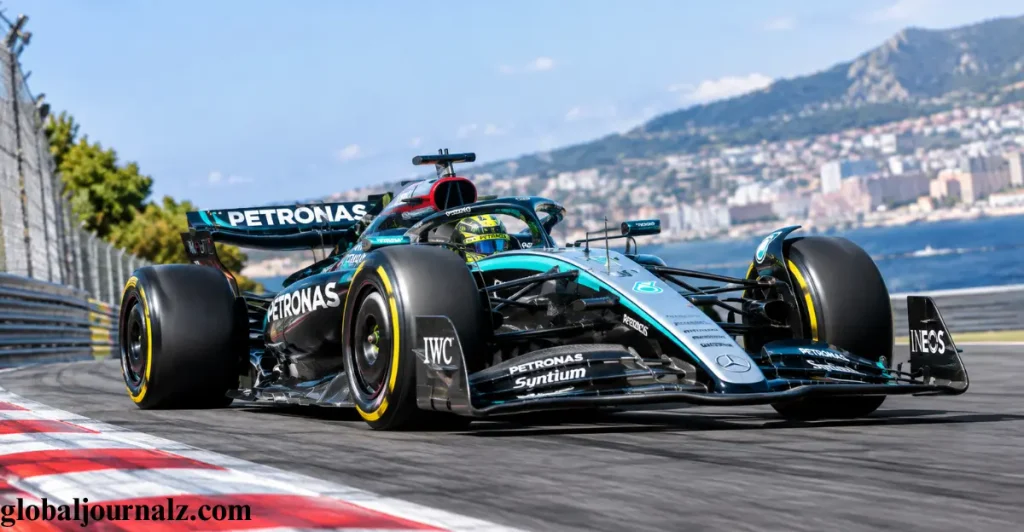
F1 drivers can experience up to around 6 G through the fastest corners and approximately 5 to 6 G under heavy braking. At 5 G, a driver’s head and helmet, weighing about 7 kilograms together, effectively create a load of roughly 35 kilograms, placing huge demands on the neck.
This is why neck training is such an important part of an F1 driver’s preparation. Through sections such as Copse at Silverstone and the esses at Suzuka, drivers experience sustained lateral loads while maintaining precise steering and racing lines at very high speeds.
The challenge becomes even greater because these forces are repeated throughout a race rather than experienced once. The combination of cornering, braking, acceleration, and precision driving creates a physical workload that the headline speed figures alone cannot fully explain.
F1 vs IndyCar vs MotoGP: Which Is Fastest?
The answer depends on the type of speed being measured: IndyCars can exceed 380 km/h on American banked ovals, while MotoGP bikes can reach straight-line speeds comparable to F1 cars. On a road circuit, however, F1 has a major advantage because its cornering and braking performance allow it to maintain much higher average speeds.
A clear comparison came at the Circuit of the Americas in 2019, where F1 and IndyCar competed on the same circuit during the same year. F1’s pole lap was around 1 minute 32 seconds, while IndyCar’s best was approximately 1 minute 46 seconds, leaving F1 roughly 14 seconds quicker over one lap.
That difference shows why outright top speed does not determine which racing machine is fastest overall. IndyCar has the edge on certain high-speed ovals, MotoGP offers exceptional acceleration and agility on two wheels, but F1’s combination of aerodynamic downforce, cornering speed and braking makes it exceptionally quick around road circuits.
Are the 2026 Cars Faster or Slower?
The 2026 cars were designed with smaller dimensions, lower drag, reduced weight and active aerodynamics, creating expectations of speeds beyond 400 km/h. Instead, early-season performance has been slower, with George Russell’s Melbourne pole about 3.4 seconds behind the previous year’s benchmark and the fastest qualifying speed trap reaching only around 315 km/h.
A major factor is energy management, because the 2026 power units depend heavily on electrical energy and drivers must carefully preserve battery charge for each straight. When the available energy runs low, clipping limits acceleration, sometimes forcing drivers to lift and coast so they can recover energy for later parts of the lap.
The FIA adjusted the regulations from the Miami round to reduce the strangest effects, but the overall speed trend has remained similar. Despite a very high theoretical physics ceiling, energy restrictions and regulations keep actual speeds below expectations, allowing Bottas’s 2016 records to remain intact.
What These Speeds Feel Like Trackside
The sheer speed of an F1 car becomes easier to understand when its rapid movement is considered alongside its acceleration and braking. A machine travelling at more than 300 km/h covers a huge distance in seconds, leaving very little time for the driver to react.
High-speed cornering adds another dimension because the car does not simply travel quickly in a straight line. It brakes extremely late, changes direction at tremendous speed, and immediately accelerates onto the next section while maintaining remarkable aerodynamic grip.
These combined forces explain why F1 performance cannot be judged by top speed alone. The interaction between speed, braking, cornering, downforce and acceleration is what makes an F1 car so exceptionally fast around a complete circuit.
Conclusion
Formula 1 cars are built around much more than outright top speed. Their extraordinary acceleration, braking, cornering and downforce make them exceptionally fast around a complete lap, while speeds above 350 km/h and forces of up to 6 G demonstrate the extreme demands placed on both car and driver. Comparisons with IndyCar and MotoGP show that speed depends heavily on the circuit and what is being measured, while the 2026 regulations have introduced new challenges through energy management. Even so, records such as Bottas’s 372.5 km/h and the 397.36 km/h Bonneville run remain important benchmarks. Ultimately, an F1 car’s true performance comes from combining speed, braking, aerodynamic grip and cornering ability throughout an entire lap.
FAQs
How fast can an F1 car go?
Modern F1 cars can reach around 340–360 km/h (210–225 mph) on long straights. The official race speed record is 372.5 km/h (231.4 mph), set by Valtteri Bottas in 2016.
What makes an F1 car accelerate so quickly?
With around 1,000 horsepower, an F1 car can reach 100 km/h in roughly 2.5 seconds and 200 km/h in about 4.5–5 seconds. Aerodynamic grip becomes increasingly important as the car gains speed.
How much G-force does an F1 driver experience?
During heavy braking and fast corners, drivers can face around 5–6 G of force. That places a huge load on the head, neck and body, making physical conditioning essential.
Which is faster, an F1 car or an IndyCar?
On high-speed ovals, IndyCars can exceed 380 km/h, giving them the top-speed advantage. F1 cars are generally faster on road circuits because of superior cornering, braking and aerodynamic downforce.
Have the 2026 F1 cars become faster or slower?
Despite the potential for very high speeds, the 2026 cars have so far been slower in real-world conditions. Energy management and battery limitations can restrict acceleration on long straights.
 Muhammad Bilal