 By admin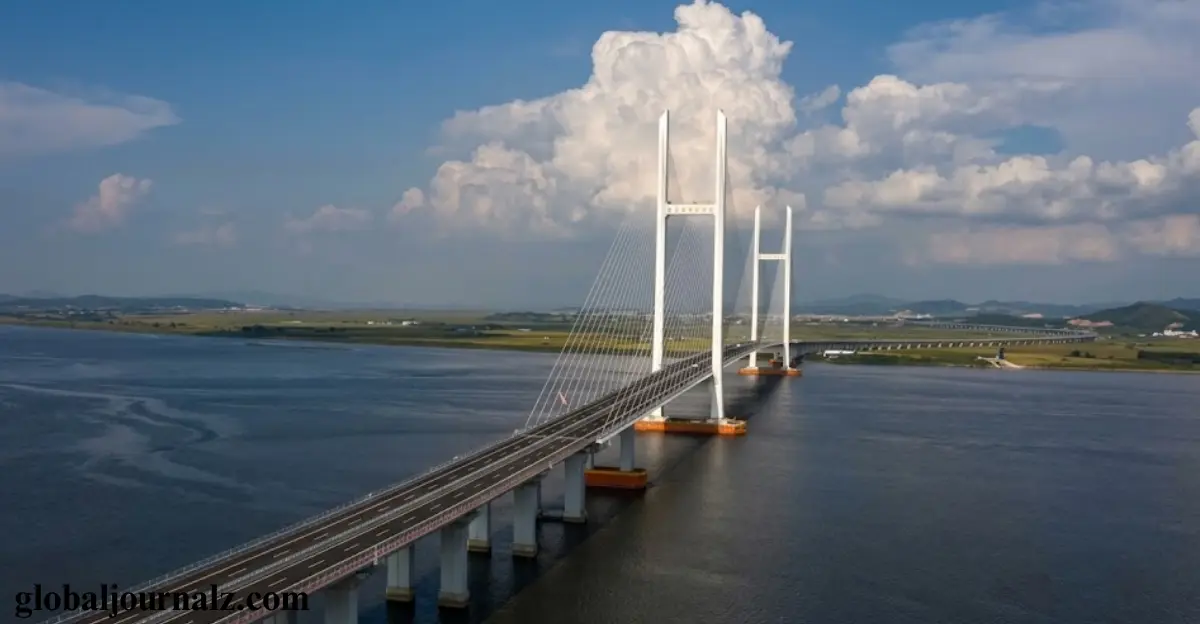
The opening of a new bridge between North Korea and China marks an important development in the two countries’ cross-border relations after a 12-year delay. The project highlights the importance of transport links for trade, economic cooperation and movement between the neighboring nations. It also comes as North Korea continues to rely heavily on its relationship with China for economic ties and regional engagement. The bridge’s opening raises questions about how the new connection could influence border activity, bilateral trade and future cooperation between the two countries.
Table of Contents
North Korea and China Open New Yalu River Bridge
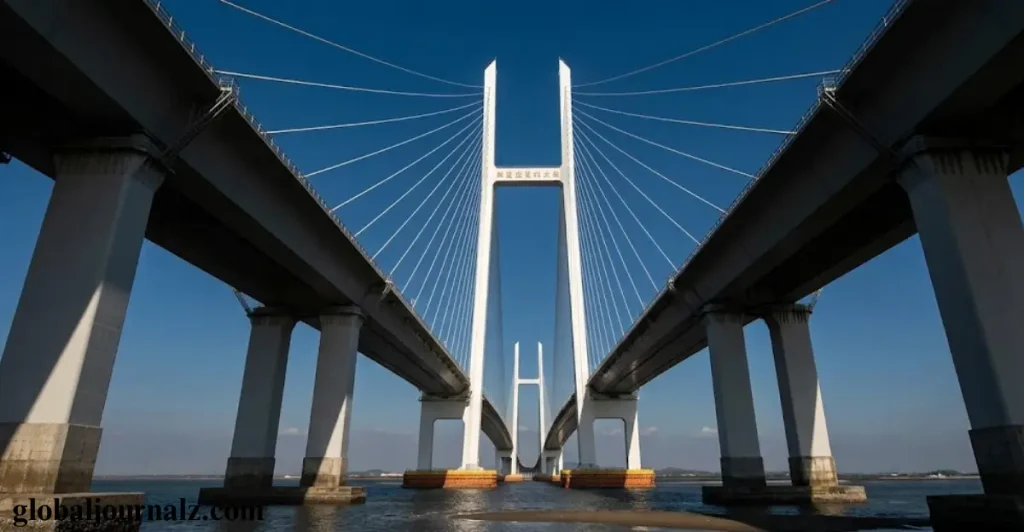
North Korea and China have opened the New Yalu River Bridge after a 12-year delay, according to Chinese state media. The long-delayed road bridge, measuring 3km (1.9 miles), connects Dandong, a Chinese border city, with Sinuiju near the North Korean border, improving road infrastructure and regional transport.
The bridge opening could strengthen connectivity, trade ties, and bilateral relations through a major main land route for trade between neighbours. However, cross-border trade remains affected by international sanctions over Pyongyang’s nuclear weapons programme, making China-North Korea cooperation important but politically sensitive.
Bridge Construction Delays and Cross-Border Trade
The New Yalu River Bridge, initially slated for 2014, experienced construction delays involving North Korea, roads and customs facilities, and was indefinitely postponed amid challenges in relations with Beijing. During this period, the Sino-Korean Friendship Bridge, a decades-old bridge built between 1937 and 1943 during Imperial Japan’s occupation of the region, remained an alternative trade route.
On Wednesday, Chinese Foreign Ministry spokesperson Mao Ning called the bridge an important facility for connectivity, trade facilitation, and people-to-people exchanges. Bilateral trade reached $2.7bn last year, returning to pre-pandemic levels, with Chinese exports to North Korea contributing to recovery. Improved customs infrastructure and transport connections could support further commercial exchanges.
Trade Relations and International Sanctions
China is North Korea’s largest trading partner and an essential economic lifeline despite heavy international sanctions linked to Pyongyang’s nuclear weapons programme. United Nations sanctions have restricted cross-border commerce, although the $2.7bn bilateral trade figure indicates a return to pre-pandemic levels, supported by Chinese imports, Chinese exports, and gradual trade growth.
Increased commerce could support North Korea’s domestic market and strengthen economic cooperation, but it may also increase import dependence and China’s influence. Kang Jun-young, a professor of Chinese studies at Hankuk University of Foreign Studies, discussed the issue in the BBC. A sudden flood of Chinese imports, border trade restrictions, and sanctions enforcement will influence future trade recovery and the wider regional economy and economic relations.
China-North Korea Alliance and Nuclear Tensions
Beijing and Pyongyang are long-standing allies connected by a mutual defence treaty, described as China’s only treaty of this kind with any country. Their relationship is often captured by the phrase close as lips and teeth, associated with Mao Zedong, the former Chinese leader. Despite their historical partnership, alliance tensions have complicated China-North Korea relations.
During the 2010s, North Korea expanded its nuclear weapons programme under Kim Jong Un, including a nuclear test in 2017 and development of banned ballistic missiles. These actions increased US wariness and concerns for South Korea and Japan, prompting stronger military alliances. Edward Howell, a lecturer at the University of Oxford, has examined the Chinese attitude towards North Korea’s nuclearisation, Pyongyang’s denuclearisation, nuclear security, regional geopolitics, and diplomatic tensions.
Russia, Ukraine War and North Korea’s International Relations
North Korea has deepened ties with Russia during the Ukraine war, with North Korean soldiers reportedly involved in fighting for Russia in Ukraine. Reports cited at least 2,300 North Korean soldiers, alongside concerns about oil supplies and UN sanctions violations. In 2024, reports of more than a billion barrels of oil linked energy transfers to payment for Pyongyang’s weapons and troops.
The first road bridge between Russia and North Korea was reported by Russian state media to support up to 300 vehicles and more than 2,000 people every day, with its opening expected last month. These links could strengthen Russian-North Korean cooperation, military support, and energy supplies, reinforcing a strategic alliance. For Beijing, the growing partnership creates pressure to reassert its sway over Pyongyang, encourage rekindling ties, and protect its regional influence amid international sanctions.
Xi Jinping’s Visit and Renewed Bilateral Relations
Air China resumed direct flights between Beijing and Pyongyang in March, following a six-year hiatus caused by the pandemic. The return of passenger train services has also supported renewed transport links and people-to-people exchanges. These developments signal efforts to restore everyday contact and improve economic and diplomatic communication.
Chinese President Xi Jinping made his first state visit of this year in June, meeting North Korean leader Kim Jong Un in Pyongyang. The New Yalu River Bridge adds practical significance to this symbolic diplomatic visit and efforts at improving bilateral relations. Leif-Eric Easley, a professor at Ewha University in Seoul, has discussed Beijing’s position as North Korea emerges from pandemic self-isolation and domestic socioeconomic crackdowns, remaining a difficult partner for Beijing despite renewed China-North Korea cooperation, diplomatic engagement, regional influence, and renewed connectivity.
Conclusion
The opening of the New Yalu River Bridge represents a significant step in China and North Korea’s efforts to strengthen cross-border trade and economic cooperation after years of delay. Connecting Dandong in China with Sinuiju in North Korea, the four-lane bridge is expected to improve cargo transportation and ease pressure on the older crossing that handles much of their official trade. Its launch also comes as both countries seek closer ties amid changing regional relationships and North Korea’s growing engagement with Russia. However, the bridge’s long-term economic impact will depend on how effectively it is used and whether cross-border trade expands under existing restrictions. The project offers a new opportunity for cooperation, but its broader significance will become clearer as commercial activity develops.
FAQs
Why did the China-North Korea bridge take 12 years to open?
Although construction was completed in 2014, the bridge remained unused because North Korea had not completed the necessary connecting infrastructure and customs facilities on its side. Political and economic tensions may also have contributed to the delay.
What is the name of the new bridge between China and North Korea?
The bridge is called the New Yalu River Bridge. It crosses the Yalu River, also known as the Amnok River, and connects Dandong in northeastern China with Sinuiju in North Korea.
How could the new bridge affect trade between China and North Korea?
The bridge could improve cargo transportation, support the movement of goods, and reduce congestion at the existing border crossing. However, any significant increase in trade will depend on demand, border procedures, and international restrictions.
Why are China and North Korea strengthening their relationship?
China is North Korea’s main trading partner, while both governments have expressed interest in expanding economic and strategic cooperation. The bridge provides additional infrastructure to support cross-border exchanges as regional relationships continue to evolve.
Will the new bridge replace the old China-North Korea crossing?
The new bridge is expected to ease pressure on the older Sino-Korean Friendship Bridge rather than immediately replace it. The older crossing remains an important route for road and rail traffic between the two countries.
 Muhammad Bilal