 By admin
Rising inflation in the United States is putting renewed pressure on household budgets as the cost of everyday essentials continues to shape consumer spending. When prices increase more than economists expect, families may face higher bills for groceries, housing, transportation and other necessities. The latest inflation figures also matter for the Federal Reserve, which uses economic data to guide decisions about interest rates and monetary policy. Understanding what is driving prices upward can help explain how inflation affects purchasing power, business costs and the wider US economy.
Table of Contents
US Inflation and Rising Consumer Prices
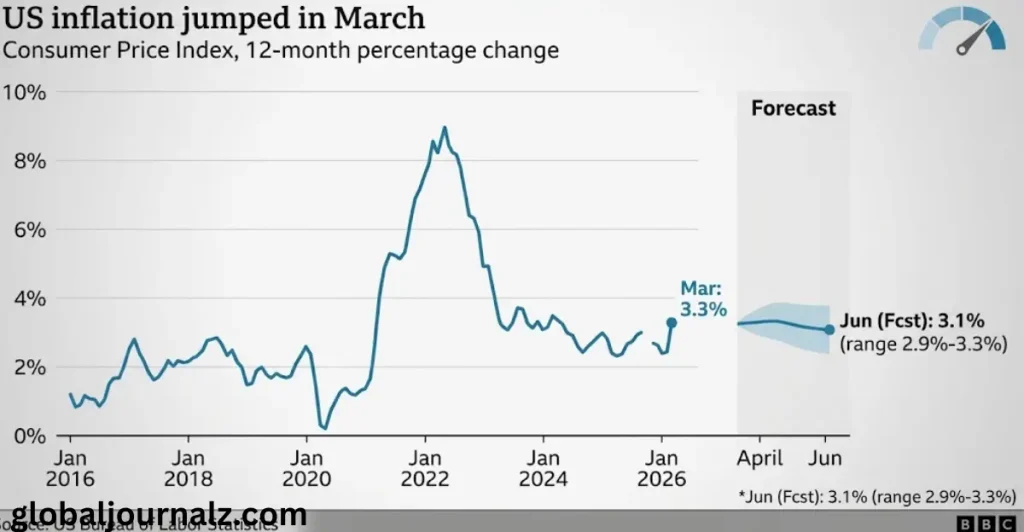
US inflation increased to 3.7% in September, compared with 3.4% previously, according to official figures released by the Bureau of Labor Statistics. The latest annual inflation rate indicates that higher-than-expected price increases are adding to existing cost of living pressures across the US economy.
The report, covered by Rachel Clun, business reporter highlights how rising costs for essential goods and services continue to affect consumers as the country approaches the midterm elections next month. These September inflation figures have renewed concerns about price stability and the wider economic outlook.
The consumer price index (CPI) tracks changes in the prices consumers pay for a broad range of everyday products and services. Its latest figures reflect the combined effects of rising gasoline prices, changes in fresh food costs and increases in categories such as medical services.
These developments complicate inflation forecasts as households must adjust their budgets to accommodate higher expenses. When consumer prices rise faster than expected, families may have less money available for discretionary purchases, increasing economic pressure and affecting overall household spending.
The situation has also been influenced by disruptions to Middle East energy supplies linked to the US-Israel conflict with Iran. Concerns about energy disruption have pushed fuel costs higher, adding pressure to transport household bills, and other parts of the economy.
The latest inflation data release therefore raises questions about how quickly price increases might ease and whether further pressure will affect other goods and services. For consumers, the immediate concern remains the rising cost of living, while policymakers must assess whether these developments represent a temporary energy shock or a more persistent inflation problem.
Consumer Price Index and Inflation Measurement
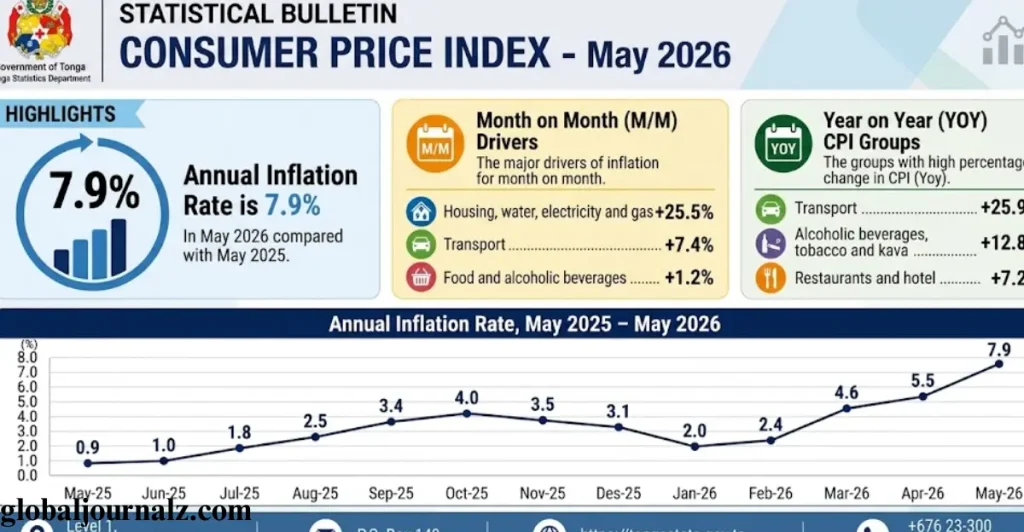
Inflation measures how the price of products and service costs change over time. For example, if a bottle of milk costs $1 and later costs $1.10, its price has increased by 10%. When a similar increase occurs across a broad range of goods and services over a year, it contributes to the annual inflation rate. This basic example helps explain annual inflation calculations, although official measures consider many categories and use weighted calculations rather than simply averaging individual price changes.
The Bureau of Labor Statistics uses the consumer price index (CPI) to monitor changes in a representative basket of goods containing hundreds of everyday items and services. The index tracks categories that include fresh food prices, gasoline, medical services, housing-related expenses, and other common purchases.
Because consumers have different spending habits, the index assigns different weights to categories to estimate changes in overall prices. These official statistics provide an important measure of overall price levels and help economists assess conditions across the US economy.
The CPI is widely used to examine consumer spending, price tracking, and changes in the cost of living. When the index rises, it indicates that the measured basket has become more expensive on average, although individual households may experience different effects depending on their purchases and circumstances.
Household expenses, product prices and service inflation do not necessarily rise at the same pace. Understanding these differences is essential when interpreting inflation figures because a headline rate summarises broad price movements rather than describing the exact financial experience of every consumer.
Supply, Demand and Causes of Inflation
Supply and demand play a central role in determining prices. When consumer demand increases faster than the available supply of a product, sellers may raise prices, particularly when production cannot expand quickly. Similarly, product shortages and other supply constraints can create upward pressure even when demand remains relatively stable.
Higher incomes may also encourage spending on particular goods, giving producers more room to increase prices. These inflation drivers interact with production costs, competition, and wider economic conditions to influence the prices consumers ultimately pay.
Consumer trends can produce similar effects in specific markets. Collectible products such as Labubu dolls, for example, may experience higher resale prices when demand outpaces the limited product supply. Such changes demonstrate how consumer trends, scarcity, and market expectations can affect individual prices.
However, increases in a particular collectible market do not automatically mean that general inflation is rising. Broad inflation depends on price changes across many categories, while market competition, consumer purchasing power, and the availability of alternatives can influence how far sellers are able to raise prices.
Energy markets provide a more widespread example of how supply disruptions affect the economy. Crude oil is used to produce fuels including gasoline and diesel, so interruptions to oil supplies can raise costs throughout the energy chain.
In the circumstances described in the supplied figures, crude oil prices moved from just over $70 a barrel to over $100 a barrel, illustrating the scale of the reported increase. When oil supply disruption combines with rising transport and production costs, businesses may pass some of those expenses to customers. These pressures can contribute to price increases, greater price volatility, and wider changes in commodity markets.
Gasoline Prices and Current Inflation Rate
The rise in September inflation to 3.7% was driven substantially by higher gasoline prices. According to the Bureau of Labor Statistics, gasoline prices increased by 9.1% monthly in September and recorded a 34.2% annual increase. The monthly increase in gasoline accounted for more than half of inflation increase measured across the overall index. This sharp movement shows how changes in one major spending category can influence the headline inflation rate, particularly when fuel prices rise rapidly within a single month.
The wider energy inflation measure recorded a 20.4% annual rise, reflecting significant pressure across energy-related categories. The reported 74.2% fuel oil increase is especially important for households that rely on fuel oil for heating, as higher prices can increase home heating costs during colder periods.
Changes in energy services and electricity prices can also affect monthly budgets, even when their increases are smaller than those recorded for gasoline and fuel oil. Together, rising energy costs and fuel price increases add to consumer expenses and create additional economic pressure.
Energy costs are not the only factor monitored by the US Federal Reserve when assessing inflation and setting interest rate policy. The latest figures also showed 2.6% core inflation, which excludes food and energy, while food inflation reached 2.5% annually. Monthly food prices were flat overall in September, indicating that food prices did not rise at the same pace as fuel during that month. Nevertheless, continuing energy market disruptions may affect the cost of transporting and producing goods over time. These developments contribute to inflation risks and complicate forecasts about the direction of consumer prices.
US Federal Reserve and Wider Economic Effects
The US Federal Reserve monitors changes in prices, spending, employment, and economic activity when making decisions about interest rates and monetary policy. Higher energy costs and rising gasoline prices can put immediate pressure on household finances, while increases in other categories may indicate that inflation is spreading more broadly. Policymakers therefore examine inflation expectations, economic indicators, and the latest data to determine whether price increases are likely to persist. The goal of inflation control is to support price stability without unnecessarily weakening economic activity.
The latest report recorded 2.6% core inflation, which measures price changes excluding food and energy, alongside 2.5% annual food inflation. Although September food prices were unchanged overall from the previous month, households continued to face pressure from fuel, electricity, and other expenses.
Rising energy services, electricity costs, fuel oil, and household heating expenses can leave families with less money for other purchases. This can affect consumer spending, reshape household budgets, and reduce consumer purchasing power, particularly for people whose incomes do not rise at the same pace as prices.
For policymakers, the combination of higher headline inflation and continuing energy disruption creates uncertainty around economic forecasts and the inflation outlook. The Federal Reserve must weigh the risk that persistent price increases could become more widespread against the possibility that energy pressures may ease.
Future interest rate decisions will depend on incoming economic data and assessments of whether inflation is becoming more persistent. These decisions can influence borrowing costs, business investment, and household spending, making economic policy an important part of the response to rising prices across the US economy.
Social Security Payments and Cost-of-Living Adjustment
The Social Security Administration announced a 3.6% benefit increase for 2027, providing a cost-of-living adjustment for people receiving Social Security benefits. The adjustment applies to old age benefits, survivors insurance, and disability insurance, helping payments reflect changes in prices over time. The administration said the average retirement benefit would increase by approximately $75 a month, with the regular January payment increase intended to provide additional support as living costs rise.
Nearly 72 million people receiving Social Security benefits are expected to receive the adjustment, while approximately 7.2m recipients of supplemental security income are also affected. The increased SSI payments are scheduled to begin on 31 December, ahead of the start of 2027.
These changes will influence retirement payments, disability support, and monthly income for eligible recipients. Although the adjustment increases the amount of money beneficiaries receive, its practical value depends on how prices for essentials such as food, healthcare, housing and energy change over the same period.
The annual inflation adjustment is intended to help protect household income and the purchasing power of older Americans and other beneficiaries. Higher monthly payments can provide important economic support, especially for people who depend on retirement income or disability assistance to cover routine household expenses.
However, benefit increases do not necessarily compensate every recipient for their individual cost increases, because spending patterns vary. As inflation continues to affect the cost of living, the effectiveness of inflation-linked benefits will depend on whether these payments keep pace with the expenses that matter most to the people receiving them.
Conclusion
The latest US inflation figures show that rising prices remain a challenge for American households, with annual inflation reaching 3.7% in September 2026, up from 3.4% in August. Higher gasoline costs were the biggest contributor to the monthly increase, while housing and several other consumer categories continued to put pressure on household budgets. The figures also create a difficult balancing act for the Federal Reserve as it considers how to control inflation without placing unnecessary pressure on economic growth and employment.
FAQs
Why is US inflation rising more than expected?
US inflation rose faster than expected in September 2026, largely because of higher energy costs. Gasoline prices increased 9.1% during the month, while shelter and several other categories also recorded price increases.
What is the current US inflation rate?
The US annual Consumer Price Index (CPI) inflation rate reached 3.7% in September 2026, compared with 3.4% in August, according to the US Bureau of Labor Statistics.
Which everyday expenses are becoming more expensive?
Gasoline, housing, restaurant meals, airline fares, and several other goods and services recorded increases. However, food prices overall were unchanged month over month in September, with grocery prices edging down slightly.
How does rising inflation affect American households?
Higher inflation means households may need to spend more to maintain the same standard of living. If wages do not keep pace with prices, families can lose purchasing power and have less money available for savings and other expenses.
Could rising inflation lead to higher interest rates in the US?
Yes, persistent inflation could lead the Federal Reserve to consider higher interest rates or delay rate cuts. However, its decisions will depend on incoming inflation, employment, and economic growth data, so another increase is not guaranteed.
 Muhammad Bilal