 By Muhammad Bilal
 Fort Ross once marked the southern edge of Russia’s North American ambitions, standing on the California coast from 1812 as a Russian-American Company outpost. Built under Ivan Kuskov, the settlement supported Russian Alaska through farming, trade, shipbuilding and the lucrative sea otter trade. Its presence unfolded within territory claimed by Spain and later Mexico, creating a little-known chapter in California’s colonial history. Explore how Russia established this forgotten foothold in California and why it eventually disappeared.
Table of Contents
The beginning of Russian America
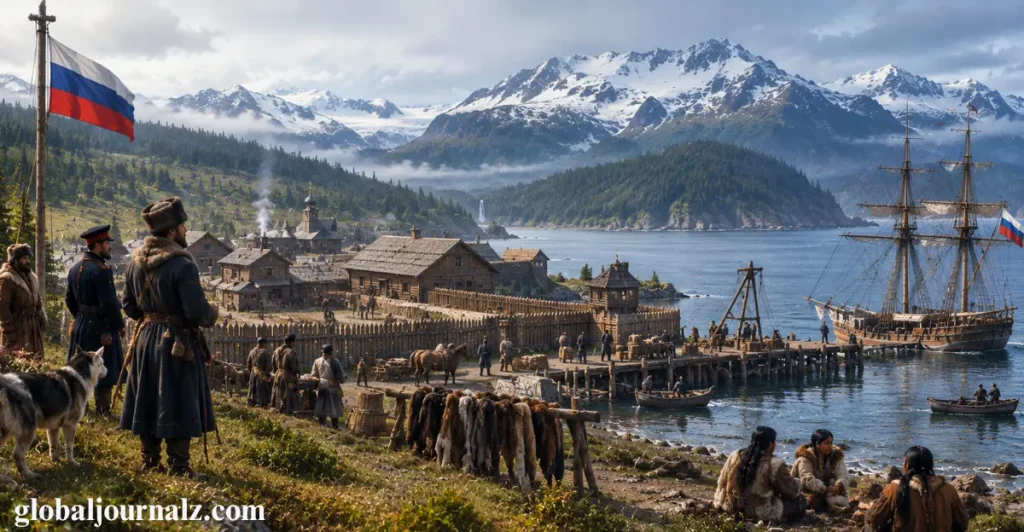
Russia expanded east across Siberia and reached the Pacific coast by the 1640s. This movement brought Russian America into existence as fur traders and mercenaries moved through Alaska and established settlements along its islands and coasts. The region became increasingly important because of its rich supply of sea otters and valuable pelts.
In 1799, Tsar Paul I chartered the Russian-American Company, giving the business control over Alaska’s fur trade and colonial activities. The company earned significant profits from sea otter pelts but faced a growing problem as its settlers struggled to find enough food. Alaska’s frozen landscape offered little suitable farmland, making local agriculture extremely difficult.
The shortage of food encouraged Russian settlers to look beyond Alaska toward warmer territory. They began seeking reliable supplies and Spanish trading partners farther south, while Russia’s interest in the Pacific coast continued to grow. This search for a more suitable environment would eventually lead Russian expansion toward California.
Exploring Russian California
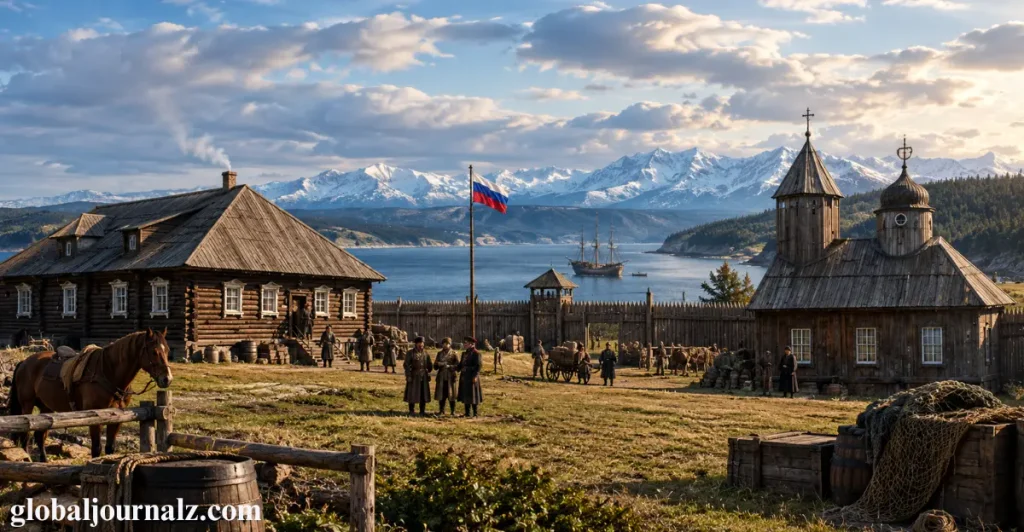
Today, Fort Ross remains a striking reminder of Russian California, standing in an isolated coastal landscape within Fort Ross State Historic Park. The former colony overlooks the Pacific and preserves traces of a settlement that once supported Russian trade, exploration and expansion along the northern California coast.
At the centre stood a fortified stockade containing barracks, blockhouses and cannons designed to protect the settlement. The warehouse stored valuable sea otter pelts for trade with China, Europe and Spanish California, while the St Nicholas chapel represented the Russian Orthodox presence and became one of the oldest Orthodox buildings in the Western Hemisphere.
Although Russia built defenses against possible Spanish attacks, the two empires never fought at Fort Ross and instead depended on trade for supplies. The settlement gradually became a diverse community with about 60 buildings, including banyas, bakeries and other structures, showing how Russian colonists created a functioning outpost far from their homeland.
Beyond the fort
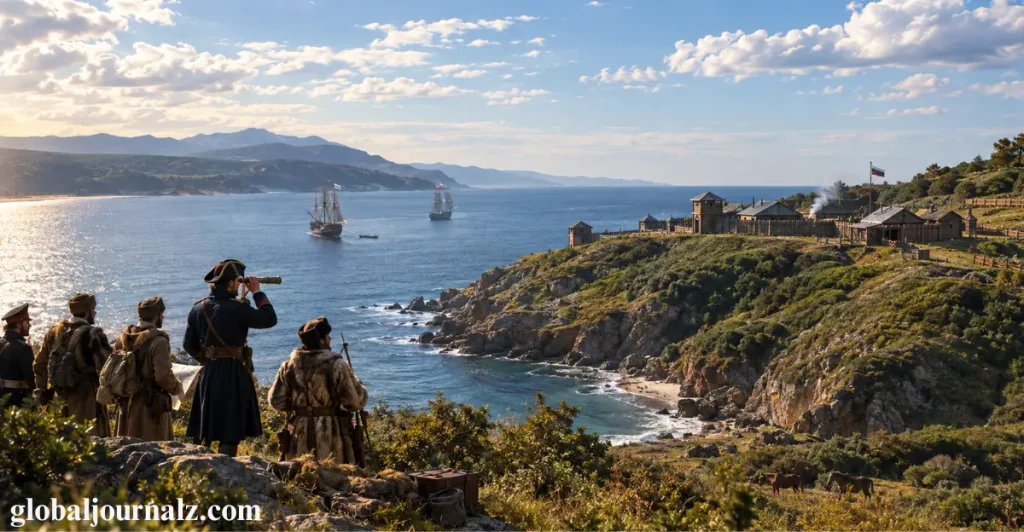
As Fort Ross grew, its population reached nearly 400 people by the 1830s and created one of the most diverse communities in California. The sloboda was home to Aleutian and Kodiak hunters, Native California women, Russian and European Creoles, Kashaya Pomo and Coast Miwok workers, with the Old Russian Cemetery serving as a shared burial ground.
Beyond the settlement, Finnish and Hawaiian craftsmen worked with local communities as coopers, carpenters and blacksmiths. Fort Ross became an important manufacturing centre where workers built ocean-going ships and produced early bricks, glass, windmills and metal goods, which were traded with Spanish and Mexican neighbours for provisions.
The colony also left a lasting mark on California’s agriculture and territorial history. The orchard began with a peach tree in 1814, while Russian settlers planted the first grapes in Sonoma County in 1817 and introduced the Mission grape. The colony’s expansion also supported wider Russian territorial ambitions through the imperial decree of 1821.
Russia’s California legacy
The legacy of Russian California can still be seen across the Golden State, from Russian Hill in San Francisco to Bodega Bay and the Russian River Valley. These places preserve traces of Russian-American activity, including the route once used to connect California with Alaska and the river the Russians called Slavyanka.
Long before the Russian arrival, the area around Fort Ross was known as Metini and had been a seasonal fishing village for thousands of years. The Kashaya Pomo people remembered the newcomers as the “Undersea People”, reflecting how the Russians appeared to emerge from the Pacific when viewed from the coastal bluff.
Today, Fort Ross still preserves this layered history through its stockade, sloboda, Cyrillic signs and St Nicholas Chapel. The surviving landscape connects California’s present with its Tsarist past, while the Russian River Valley and historic sites across the region keep the story of Russia’s brief presence in California visible.
Conclusion
Russia’s presence in California was brief but left a lasting mark on the region’s history. Fort Ross became a vital link between Russian California and the struggling settlements of Alaska. Its farming, trade, shipbuilding and sea otter activities showed the wider ambitions of the Russian-American Company. Yet limited agricultural success and changing trade networks eventually made the colony difficult to maintain. The Russians finally sold Fort Ross and withdrew from California in 1841. What remains today is a remarkable story of Russian expansion, Native communities and competing colonial powers on the Pacific coast.
1. Why did Russia establish Fort Ross in California?
Russia established Fort Ross to support its Alaskan settlements with food and supplies. The location also offered access to sea otters, farmland, trade routes and a warmer climate than Alaska.
2. Who built Fort Ross?
Ivan Kuskov led the establishment of Fort Ross in 1812 on behalf of the Russian-American Company. The settlement became an important Russian outpost for trade, farming and manufacturing along the California coast.
3. Why did Russia leave California?
Russia eventually abandoned Fort Ross because the colony struggled to produce enough food and the sea otter population declined. In 1841 the Russians sold the settlement and its assets to John Sutter f
 admin
admin